



Getting a prescription filled shouldn’t feel like a gamble. But for millions of people, a simple mistake in their medical records can lead to a dangerous reaction - or even a life-threatening emergency. If you’ve ever been told you’re allergic to a drug, you need to know how to make sure that information is recorded correctly, clearly, and permanently in your medical file. This isn’t just about filling out a form. It’s about stopping a preventable error before it happens.
Why Your Drug Allergy Info Must Be Precise
Many people say they’re "allergic to penicillin" or "sulfa drugs" without knowing what actually happened. Maybe they got a rash as a kid. Maybe their stomach upset after taking an antibiotic. But a rash or nausea isn’t always a true allergy. In fact, studies show that 90 to 95% of people who think they’re allergic to penicillin aren’t - when tested properly. If your record just says "penicillin allergy," doctors might avoid the safest, cheapest, and most effective antibiotics. That means you could end up on a stronger, more expensive drug with worse side effects - or worse, one that doesn’t work as well. That’s why specificity matters. The gold standard for documenting a drug reaction includes four things:- The exact drug name - Use the generic name, not the brand. Write "ampicillin," not "Amoxil." Write "sulfamethoxazole," not "Bactrim."
- The reaction - What happened? Hives? Swelling? Trouble breathing? Vomiting? A rash that spread?
- The severity - Was it mild? Moderate? Did you need emergency care? Did you go into anaphylaxis?
- When it happened - How long after taking the drug? Days? Minutes?
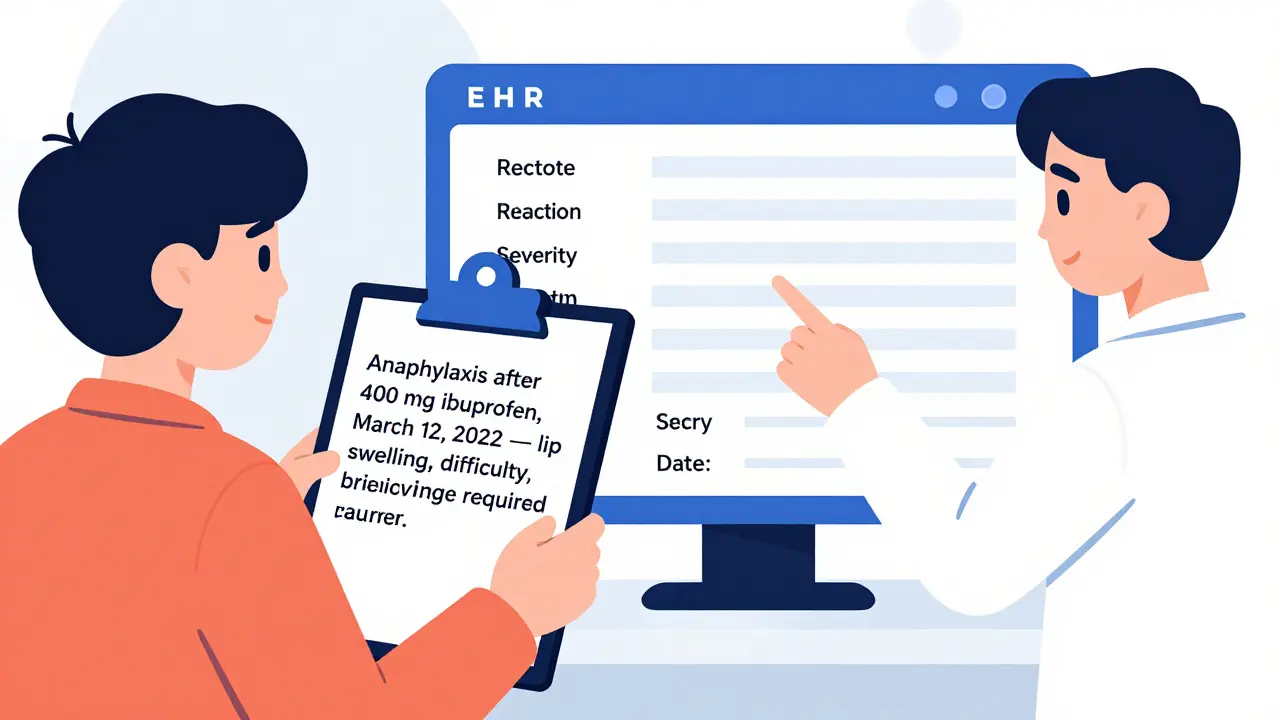
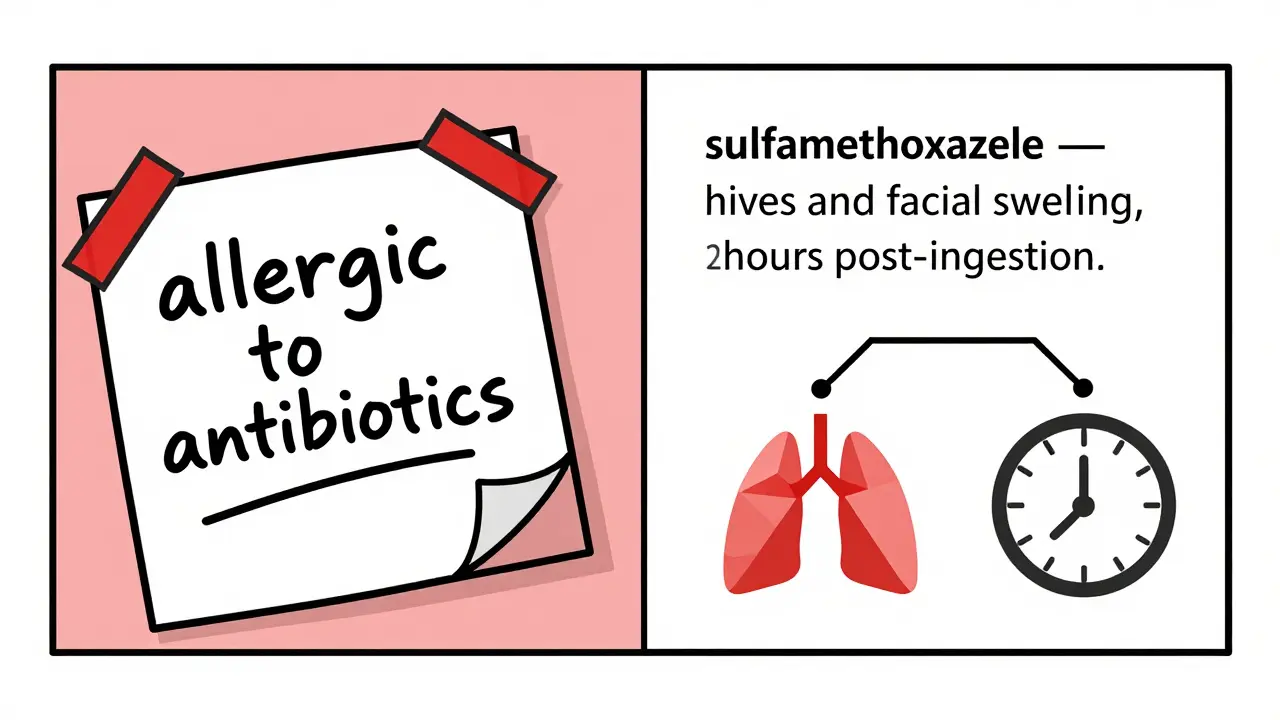
Example: Instead of writing "allergic to ibuprofen," write: "Anaphylaxis after taking 400 mg ibuprofen on March 12, 2022. Swelling of lips and throat, difficulty breathing. Required epinephrine and ER visit."
What Happens If It’s Not Documented Right?
Inaccurate or vague allergy records are one of the top causes of medication errors. According to the Journal of the American Medical Informatics Association, poor allergy documentation contributes to about 6.5% of all medication mistakes. That’s not a small number. In the U.S. alone, that’s estimated to cause 1.3 million injuries and 7,000 deaths every year. The Joint Commission - the group that certifies hospitals - calls incomplete allergy records a "significant patient safety risk." They’ve found that 5 to 10% of all adverse drug events are tied to unclear or missing allergy info. Even if you’ve never had a reaction, your record must say "No Known Drug Allergies" (NKDA). Just leaving it blank counts as a failure. Medicare and Medicaid require this. Hospitals get penalized if they don’t have it.How to Make Sure Your Record Is Accurate
You’re not just a patient. You’re the most important person in your own safety. Here’s how to take control:- Review your records before every appointment - Ask for a printed copy of your allergy list. Don’t assume it’s right. Check the drug names, the symptoms, the dates.
- Bring a list with you - Write down every drug you’ve ever reacted to, even if you think it’s "not a big deal." Include over-the-counter meds, supplements, and even contrast dye used in scans.
- Use the Drug Allergy History Tool (DAHT) - It’s a simple questionnaire used in clinics to dig deeper than "I’m allergic to penicillin." Ask your doctor if they use it. If they don’t, ask why.
- Ask for a referral to an allergist - If you’ve been told you’re allergic to penicillin or another common drug, get tested. A simple skin test can confirm or rule out a true allergy. You might be able to safely use a drug you’ve avoided for decades.
- Update your record after every hospital visit or ER trip - Even if you think nothing changed, make sure the staff checks your allergy list. If you had a new reaction, document it immediately.
One study at Massachusetts General Hospital found that after a 10-minute structured interview with patients, 61% of them needed changes to their allergy records. Over 200 vague entries were corrected. That’s not just better data - that’s safer care.
How EHRs Are Designed to Help (and Hurt)
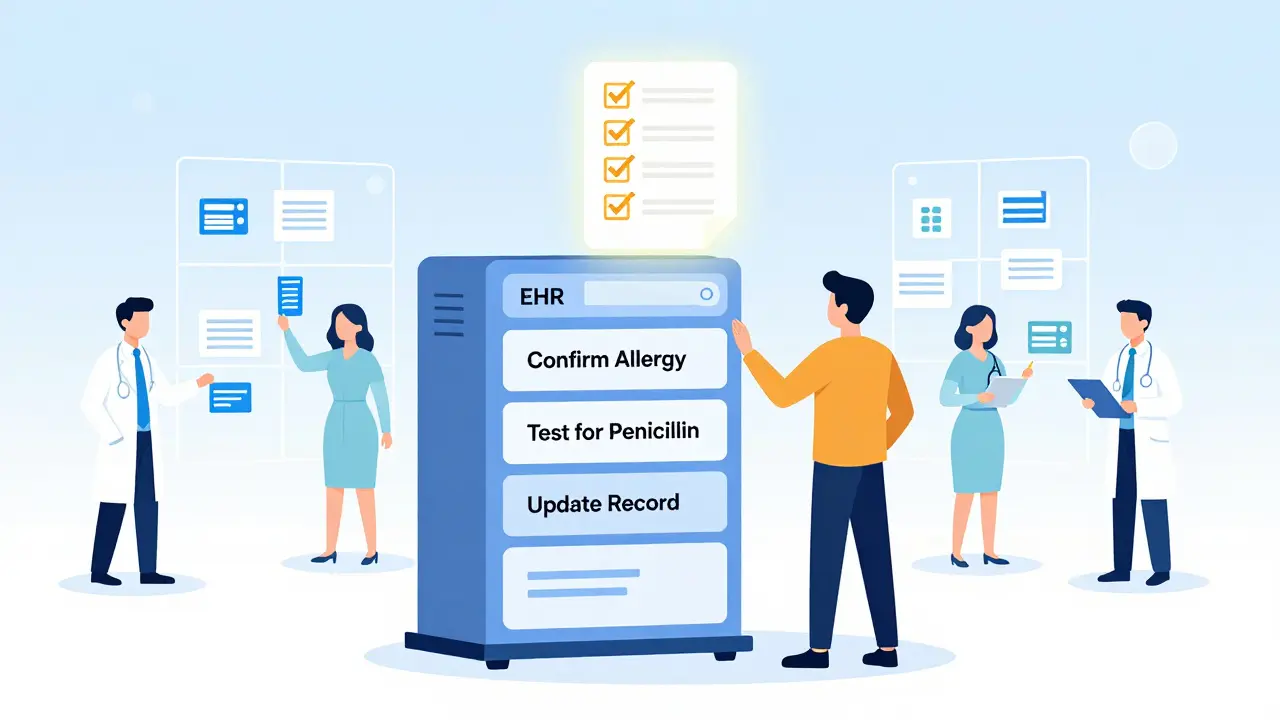
Most doctors now use Electronic Health Records (EHRs) like Epic, Cerner, or Meditech. These systems have built-in tools to help with allergy documentation - if used correctly. Good EHRs:- Require you to enter the drug name, reaction, and severity before saving
- Alert doctors if a new prescription might conflict with your allergies
- Let you mark if a reaction was "confirmed" or "suspected"
- Include a checkbox for "No Known Drug Allergies" - and won’t let you skip it
But here’s the problem: Many systems still let doctors type free text like "allergic to antibiotics" - which is useless. The 2023 federal rules require all certified EHRs to use the HL7 FHIR standard, which means allergy data can now be shared between hospitals, pharmacies, and even your phone app - but only if it’s structured correctly.
That’s why your input matters. If you say "I had a rash," and the doctor types "rash," the system might not flag it as a true allergy. But if you say "hives and swelling after amoxicillin," the system can trigger an alert when someone tries to prescribe any penicillin-based drug.
What to Do If You’re Told You’re Allergic - But You’re Not Sure
Don’t just accept it. Ask questions:- "Was this reaction confirmed by a test?"
- "Could this have been a side effect, not an allergy?"
- "Can I be tested to find out for sure?"
Penicillin allergies are the most commonly misreported. If you’ve avoided penicillin for 20 years because of a childhood rash, you might be missing out on the best treatment for future infections. Testing is safe, quick, and covered by most insurance.
Even if you’ve had a serious reaction, don’t assume it’s permanent. Allergies can fade over time. A 2017 study in JAMA Internal Medicine showed that 80% of people who tested positive for penicillin allergy 10 years ago no longer reacted when retested.
What You Can Do Today
You don’t need to wait for your next doctor’s visit. Start now:- Look through your old medical records - find any mention of drug reactions.
- Write down everything you’ve ever taken and how you reacted - even if it was years ago.
- Call your pharmacy. Ask them for your current allergy list. Compare it to your own notes.
- If you’re unsure about any entry, ask your doctor to review it.
- Ask if your clinic uses the Drug Allergy History Tool. If not, suggest it.
Remember: Your record is your safety net. If it’s incomplete, it’s not working. If it’s vague, it’s dangerous. If it’s wrong, it could kill you.
Final Thought: Your Voice Saves Lives
Doctors rely on your memory. Nurses trust what’s in the system. But neither is perfect. Only you know what happened to your body. Don’t let a rushed visit or a vague note become a life-threatening error.Be specific. Be clear. Be persistent. And never assume someone else has already checked it.
What if I don’t remember exactly what drug caused my reaction?
Write down everything you can remember - the color of the pill, when you took it, what symptoms you had, and how long after taking it. Even partial details help. Your doctor can use that to narrow down possibilities and may recommend testing to confirm the culprit.
Can I remove an allergy from my record if I’ve outgrown it?
Yes - but only after proper testing. Don’t just delete it yourself. Ask your doctor for a referral to an allergist. If testing shows you’re no longer allergic, they’ll update your record with the date of the test and the result. This is critical - your record should reflect current facts, not outdated assumptions.
Do I need to update my allergy record every time I see a doctor?
No - but you should review it every time. Medicare and Medicaid don’t require updates at every visit, but they do require your allergy list to be accurate and accessible. If nothing has changed, confirm "No Known Drug Allergies" or verify your existing list. If you’ve had a new reaction, update it immediately.
What’s the difference between a drug allergy and a side effect?
A drug allergy is an immune system reaction - it can get worse with each exposure and may cause hives, swelling, breathing trouble, or anaphylaxis. Side effects are predictable, non-immune reactions like nausea, dizziness, or headaches. Side effects are uncomfortable but not dangerous in the same way. Documenting this difference helps doctors choose safer alternatives.
Can I use a mobile app to track my drug allergies?
Yes - and you should. Apps like MyMedications or Apple Health let you store your allergy list and share it with providers. But don’t rely on them alone. Your official medical record must still contain the same information. Use apps as a backup, not a replacement.
What if I’m allergic to a drug that’s essential for my treatment?
If you have a confirmed, severe allergy to a drug that’s critical for your condition (like penicillin for a serious infection), your doctor may refer you to an allergist for a drug desensitization procedure. This is done under close supervision and allows you to safely receive the drug in controlled, increasing doses. It’s not common, but it’s life-saving when needed.


Write a comment