

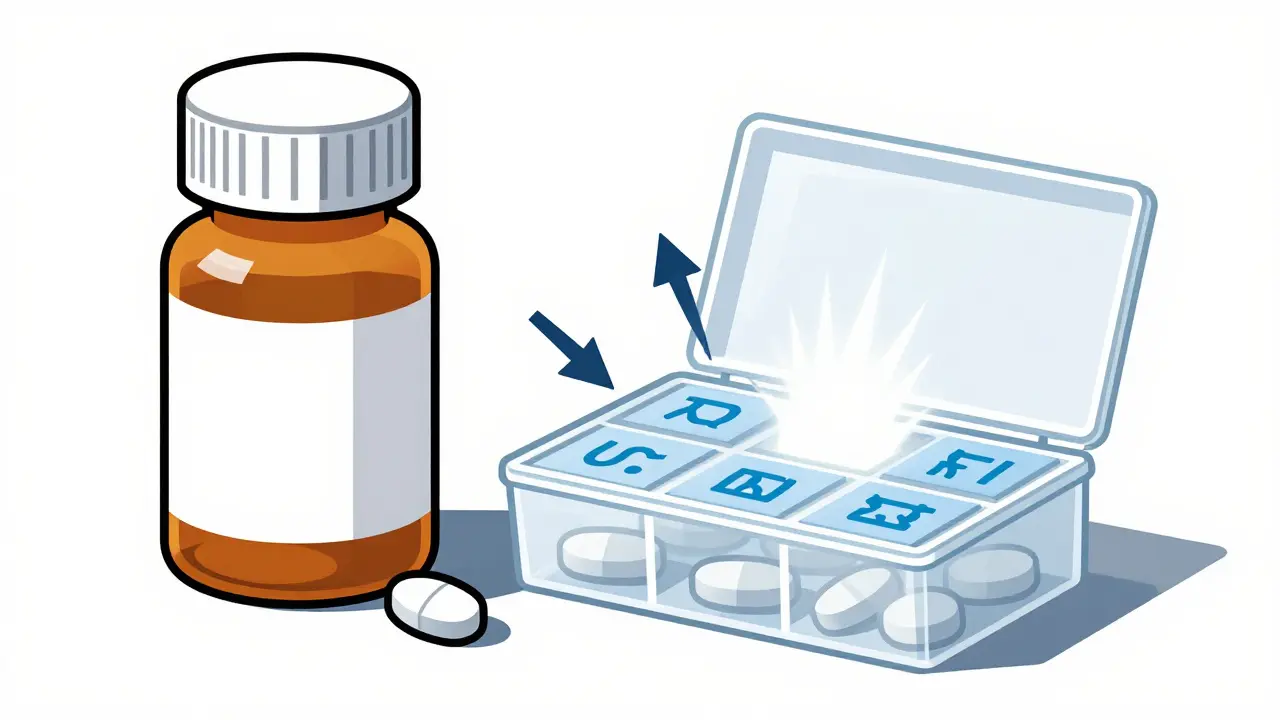
When you take medication out of its original bottle and put it into a pillbox or a pharmacy repackaging vial, you’re changing its environment. That change can make the drug less effective-or even unsafe. Most people assume that if the medicine is still within the manufacturer’s expiration date, it’s fine. But that’s not true. Once you move a pill out of its original sealed container, the clock resets. The stability of that medication is no longer guaranteed by the manufacturer. And without proper evaluation, you could be taking a drug that’s degraded, broken down, or contaminated.
Why Repackaged Medications Lose Stability
Medications are packaged with extreme care. Original bottles are made from high-density polyethylene (HDPE), often with desiccants inside to pull out moisture. They’re sealed with child-resistant caps and sometimes lined with aluminum foil to block light and oxygen. These systems are tested for years to ensure the drug stays potent until the printed expiration date. But when a pharmacy transfers those pills into a plastic vial or a plastic pill organizer, those protections vanish. Standard pharmacy vials have moisture vapor transmission rates up to twice as high as original manufacturer packaging. That means moisture gets in faster. Light hits the pills directly. Oxygen reacts with the active ingredients. And when multiple drugs are crammed into a single pillbox, they can interact chemically-causing discoloration, caking, or even chemical breakdown. A 2019 study in the Journal of Pharmaceutical Sciences showed albuterol sulfate tablets stored in standard pharmacy vials degraded by 15.7% in just 90 days. The same tablets in their original bottles degraded by only 3.2%. That’s more than a fourfold difference. And albuterol is relatively stable. Other drugs-like amoxicillin or nifedipine-are far more sensitive.What Degradation Looks Like in Practice
You can’t always see degradation, but you can spot warning signs. Look for:- Discoloration: Pills turning yellow, brown, or spotted
- Caking or sticking: Tablets or capsules clumping together
- Cracking or crumbling: Pills that break apart easily
- Odd smells: A strong chemical or sour odor
- Changes in texture: Pills that feel sticky, oily, or powdery
How Long Can Repackaged Medications Last?
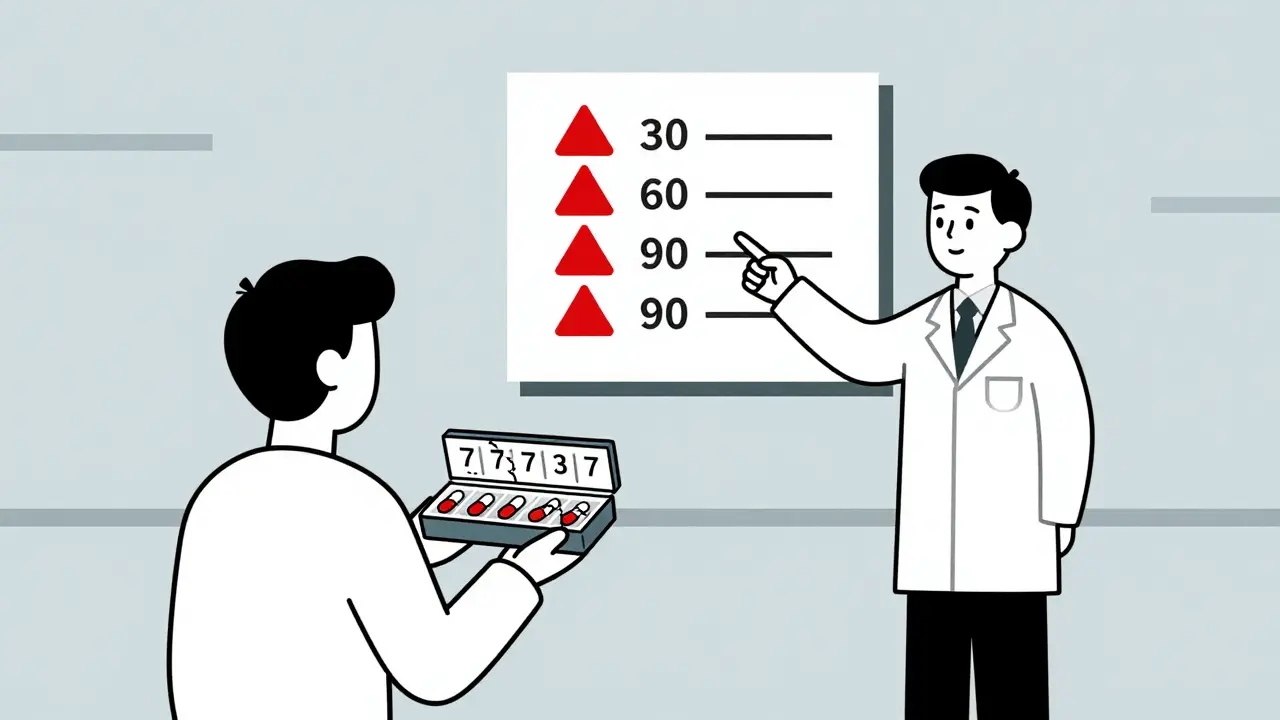
There’s no one-size-fits-all answer. It depends on the drug, the container, and the environment. But here’s what the science says:- 30 days: For moisture-sensitive drugs like amoxicillin, doxycycline, or metronidazole. Even with desiccants, these degrade fast.
- 60 days: For light-sensitive drugs like nifedipine, nitroglycerin, or riboflavin. These need amber vials or opaque pillboxes.
- 90 days: For stable drugs like atenolol, lisinopril, or metformin-only if stored in cool, dry, dark places.
- Never exceed 6 months: Even the most stable drugs shouldn’t be kept in repackaged form beyond this. The FDA and USP both recommend this as an absolute upper limit.
What You Should Do as a Patient or Caregiver
You don’t need a lab to protect yourself. Here’s how to stay safe:- Ask your pharmacist: When you get a repackaged prescription, ask: “What’s the expiration date for this container?” If they say “the same as the bottle,” walk away. That’s wrong.
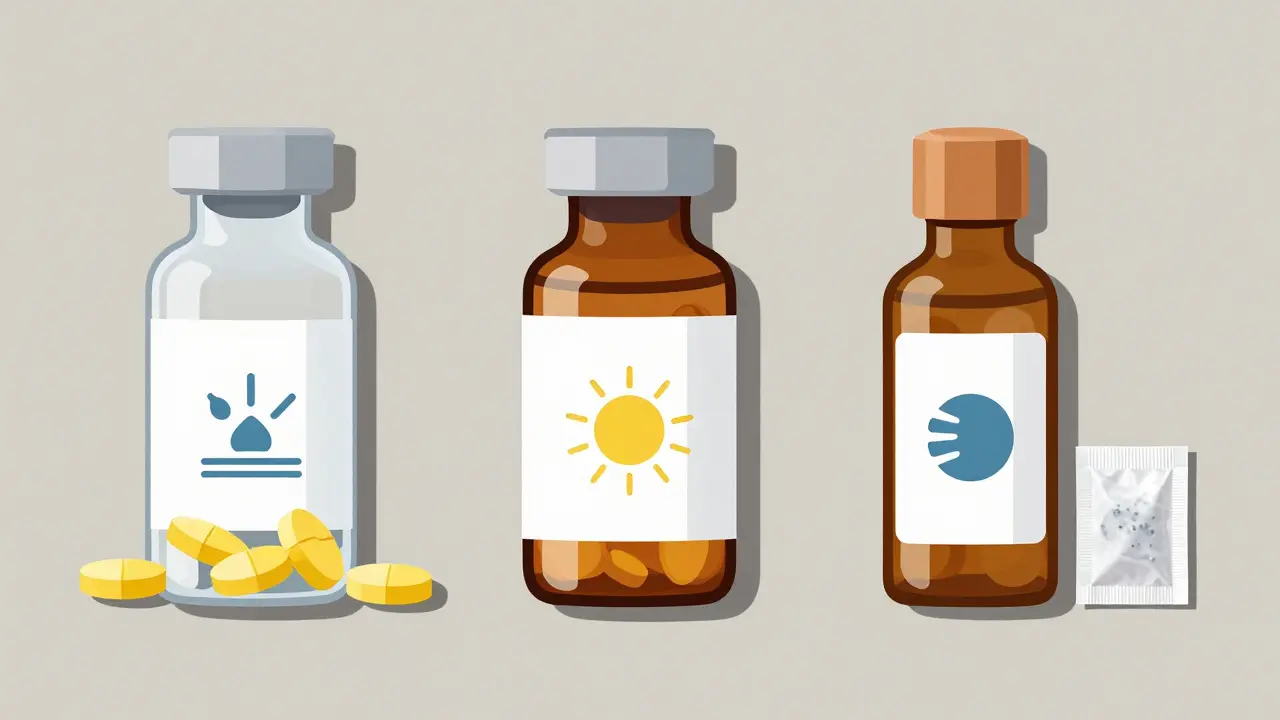
- Check the container: Is it amber? Does it have a desiccant pack? If it’s clear plastic and dry inside, it’s not safe for light- or moisture-sensitive drugs.
- Use pillboxes wisely: Don’t pre-fill more than 7-14 days at a time. The longer the pills sit in a plastic organizer, the higher the risk of interaction and degradation.
- Store properly: Keep repackaged meds in a cool, dry place-like a bedroom drawer, not the bathroom. Humidity from showers ruins pills fast.
- Discard if in doubt: If a pill looks, smells, or feels off, throw it out. No pill is worth the risk.
What Pharmacies Should Be Doing
Pharmacies that repackage medications are legally required to establish their own expiration dates. The FDA’s 2023 warning letter to a major pharmacy chain made this clear: failing to assign proper expiration dates for repackaged drugs is a critical violation. The consequences? Shutdowns, fines, and most importantly-patient harm. Best practices include:- Testing with HPLC: High-performance liquid chromatography is the gold standard. It detects degradation products as low as 0.05%. Hospitals with labs use this. Independent pharmacies often don’t-but they should still follow conservative timelines.
- Using desiccants: A simple silica gel pack in each vial can extend stability by up to 47%, according to a 2023 ISMP trial.
- Grouping by stability: High-risk drugs (like warfarin, digoxin, or insulin) should never be repackaged unless tested. Lower-risk drugs can use “bracketing”-grouping similar drugs (e.g., all beta-blockers) and applying the same expiration based on the least stable one.
- Training staff: Since January 2024, PCAB-accredited pharmacies must provide 8 hours of annual stability training to pharmacists overseeing repackaging.
The Bigger Picture: Why This Matters
The FDA found that 22% of repackaged medications tested beyond 90 days showed degradation beyond acceptable limits. Compare that to just 3% of original-packaged drugs. That’s a sevenfold increase in risk. And it’s not just about potency. Degraded drugs can form toxic byproducts. A 2021 study in the Journal of Chromatography B found that degraded antihypertensive drugs produced compounds that could irritate the liver or kidneys. These aren’t theoretical risks. They’re documented. The cost of ignoring this? The Congressional Budget Office estimated $1.2 billion in preventable adverse events and wasted medication each year. But the real cost is measured in hospital visits, ER trips, and lives lost.What’s Coming Next
The USP is finalizing General Chapter <1790> on Repackaged Drug Product Stability, expected in late 2024. It will require:- Minimum sample sizes of 12 units per test point
- At least three testing intervals for products used under 90 days
- Standardized container closure integrity testing
Final Takeaway
Your medication’s expiration date isn’t written in stone once it leaves the original bottle. It’s a new clock, starting the moment it’s repackaged. You can’t trust the label on the big bottle anymore. You need to ask questions, check conditions, and act on what you see. If your pharmacist can’t tell you how long your repackaged pills will stay safe-find one who can. Your health isn’t worth guessing.Can I use the manufacturer’s expiration date on repackaged pills?
No. The manufacturer’s expiration date only applies if the drug remains in its original sealed container with the original desiccant and closure system. Once a pill is moved into a pharmacy vial or pillbox, the packaging environment changes, and degradation can occur faster. The FDA explicitly states that pharmacies must assign new expiration dates based on stability testing or conservative guidelines-not the original label.
How do I know if my pillbox meds are still good?
Look for physical changes: discoloration, caking, cracking, or unusual smells. If pills are sticking together or turning yellow or brown, they’ve likely degraded. Even if they look fine, don’t use pillbox medications older than 14 days unless you’ve confirmed stability with your pharmacist. For high-risk drugs like blood thinners or heart medications, never exceed 7 days in a pillbox.
Are desiccant packs really that important?
Yes. A 2023 ISMP trial showed that adding a simple silica gel desiccant pack to repackaged medication containers extended stability by 47%. This is especially critical for moisture-sensitive drugs like antibiotics (amoxicillin), antifungals (ketoconazole), or seizure medications (phenytoin). Always check if your pharmacy includes one-and if not, ask them to.
Can I store repackaged meds in the fridge?
Only if the original manufacturer’s instructions say to. Most solid oral medications don’t need refrigeration. In fact, putting them in the fridge can cause condensation when taken out, which introduces moisture and speeds up degradation. Store them at room temperature, in a cool, dry, dark place-like a bedroom drawer-away from heat and humidity.
What should I do if my pharmacy won’t give me a new expiration date?
Ask for the pharmacy’s written policy on repackaged medication stability. If they can’t provide one, request your medication in original bottles. If that’s not possible, consider switching to a pharmacy that follows USP and FDA guidelines. You can also report unsafe practices to your state pharmacy board. Patient safety is non-negotiable.


Write a comment