

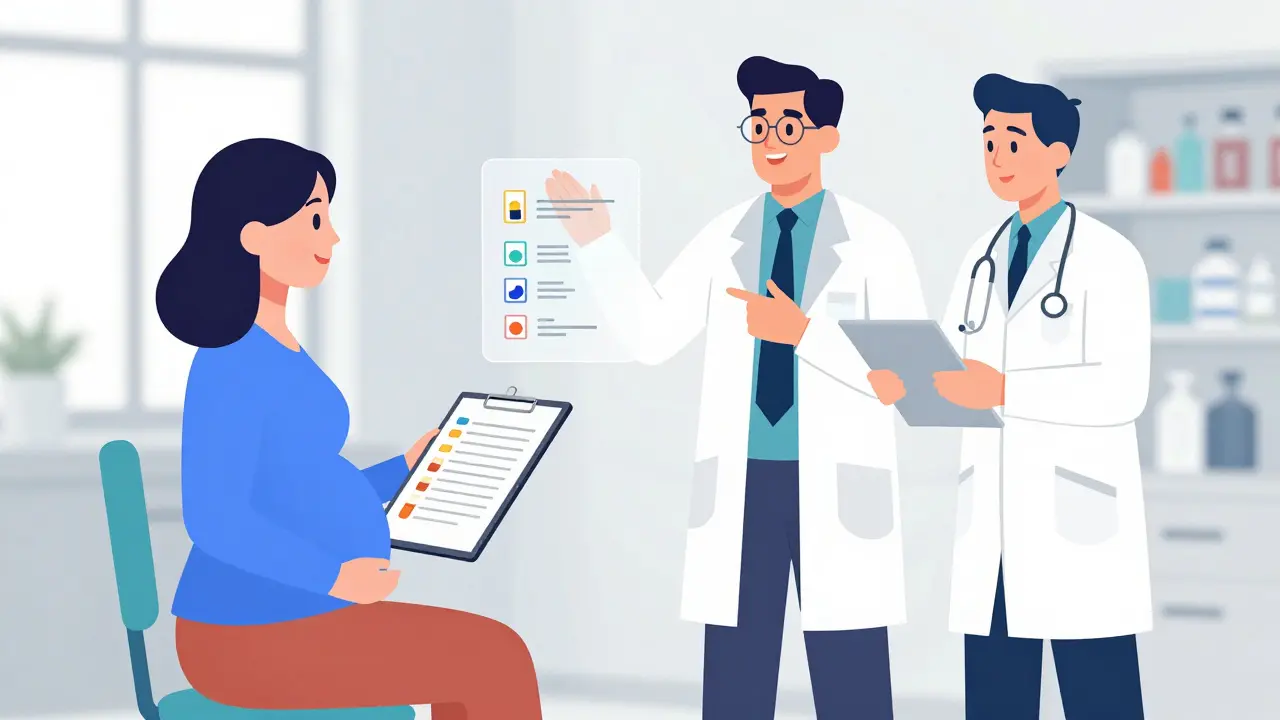
When you're pregnant or planning to breastfeed, taking any medication - even something as simple as an ibuprofen or an antidepressant - isn't just about your body anymore. It’s about the baby growing inside you, and later, the one nursing at your breast. Yet, too often, these conversations don’t happen the way they should. Providers rush through appointments. Patients are afraid to ask. And when they do, they get vague answers like "it’s probably fine" or "avoid it just in case." That’s not enough. Medication safety during pregnancy and breastfeeding isn’t about fear. It’s about informed choice.
Why This Conversation Can’t Wait
About 90% of pregnant people in the U.S. take at least one medication during pregnancy. That’s not rare. It’s normal. And 70% of them are on prescription drugs - for high blood pressure, diabetes, depression, asthma, seizures, or chronic pain. Stopping these meds cold turkey can be just as dangerous as taking them. Untreated depression increases the risk of preterm birth. Uncontrolled seizures can harm the fetus. High blood pressure can lead to preeclampsia. The real danger isn’t the medication. It’s the silence around it. The old letter system - A, B, C, D, X - is gone. It was too simplistic. Today, the FDA uses a more detailed labeling system that breaks down risks by trimester and includes data on human studies, animal research, and potential benefits. But knowing the label isn’t the same as understanding what it means for you. A drug labeled "C" doesn’t mean "dangerous." It means there’s limited human data. And sometimes, that’s still the best option.When to Start Talking
This isn’t a one-time talk at your first prenatal visit. It’s a process with three key moments.- Preconception: If you’re trying to get pregnant, review all your meds with your provider - even over-the-counter ones. Some drugs, like isotretinoin (Accutane), must be stopped months before conception. Others, like certain antidepressants, can be safely continued with monitoring.
- During pregnancy: Every prenatal visit should include a quick medication check. Not just new prescriptions, but any changes in dose, brand, or reason for use. A 2022 study found that 40% of pregnant patients stopped necessary meds without telling their doctor because they were scared. Don’t be one of them.
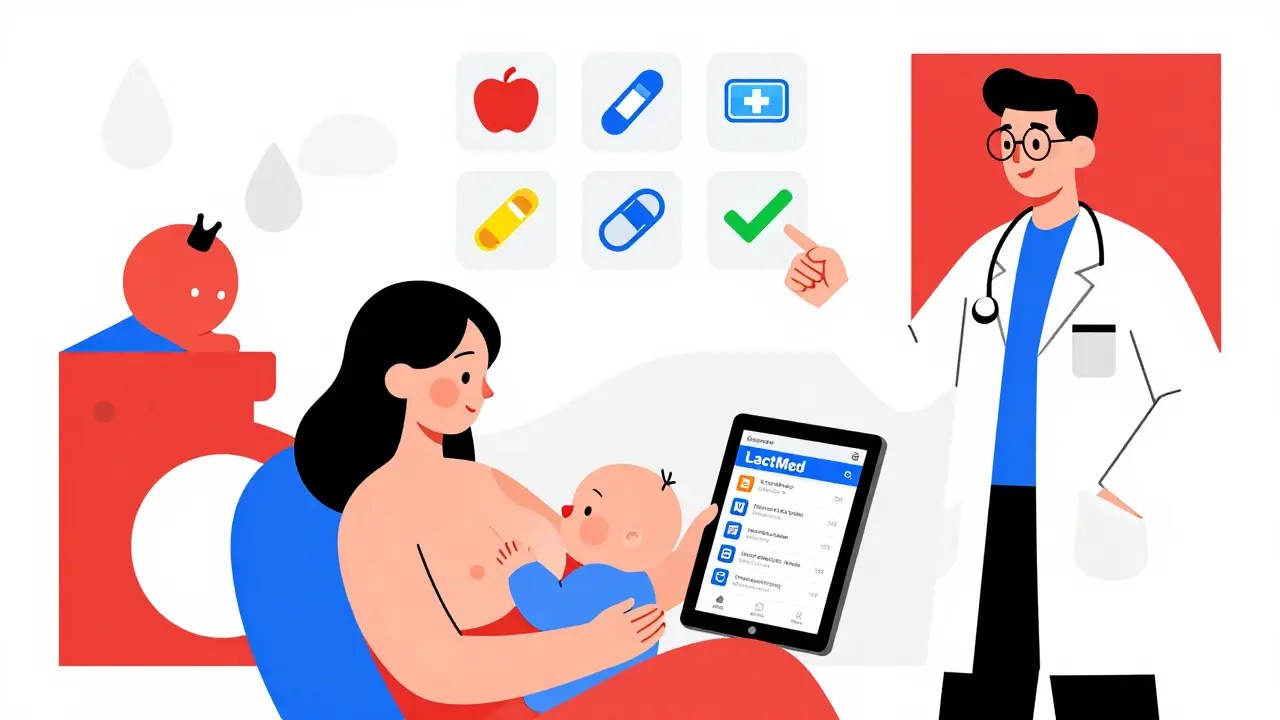
- Postpartum and breastfeeding: Your body changes again after birth. Some meds that were safe during pregnancy aren’t safe while nursing. Others become safer. LactMed, a free database from the National Library of Medicine, tracks how drugs pass into breast milk and their effects on infants. Use it. Ask your pharmacist to use it with you.
What You Need to Ask
Don’t wait for your provider to bring it up. Be ready with these questions:- Is this medication necessary? Could I manage this condition without it - through diet, therapy, or lifestyle changes?
- What’s the actual risk? Not "it’s risky," but "1 in 1,000 babies exposed to this drug had a heart defect." Numbers help you weigh it.
- Is there a safer alternative? For pain, acetaminophen is still the only recommended option in all trimesters. For anxiety, certain SSRIs like sertraline have the most data supporting safety in pregnancy and breastfeeding.
- What if I don’t take it? What happens to me? To the baby?
- Can I get a printed fact sheet? MotherToBaby offers free, evidence-based handouts on over 1,800 medications. Print one. Bring it to your next visit.
What Your Provider Should Do
Good providers don’t just give you a yes or no. They guide you through a decision.- They use standardized tools like the TERIS database or Lexicomp’s OB/GYN Toolkit, which are updated quarterly and based on real-world data from over 300,000 pregnancy cases.
- They document the discussion in your chart using ICD-10 codes like Z33.1 (pregnancy incidental) or Z34.00 (normal pregnancy supervision).
- They coordinate with your pharmacist. Many clinics now have pharmacists embedded in OB/GYN teams. They’re trained to catch interactions and adjust doses.
- They don’t assume you’re on birth control. Even if you think you’re not pregnant, always say so - especially in emergency rooms. One study found 43% of pregnant women got ibuprofen after 20 weeks because no one asked if they were pregnant.
What to Avoid
Some things are red flags:- "I’ve never heard of this drug being a problem." That’s not evidence. It’s an opinion.
- "Just stop it." No context. No plan. No backup.
- "Look it up online." Google results for "safe meds while pregnant" are wrong 57% of the time, according to a 2022 study. Reddit threads, Instagram influencers, and Facebook groups are not medical sources.
- "We’ll just monitor." If you’re on a high-risk drug, you need a clear plan - not just vague monitoring.
Real Stories, Real Choices
One patient, 32, with bipolar disorder, was told to stop her mood stabilizer during pregnancy. She did - and had a severe depressive episode at 28 weeks. She was hospitalized. Her baby was born early. She later found out sertraline was safe and effective. She wished she’d asked for alternatives sooner. Another, 29, was prescribed a steroid for asthma. Her OB said it was fine. Her pharmacist said the same. But her friend on Instagram warned her about cleft palate. She panicked and stopped. Her asthma flared. She ended up in the ER. The steroid was the right call. The fear wasn’t. The difference? One had a provider who said, "The risk of cleft palate with this steroid is 1 in 1,000. The risk of your baby being born without oxygen because your asthma isn’t controlled? That’s 1 in 50." That’s the kind of clarity you need.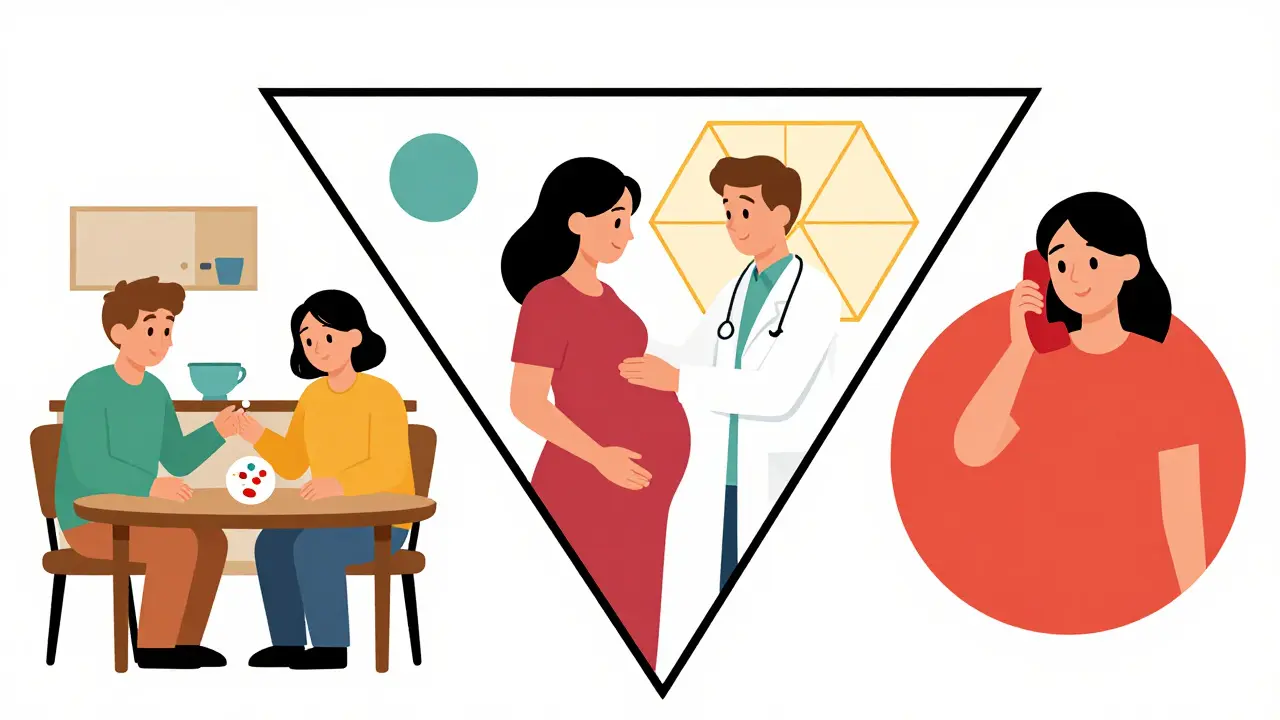
What If Your Provider Won’t Talk?
If your provider brushes you off, doesn’t use evidence-based tools, or dismisses your concerns - you have options.- Ask for a referral to a maternal-fetal medicine specialist. They handle high-risk pregnancies and are trained in medication safety.
- Call MotherToBaby at 1-800-733-4727. It’s free, confidential, and staffed by specialists who’ve reviewed thousands of cases.
- Use the LactMed app (free on iOS and Android). It gives you instant access to breastfeeding safety data for over 700 drugs.
- Bring a friend or partner to your appointment. Two ears hear better than one.
The Bigger Picture
This isn’t just about individual patients. It’s about systems. Only 35% of rural clinics have access to teratology specialists. Medicaid patients are half as likely to get a documented medication review as those with private insurance. That’s not fair. That’s not safe. But things are changing. Starting in 2025, all OB/GYN residents in the U.S. must be trained in medication safety communication. CMS now requires documentation of these discussions for full reimbursement. Hospitals using Epic and Cerner now have built-in alerts that flag unsafe prescriptions during pregnancy. You’re not just a patient. You’re part of the solution. Ask. Push. Bring the facts. Use the tools. And if your provider can’t give you clear, evidence-based answers - find someone who can.Is it safe to take antidepressants while pregnant or breastfeeding?
Yes, many antidepressants are considered safe. Sertraline and fluoxetine have the most data supporting use during pregnancy and breastfeeding. Stopping them can lead to severe depression, which carries higher risks for both mother and baby than the medication itself. Always work with your provider to choose the lowest effective dose and monitor closely.
Can I take ibuprofen while pregnant?
Avoid ibuprofen after 20 weeks of pregnancy. It can cause low amniotic fluid and heart problems in the baby. Acetaminophen (Tylenol) is the only recommended pain reliever for all trimesters. If you need stronger pain relief, talk to your provider about alternatives - don’t self-medicate.
What if I took a medication before I knew I was pregnant?
Don’t panic. Most medications taken in the first few weeks after conception either have no effect or cause an "all-or-nothing" outcome - meaning if the embryo was harmed, it wouldn’t survive. If you’re concerned, contact MotherToBaby or your OB. They can assess the specific drug, timing, and dose to give you accurate risk information.
Are herbal supplements safe during pregnancy?
Many are not. Unlike prescription drugs, supplements aren’t tested for safety in pregnancy. Herbs like black cohosh, dong quai, and goldenseal can stimulate contractions or affect hormone levels. Always tell your provider about every supplement you take - even if you think it’s "natural."
How do I know if a medication is safe for breastfeeding?
Use LactMed, a free, science-backed database from the National Library of Medicine. It tells you how much of the drug passes into breast milk and whether it’s been linked to side effects in infants. Most medications are safe in small amounts, but timing matters - take doses right after nursing to minimize exposure.


Write a comment