
Medication List Checklist
Why This Matters
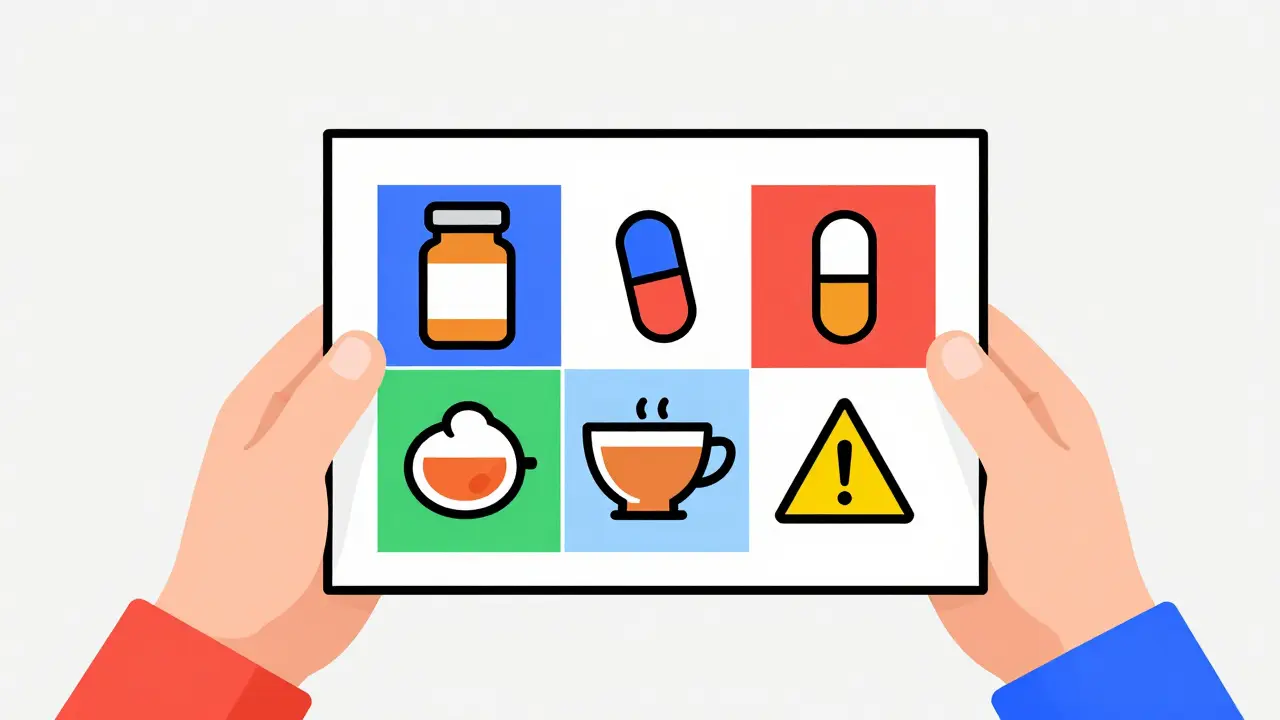
Your medication list is your lifeline. Inaccurate lists cause over 1.5 million ER visits annually. Include every pill, supplement, and OTC medication to prevent dangerous interactions.
Did you know? 30% of unexpected drug reactions happen because OTC meds and supplements were left off medication lists.
Complete Your Safety Checklist
Important: This checklist covers essential elements, but your list should also include the latest updates to your medications.
Your Safety Score
Checklist completion: 0%
Every year, more than 1.5 million people in the U.S. end up in the emergency room because of medication mistakes. Many of these cases happen because doctors don’t know what a patient is really taking. It’s not always about prescription drugs. It’s the ibuprofen you take for your back, the magnesium supplement you started last month, the herbal tea your sister swore by for sleep. If it’s in your body, it matters. And if your doctor doesn’t know about it, you’re at risk.
Why Your Medication List Is Your Lifeline
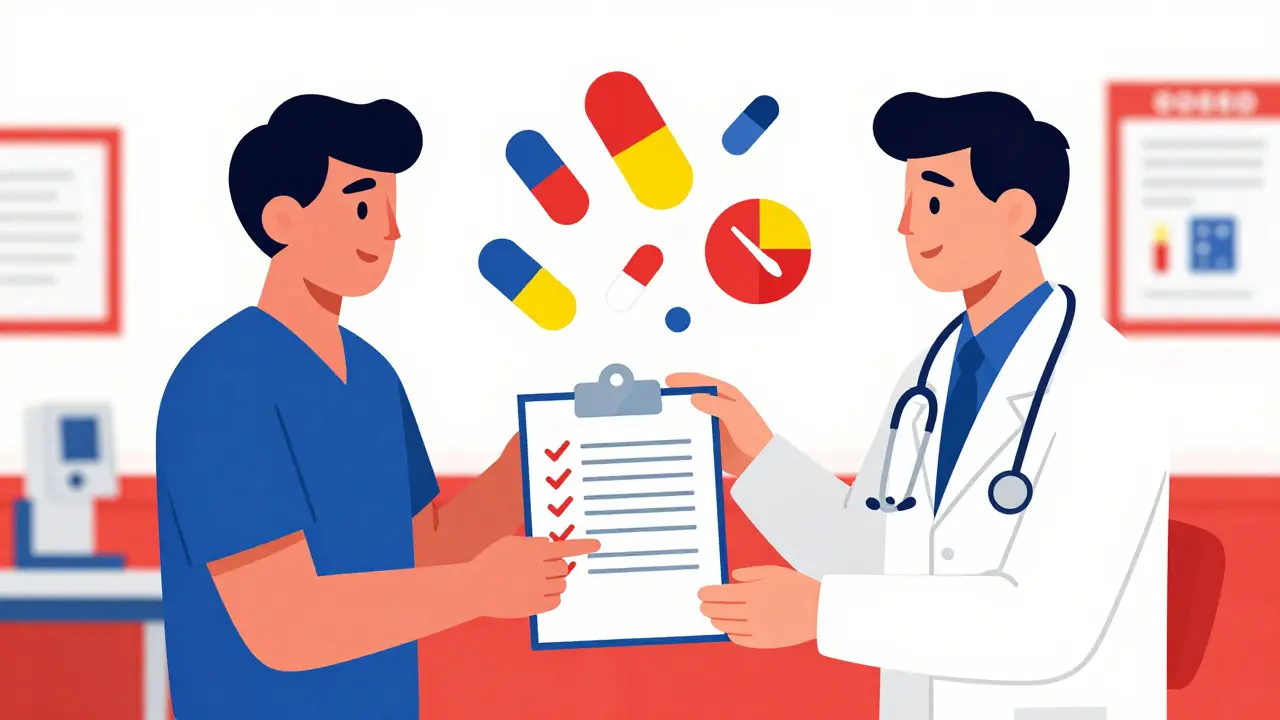
A personal medication list isn’t just a good idea - it’s a safety net. When you’re rushed to the hospital after a fall, or you’re being treated for something unexpected, the first thing the medical team needs to know is what’s in your system. A mistake here can mean the difference between recovery and a life-threatening reaction. The FDA and CDC both say the same thing: inaccurate medication lists are one of the top causes of preventable harm in healthcare. About half of all medication errors during hospital transfers happen because the list was outdated or incomplete. That’s not a small number. That’s half of all avoidable mistakes. And it’s not just older adults. While 74% of people over 65 keep a list, nearly 40% of adults between 40 and 79 are taking five or more medications - including supplements. If you’re on even three different prescriptions, you’re already in the high-risk zone for dangerous interactions.What to Put on Your List
Your list needs to be thorough. Not just the big-name drugs. Every single thing you take, every day. Here’s exactly what to include:- Brand and generic names - Write both. If your doctor sees "Lipitor," they might not know you’re also taking atorvastatin. Same thing if you’re on a generic version.
- Dosage and strength - Not just "take one pill." Write "10 mg daily" or "500 mg twice a day." If you take different doses on different days, note that too.
- Why you’re taking it - Is this for high blood pressure? Anxiety? Aching knees? Writing the reason helps your doctor spot duplicates or unnecessary drugs.
- When and how to take it - "Take with food," "take on an empty stomach," "take at bedtime." These details matter. Some drugs interact with food. Others cause drowsiness.
- Over-the-counter (OTC) drugs - This is where most people fail. Painkillers like ibuprofen or acetaminophen, antacids, sleep aids, cold meds - all go on the list. Dr. Sarah Ahmed’s research shows 30% of unexpected reactions happen because OTC meds were left off.
- Vitamins and supplements - Fish oil, vitamin D, turmeric, melatonin, ginseng - yes, even the "natural" stuff. Some herbs can interfere with blood thinners, blood pressure meds, or even chemotherapy.
- Allergies and bad reactions - Not just "allergic to penicillin." Write what happened. "Rash after amoxicillin," "swelling after aspirin," "severe nausea with codeine." Details save lives.
- Physical description of pills - Color, shape, markings. If you’re ever confused about a pill, or someone gives you a new bottle, this helps you verify it’s the right one. Pfizer’s safety guide says this simple step cuts confusion by up to 40%.
- Emergency contacts - Who to call if you can’t answer. A family member, a friend, your pharmacist. Put their name and phone number on the list.
How to Keep It Updated
A list that’s out of date is worse than no list at all. It gives false confidence. Here’s how to stay on top of it:- Update it immediately - Every time you start, stop, or change a dose. Don’t wait for your next doctor visit. Do it the same day.
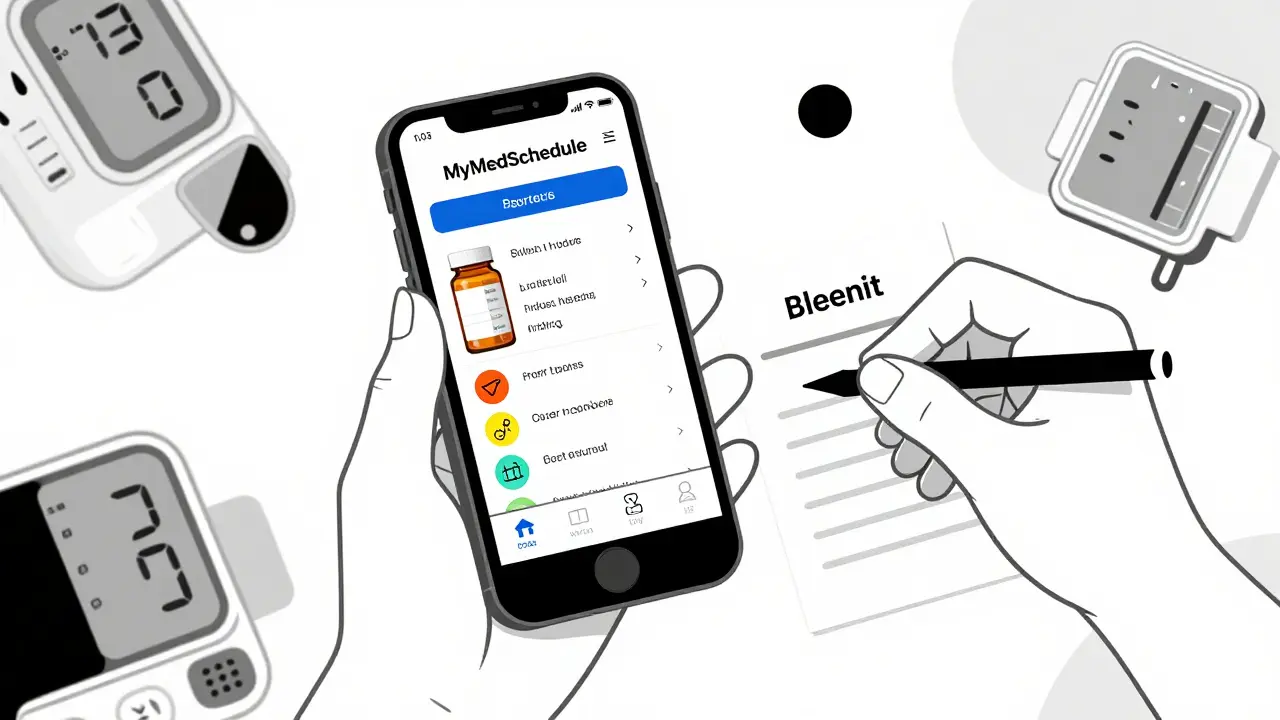
- Use one system - Paper, app, or digital form. Pick one and stick with it. The FDA’s "My Medicines" template is free and easy to print. Apps like MyMedSchedule (updated in 2024) let you take a photo of your pill bottle and auto-fill the details. NIH testing shows 92% accuracy.
- Carry it with you - Keep a printed copy in your wallet or purse. Or save it in your phone’s notes app with a clear title like "My Medications - Emergency." If you’re in an accident, first responders need to see it fast.
- Share it with everyone - Not just your GP. Dentists, physical therapists, chiropractors, even your optometrist. Many medications affect your eyes, your balance, your jaw, your ability to heal. They all need to know.
- Use the same pharmacy - CVS, Walgreens, or your local pharmacy. When all your prescriptions go through one place, they can flag potential interactions before you even pick up the bottle. Patients who use one pharmacy have 37% fewer drug clashes.
Tools That Actually Work
There are tons of apps and gadgets out there. Most are gimmicks. But a few have real proof behind them:- MyMedSchedule (FDA-backed app) - Lets you snap a photo of your pill. The app recognizes the imprint, color, and shape, then fills in the details. Works even if the label is faded.
- QR code templates (CDC, 2024) - Print your list on paper with a QR code. Scan it with your phone and it links to up-to-date interaction warnings and dosage guides. Great for older adults who aren’t tech-savvy.
- Pill organizers with alarms - Not just for memory. When you use a weekly pill box and your list matches it exactly, you’re 45% more likely to take your meds right. Walgreens’ 2022 study proved it.
- Barcode scanner apps - Some pharmacies and health systems (like University of Michigan) let you scan your pill bottle’s barcode to auto-update your digital list. Error rate dropped by 63% in their older adult group.
What Not to Do
Avoid these common traps:- Don’t rely on memory - Even if you’ve been on the same meds for 10 years, your body changes. Your liver processes drugs differently as you age. Your kidneys slow down. What was safe last year might not be this year.
- Don’t skip the supplements - "It’s just a vitamin" is a dangerous lie. St. John’s Wort can make your antidepressant useless. Calcium can block thyroid meds. Garlic supplements thin your blood - big problem before surgery.
- Don’t wait for a crisis - Don’t wait until you feel dizzy, confused, or nauseous to update your list. That’s too late. Update it before the problem happens.
- Don’t keep it in a drawer - If it’s not accessible in an emergency, it’s useless. Keep it with you. Or give a copy to someone you trust.
Why This Matters in Australia Too
You might think this is an American issue. It’s not. Australia’s Therapeutic Goods Administration (TGA) has the same warnings. In Sydney, Melbourne, and Brisbane, emergency departments see dozens of cases each week where patients didn’t tell doctors about their supplements or OTC meds. The TGA recommends the same checklist: full names, doses, reasons, allergies. Even if you’re on Medicare or have private insurance, no system is perfect. Pharmacists can miss interactions. Doctors can overlook a note. But your list? That’s yours. And it’s the one thing no system can replace.Start Today
You don’t need to be sick to make this list. You don’t need to be old. You just need to be smart. Grab a piece of paper. Or open a note on your phone. Start writing. Don’t worry about making it perfect. Just get everything down. Then, update it next week. Then again after your next doctor visit. This isn’t about bureaucracy. It’s about control. It’s about knowing what’s in your body - and making sure no one else makes a mistake with it. Medication safety starts with you. Not your doctor. Not your pharmacist. You.Do I need to list vitamins and supplements on my medication list?
Yes. Vitamins, herbal remedies, protein powders, and supplements are part of your medication list. Many cause dangerous interactions - for example, St. John’s Wort can reduce the effectiveness of birth control, antidepressants, and blood thinners. Garlic and ginkgo can increase bleeding risk before surgery. The CDC and FDA both stress that OTC and supplement omissions cause about 30% of unexpected drug reactions.
Should I include medications I stopped taking?
Yes, but mark them clearly as "discontinued" with the date you stopped. This helps doctors avoid prescribing something you’ve already had a bad reaction to. For example, if you had severe nausea from codeine six months ago, your doctor should know you’re no longer taking it - and avoid prescribing it again.
Can I use a smartphone app instead of paper?
Absolutely. Apps like MyMedSchedule (FDA-approved) let you take photos of pill bottles and auto-fill details with 92% accuracy. Digital lists are easier to update and share. But always have a printed backup. Phones can die, apps can crash, and emergency responders might not have access to your cloud data.
How often should I update my medication list?
Update it immediately after any change - whether you start a new drug, stop one, or change the dose. The Agency for Healthcare Research and Quality found that 35% of medication errors happen because the list was outdated. Waiting for your next doctor’s visit is too risky.
What if I don’t know the generic name of my medicine?
Write the brand name and ask your pharmacist for the generic version. Most pharmacies print the generic name on the label. If you’re unsure, take the bottle to your pharmacist - they’ll help you identify it. Never guess. Incorrect names can lead to dangerous duplication or missed interactions.
Is it safe to share my medication list with non-medical people?
Yes - but only with trusted people who can help in an emergency. Give a copy to a family member, close friend, or caregiver. Make sure they know where you keep it and how to access it if you’re unconscious. Your list isn’t private in the same way as your medical records - it’s a safety tool, not a secret.
Do I need to bring my list to every doctor visit?
Yes. Even if you’ve been seeing the same doctor for years. Medications change. New ones get added. Old ones get stopped. Your list is the only thing that gives them the full picture. Many doctors now ask for it upfront. Don’t wait to be asked - bring it every time.
Can my pharmacist help me make a medication list?
Yes. Pharmacists are trained to review your entire medication history - including OTC and supplements. Ask them to print a complete list for you. Many pharmacies now offer free medication reviews. This is especially helpful if you use multiple pharmacies or have prescriptions from different doctors.
What if I take a lot of medications? Will the list get too long?
Long lists are common - and necessary. People over 65 often take 5-10 medications. The goal isn’t to shorten it. The goal is to make it accurate. Use a digital tool with search or sorting features. Or print two copies: one detailed, one simplified with only the most critical info (like blood thinners, insulin, or seizure meds) for emergencies.
Can a medication list prevent falls in older adults?
Yes. The CDC found that medications affecting the central nervous system - like sleep aids, antidepressants, and some painkillers - increase fall risk by 50% in older adults. A complete list helps doctors identify and reduce these risky drugs. If you’re dizzy, unsteady, or have fallen before, your list is the first tool your doctor will use to find the cause.


Write a comment