


C. diff Risk Calculator
Assess Your Risk
This tool estimates your risk of developing antibiotic-induced diarrhea or C. diff infection based on your antibiotic treatment.
Your Risk Assessment
When you take an antibiotic to fight an infection, you expect to feel better. But for many people, the side effect isn’t just a stomachache-it’s severe, watery diarrhea that won’t go away. In some cases, it’s not just a side effect. It’s a dangerous infection caused by Clostridioides difficile, or C. diff. This isn’t rare. Every year in the U.S., about 500,000 people get C. diff after taking antibiotics, and nearly 30,000 die within a month. The problem isn’t the antibiotic itself-it’s what it does to your gut.
Why Antibiotics Cause Diarrhea
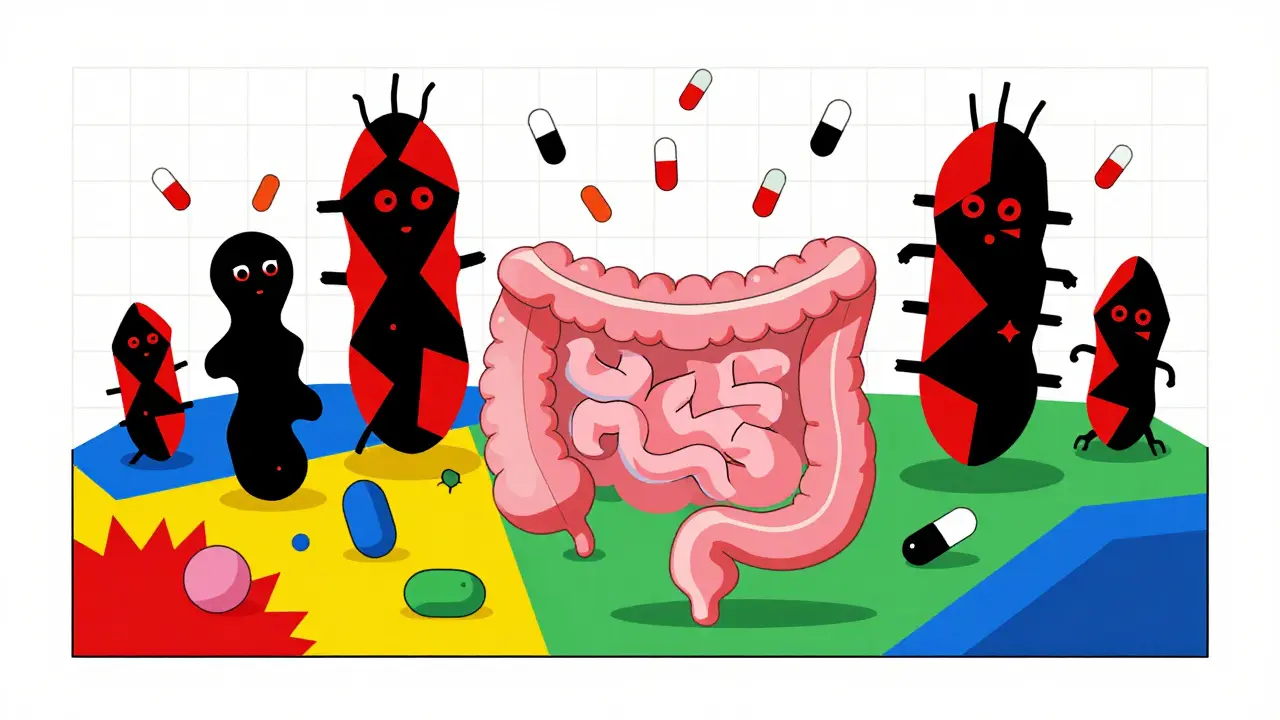
Your gut is full of bacteria-trillions of them. Most are harmless. Some are even helpful. They help digest food, make vitamins, and keep bad bugs from taking over. When you take an antibiotic, it doesn’t just kill the bacteria causing your infection. It wipes out good bacteria too. This throws your gut off balance. Without enough good bacteria to keep things in check, C. diff can grow unchecked. C. diff is a tough bug. It doesn’t just live in your gut-it forms spores. These spores can survive on doorknobs, bed rails, and even your phone for months. They’re not killed by hand sanitizer. Only soap and water can wash them away. That’s why hospitals are high-risk places: people are on antibiotics, they’re in close contact, and spores are everywhere. Not every case of diarrhea after antibiotics is C. diff. In fact, about two out of three cases aren’t. But when diarrhea is severe, watery, and lasts more than a few days, especially with fever or abdominal pain, C. diff should be suspected. And it’s not just older adults. While people over 65 are at highest risk, younger people on broad-spectrum antibiotics are getting it too.Which Antibiotics Are Most Likely to Cause C. diff?
Some antibiotics are much more likely to trigger C. diff than others. The biggest culprits are:- Fluoroquinolones (like ciprofloxacin and levofloxacin)
- Third- and fourth-generation cephalosporins (like ceftriaxone and cefepime)
- Clindamycin
- Carbapenems (like meropenem)
How C. diff Is Diagnosed
There’s no single test that gives a clear yes or no. Doctors use a two-step process. First, they test stool for something called glutamate dehydrogenase (GDH), which tells them if C. diff is present. If that’s positive, they test for the actual toxins the bacteria produce. Some places use a DNA test (NAAT) to detect the bacteria’s genes, but that can pick up harmless carriers-people who have the bug but aren’t sick. That’s why toxin testing matters. If you’re not having diarrhea, you probably don’t have an active infection, even if the test is positive. The CDC says stool samples must be unformed-not loose, not hard. And you can’t have taken laxatives in the last 48 hours. If your stool is too solid, the test won’t work. Many people wait days to get tested because their doctor doesn’t suspect C. diff at first. They think it’s a virus or food poisoning. That delay can mean the infection spreads.How It’s Treated Today
Treatment depends on how bad it is. For mild cases, the first choice is either vancomycin or fidaxomicin. Both are taken by mouth. Vancomycin costs about $1,650 for a full course. Fidaxomicin costs over $3,350-but it’s better at keeping the infection from coming back. In studies, 13% of people on fidaxomicin had a recurrence, compared to 22% on vancomycin. That difference matters. Recurrent C. diff is harder to treat, and each recurrence makes the next one more likely. Metronidazole used to be the go-to drug. But it’s not anymore. Studies show it fails in 30-40% of cases now. It’s also less effective at killing the toxin. The CDC says it’s no longer recommended as first-line treatment. It’s only used if the other drugs aren’t available or too expensive. For severe cases-where your white blood cell count is high or your kidneys are stressed-doctors still use vancomycin or fidaxomicin. But if you’re in critical condition-low blood pressure, bloated belly, or a swollen colon-they add intravenous metronidazole and may give vancomycin through the rectum. This is life-saving, but it’s rare. Most people don’t get this bad.
What Not to Do
Don’t take anti-diarrhea meds like loperamide (Imodium). They might make you feel better for a few hours, but they trap the toxin in your colon. That can make things worse-sometimes dangerously so. The Cleveland Clinic warns this can lead to toxic megacolon, a life-threatening condition where the colon swells and can rupture. Also, don’t stop your antibiotic just because you have diarrhea. Unless your doctor says so, finish the full course. Stopping early can make your original infection worse or lead to antibiotic resistance. The goal is to treat the C. diff without letting the original infection come back.What Happens When It Comes Back
About 20% of people who get C. diff have it again. For some, it’s once. For others, it’s three, four, even seven times. Each recurrence makes the next one more likely. That’s because every antibiotic you take after a C. diff infection knocks out more good bacteria, giving C. diff another chance to grow. For a first recurrence, doctors often repeat the same antibiotic. But for second or later recurrences, they use a different approach: a vancomycin taper. You start with 125mg four times a day for 10 to 14 days, then cut back to twice a day for a week, then once a day for another week, and finally every two or three days for up to eight weeks. This slow withdrawal gives your gut time to rebuild its good bacteria. Fidaxomicin can also be used with rifaximin-a non-absorbed antibiotic that stays in the gut-to prevent more recurrences.Fecal Transplants: A Game-Changer
When all else fails, fecal microbiota transplantation (FMT) works. It’s not as gross as it sounds. Healthy donor stool is processed, turned into a liquid, and delivered through a colonoscopy, capsule, or enema. The goal? Rebuild your gut with good bacteria. FMT works in 85-90% of cases after multiple recurrences. In 2022, the FDA approved Rebyota, the first FDA-approved FMT product. In April 2023, they approved Vowst, a pill form made of bacterial spores. These aren’t experimental anymore-they’re standard care for people who’ve failed antibiotics. Patients who’ve had FMT often say it changed their lives. One person on a patient forum wrote, “After 7 recurrences over 18 months, one FMT cleared my infection permanently-I wish I hadn’t waited so long.”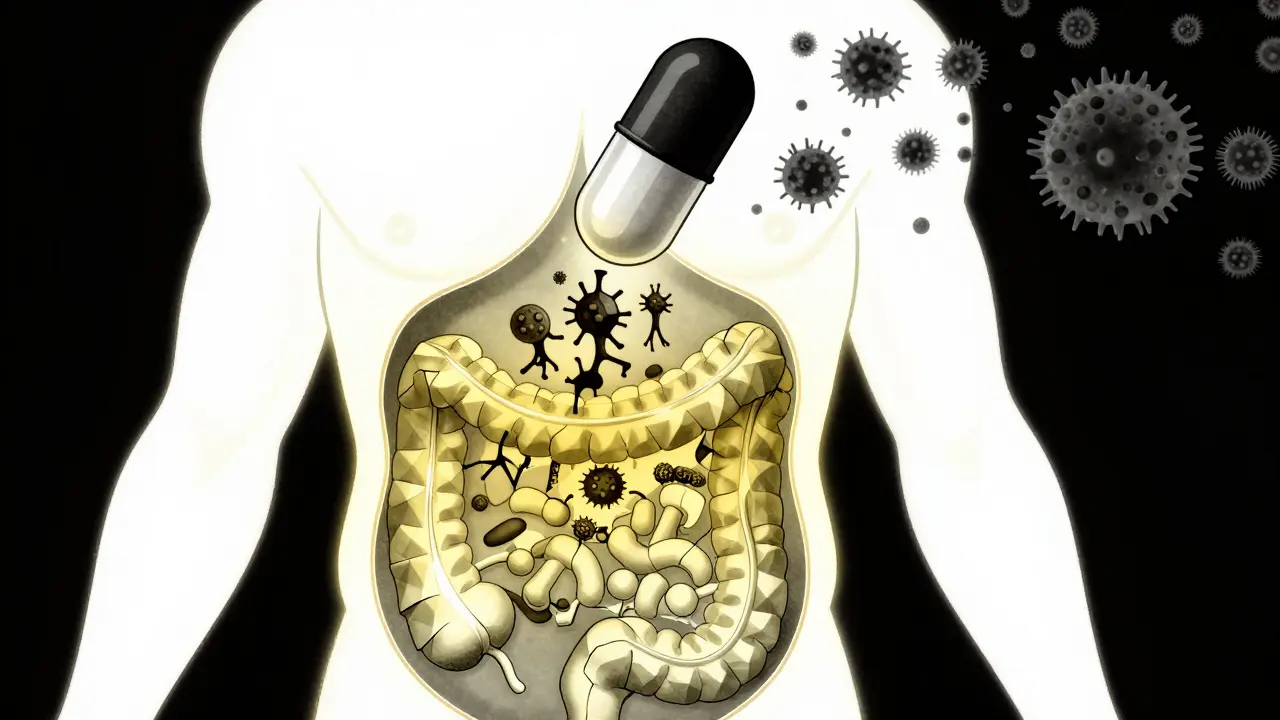
Monoclonal Antibodies and New Drugs
There’s another tool: bezlotoxumab (Zinplava). It’s not an antibiotic. It’s a lab-made antibody that neutralizes one of C. diff’s toxins. It’s given as a single IV infusion during antibiotic treatment. In clinical trials, it reduced recurrences by 10 percentage points-from 27% down to 17%. But it’s expensive, and only used in high-risk patients: those over 65, with kidney disease, or who’ve had prior recurrences. New drugs are coming. Ridinilazole, tested in a 2022 trial published in The Lancet Infectious Diseases, showed better results than vancomycin-45% sustained recovery versus 30%. It’s designed to kill C. diff while sparing other gut bacteria. Phase III trials are complete, and it could be available soon.How to Prevent It
The best way to avoid C. diff is to avoid unnecessary antibiotics. The CDC says 30-50% of antibiotics given in hospitals are not needed. That’s a huge number. If you’re prescribed an antibiotic, ask: Is this really necessary? Is there a narrower-spectrum option? Can I take it for fewer days? In hospitals, infection control matters. Surfaces must be cleaned with EPA-registered sporicidal cleaners (List K). Alcohol-based hand sanitizers don’t kill C. diff spores. Only soap and water do. Healthcare workers must wash hands between every patient. Visitors should too. Probiotics? Some studies say yes. Saccharomyces boulardii and Lactobacillus rhamnosus GG may reduce risk by 60%. But the IDSA doesn’t recommend them routinely because results are mixed. If you want to try one, talk to your doctor first. Don’t just buy any probiotic off the shelf.What Recovery Really Looks Like
People think once the diarrhea stops, they’re fine. But recovery isn’t that simple. A 2022 review of over 1,200 patient reports found:- 68% felt better in 3 days after starting vancomycin
- 22% took 5 to 7 days
- 10% still had symptoms after a week
- 45% reported brain fog lasting weeks
- 37% had ongoing fatigue
- 82% had to avoid certain foods-dairy, sugar, fried foods-for months


Write a comment