
Most people don’t think twice about grabbing a bottle of painkillers from the back of the medicine cabinet-until they notice a date printed on the side. Is it safe? Is it useless? Should you toss it? The truth is, expiration date doesn’t mean what you think it means. It’s not a magic cutoff where your medicine suddenly turns toxic. But it’s also not a suggestion you can ignore. Understanding what that date really tells you could save you money, prevent ineffective treatment, or even avoid serious health risks.
What Does an Expiration Date Actually Mean?
The expiration date on your medication is the last day the manufacturer guarantees the drug will work exactly as intended-full strength, safe, and stable. This isn’t a guess. It’s based on real lab testing. Companies put pills, liquids, and patches through heat, humidity, light, and time to see how they hold up. If the active ingredient drops below 90% potency before the printed date, they adjust the date. That’s why most pills say 1 to 5 years from manufacture. Eye drops? Often just 1 to 2 years. Insulin? Usually 1 to 2 years too, but once opened, it lasts only 28 days.
That’s the key: the expiration date assumes you’ve stored the medicine right. Heat, moisture, and sunlight degrade drugs faster. A bottle left on the bathroom counter near the shower? It’s aging faster than the label says.
How to Spot Different Expiration Date Formats
There’s no single global standard. You’ll see different formats depending on where the medicine was made or sold. Here’s how to decode them:
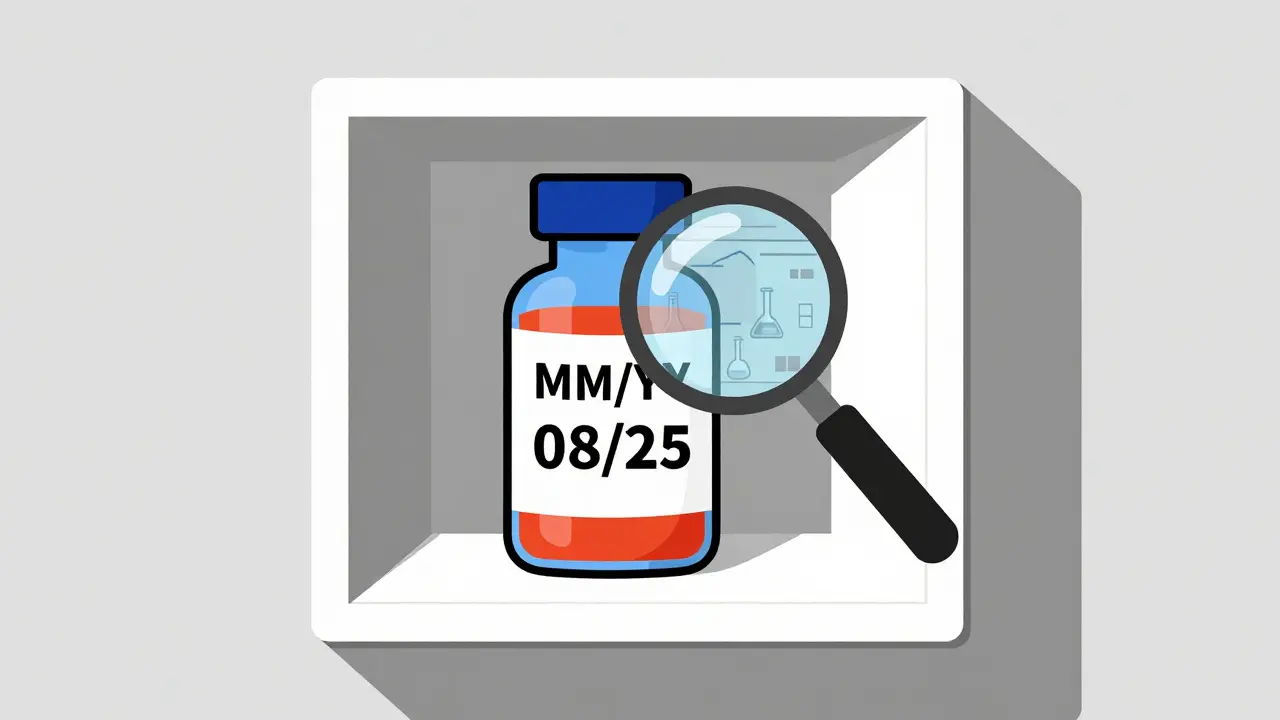
- MM/YY or MM/YYYY - This is common in the U.S. and Canada. If it says 08/25, it expires on August 31, 2025. The last day of the month.
- DD/MM/YYYY - Used in the EU, Australia, and many other countries. 27/09/2024 means September 27, 2024.
- YYYY-MM-DD - The WHO recommends this format for clarity. You’ll see it more often on newer packaging. 2025-03-15 means March 15, 2025.
- Exp, Exp. Date, Expiry, Use by, Use before - These are all just different words for the same thing. Look for any of them.
Don’t assume the format. Always check the label. If you’re unsure, ask your pharmacist. They see these every day.
Pharmacy Labels vs. Manufacturer Dates: Which One Wins?
This is where people get confused-and sometimes waste money.
When you pick up a prescription, the pharmacy puts their own label on the bottle. It might say “Discard after 12/2025.” That’s not the drug’s true expiration. That’s the pharmacy’s beyond-use date. It’s based on how long they believe the medicine will stay stable after being repackaged into a pill bottle, often with no original foil seal.
For most pills, the manufacturer’s date is longer. But for liquids-like antibiotics or insulin-the pharmacy’s date is shorter. That’s because liquids break down faster once opened. An antibiotic suspension might expire in 14 days after mixing, even if the original bottle says 2 years.
Always check both. If the pharmacy label says “discard after 03/2026” but the original box says “exp 09/2027,” trust the pharmacy’s date for that bottle. But keep the original box. It’s your backup.
Which Medications Are Dangerous After Expiration?
Most expired pills are just weak. But a few can be risky.
- Insulin - Loses potency fast. Taking weak insulin can cause dangerous blood sugar spikes or drops.
- Birth control pills - Even a small drop in hormone levels can lead to unintended pregnancy.
- Thyroid meds - Inconsistent dosing can throw your metabolism out of balance.
- Antiplatelet drugs (like aspirin or clopidogrel) - If they don’t work, you’re at higher risk for heart attack or stroke.
- Eyedrops - Once opened, they’re prone to bacterial growth. Using expired drops can cause eye infections.
For these, never take them past the date. No exceptions.
What about ibuprofen or antihistamines? They’re generally safe for months after expiry, but they might not work as well. A 2023 study found that some OTC painkillers lost up to 20% potency after 18 months past expiration. That’s not dangerous-but it’s not helpful either.
How to Tell If Your Medicine Has Gone Bad
Expiration dates don’t always show visible signs. But sometimes they do. Look for:
- Change in color (pills turning yellow or brown)
- Cracking, crumbling, or sticking together
- Unusual smell (like vinegar or ammonia)
- Liquids that are cloudy, discolored, or have particles
- Patches that are sticky, dry, or peeling
If you see any of this-throw it out. Even if the date hasn’t passed. Storage matters. A bottle of pills left in a hot car or a damp bathroom can degrade before the printed date.
Storage Rules That Actually Matter
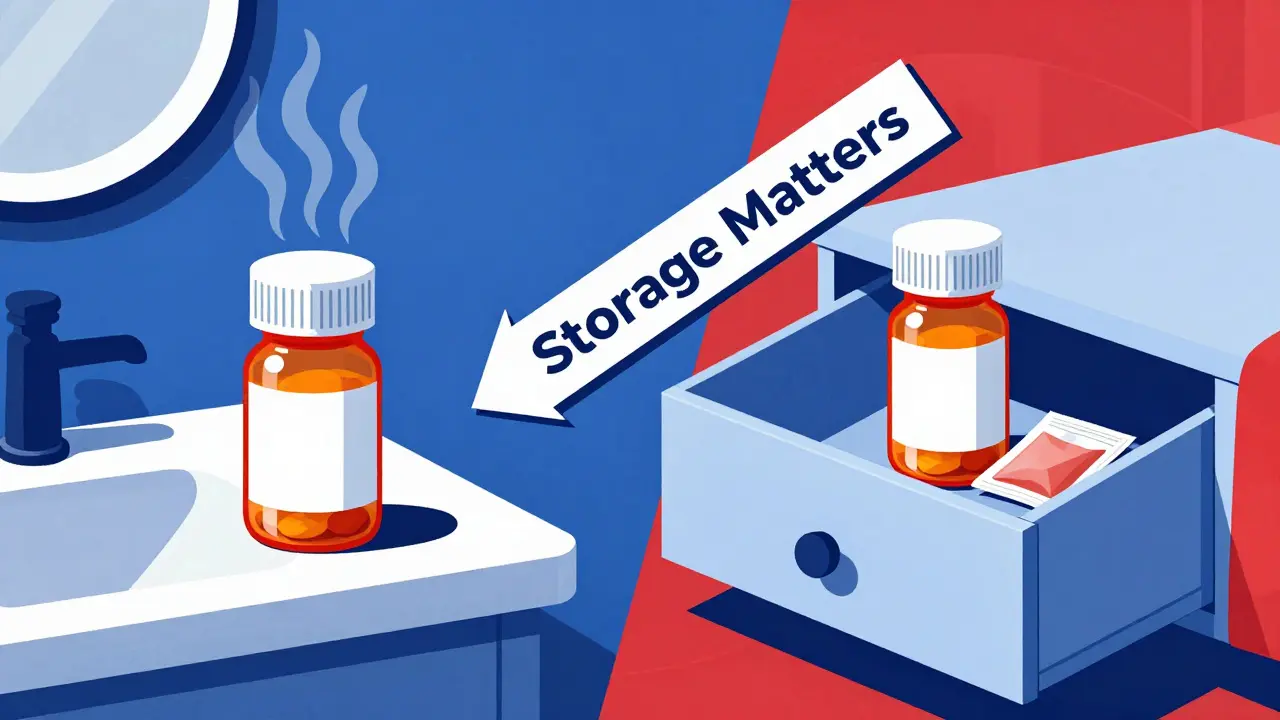
Most medicines say “store at room temperature.” But what does that mean? 15-30°C (59-86°F). If your bathroom hits 35°C in summer? That’s too hot. If your garage drops below freezing? Don’t store meds there.
Keep them in a cool, dry place-like a bedroom drawer, not the bathroom. Avoid direct sunlight. Keep the original container with the desiccant packet inside. That little cotton ball? Don’t throw it out. It keeps moisture away.
Some medicines-like insulin, certain antibiotics, and eye drops-need refrigeration. Always check the label. If it says “refrigerate,” don’t leave it on the counter.
What to Do With Expired Medicine
Don’t flush it. Don’t toss it in the trash where kids or pets might find it. Don’t give it to someone else.
Take it to a pharmacy that offers a take-back program. In Australia, most chemists have a bin for expired or unwanted medicines. If you’re not sure, call your local pharmacy. Some hospitals and community centers also run collection events.
If there’s no drop-off option, mix pills with coffee grounds or cat litter, seal them in a bag, and throw them in the trash. It’s not ideal, but it’s safer than leaving them exposed.
Smart Tips to Avoid Confusion
- Write the expiration date on the bottle with a marker when you get it.
- Use a free app like MedSafe or MyTherapy to track multiple meds and get alerts.
- Ask your pharmacist to write the manufacturer’s expiration date on the label, not just the pharmacy’s discard date.
- Check your medicine cabinet every 6 months. Toss anything expired or suspicious.
- Keep original packaging for critical meds. It has the lot number, which matters if there’s a recall.
One Reddit user in Sydney shared that they threw out a $200 prescription because they misread the pharmacy label. They later found the original box had a date 10 months later. Don’t let that be you.
What’s Changing in the Future
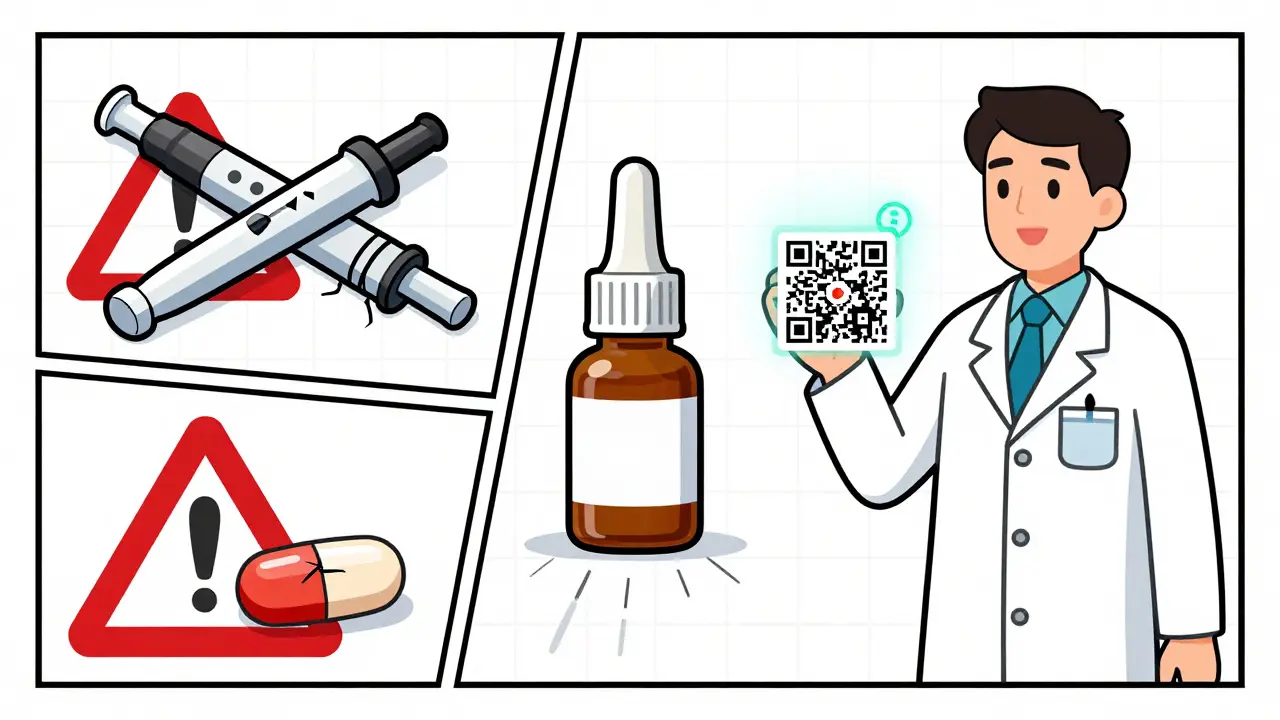
Pharmaceutical companies are starting to use smarter labels. Some now have QR codes that link to real-time expiration and storage info. Others use thermochromic ink that changes color if the medicine got too hot. Merck, for example, now puts these on insulin pens.
The World Health Organization is pushing for global standardization: “YYYY-MM-DD” on every label, with clear icons for refrigeration or light sensitivity. That’s coming. But for now, you still need to read carefully.
Bottom line: expiration dates aren’t arbitrary. They’re science-backed safety limits. Most medicines are fine past their date-but not all. When in doubt, ask your pharmacist. They’ve seen it all. And when you’re managing multiple meds, a little attention to dates saves you from risks you didn’t even know existed.
Can I still take medicine after the expiration date?
For most pills and capsules, yes-if they’ve been stored properly and show no signs of damage. But potency drops over time, so they may not work as well. Avoid taking expired insulin, birth control, thyroid meds, antibiotics, or eye drops. When in doubt, talk to your pharmacist.
Why do pharmacies put a shorter expiration date on prescriptions?
Pharmacies assign a "beyond-use date" based on how long the medication will stay stable after being repackaged. For liquids, suspensions, or eye drops, this date is often much shorter than the manufacturer’s because these forms degrade faster once opened or exposed to air. The pharmacy date takes priority for the bottle you’re using.
Does storing medicine in the bathroom ruin it?
Yes. Bathrooms are hot and humid-exactly what medicines try to avoid. Moisture can break down pills, cause tablets to stick together, or weaken capsules. Store meds in a cool, dry place like a bedroom drawer instead.
What should I do if I accidentally took expired medicine?
If it was a common painkiller like ibuprofen and you only took one dose, you’re likely fine-just not fully protected. If it was insulin, antibiotics, or a heart medication, contact your doctor or pharmacist immediately. Don’t wait for symptoms. Even if you feel okay, the dose may have been too weak to work.
Are there any medicines that become toxic after expiration?
Tetracycline was the only antibiotic shown to become toxic after expiration, but that was from old formulations made before the 1970s. Modern versions don’t have this risk. Today, the main danger isn’t toxicity-it’s reduced effectiveness. But for critical drugs like insulin or birth control, reduced potency can be just as dangerous.


Write a comment