

The core of the problem is Nitrosamine contamination is the presence of N-nitroso compounds, which are potent genotoxic agents and probable human carcinogens, within pharmaceutical products. These aren't ingredients added by mistake; they are impurities that form during the manufacturing process or through the degradation of the drug over time. Because they can cause cancer even in trace amounts, regulators like the FDA have set incredibly strict limits-often measured in nanograms per day-meaning even a microscopic amount of the wrong chemical can trigger a global recall.
The Timeline of a Crisis: From Valsartan to Metformin
The alarm bells first rang in 2018 when the U.S. Food and Drug Administration (FDA) found NDMA (N-Nitrosodimethylamine) in Valsartan, a common medication used to treat high blood pressure. This sparked a chain reaction. Suddenly, regulators realized that the chemical conditions allowing nitrosamines to form weren't unique to one drug. They were popping up in Ranitidine (the active ingredient in Zantac), Metformin for diabetes, and even antidepressants like Duloxetine.
Between 2018 and mid-2025, the FDA oversaw more than 40 specific product recalls, but the broader impact was much larger. In total, over 500 recalls have been issued due to unacceptable levels of these impurities. We've seen a shift from simple contaminants to more complex NDSRIs (Nitrosamine Drug Substance-Related Impurities), where the nitrosamine is actually a derivative of the drug's own molecule. This makes detection and prevention significantly harder because the "poison" is chemically similar to the "cure."
How These Impurities Actually Form
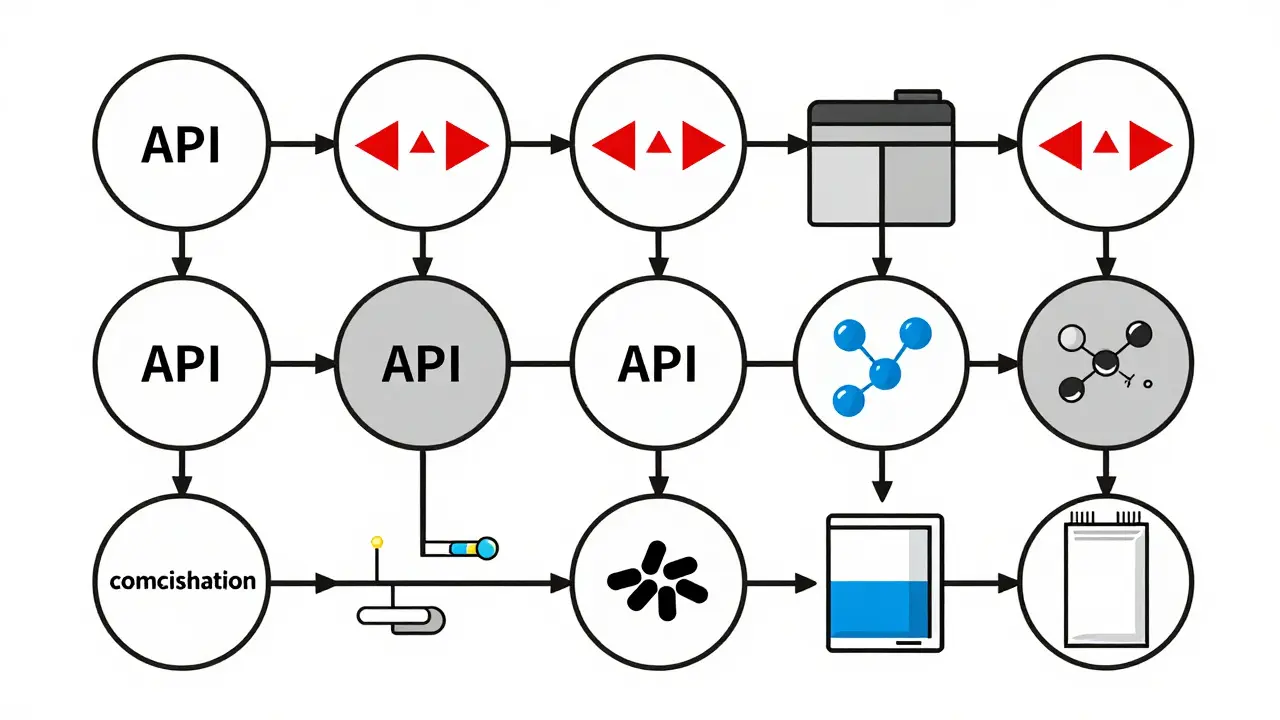
Nitrosamines don't just appear out of nowhere. They are the result of a chemical "perfect storm": a nitrosating agent (like nitrites) reacting with a secondary or tertiary amine. This can happen in several ways:
- API Synthesis: Contaminants in the starting materials or the use of certain solvents during the creation of the Active Pharmaceutical Ingredient (API).
- Excipient Contamination: A classic example is magnesium stearate. If this common lubricant contains nitrite impurities, it can trigger the formation of NDEA (N-Nitrosodiethylamine) in the final tablet.
- Packaging Leaks: More recent recalls from 2022 to 2025 have pointed to a surprising culprit: packaging. Adhesives, colorants, or the films used in blister packs can release nitrosating agents that migrate into the drug.
For a manufacturer, fixing this is like playing whack-a-mole. A process engineer on Reddit recently shared that their company spent 18 months and over $2 million just to clean up a single metformin line, only to find that changing one variable sometimes created a new risk elsewhere in the process.
Comparing Global Regulatory Responses
While most global agencies are on the same page about the risk, the FDA is widely considered the most aggressive. While the European Medicines Agency (EMA) has used a more staggered implementation timeline extending into 2026, the FDA has pushed for faster, compound-specific limits. This puts immense pressure on generic manufacturers who operate on razor-thin profit margins.
| Feature | FDA (USA) | EMA (Europe) |
|---|---|---|
| Approach | Strict, compound-specific AI limits | Broader framework, staggered rollout |
| Recent Action | 500+ total recalls since 2018 | ~32 major product recalls through 2025 |
| NDSRI Deadline | August 2025 (softened to progress reports) | Phased implementation through 2026 |
| Focus | High emphasis on packaging and API sources | Broad risk assessment across all categories |
The Cost of Compliance and Market Fallout
Compliance isn't just about a new test; it's a massive financial burden. Industry surveys suggest that a comprehensive testing program costs a mid-sized generic firm between $500,000 and $2 million annually. This requires high-end equipment like LC-MS/MS (Liquid Chromatography-Tandem Mass Spectrometry) capable of detecting impurities at parts-per-billion levels-essentially finding a needle in a haystack.
This financial strain is changing the market. Smaller players who can't afford these upgrades are being pushed out, leading to a consolidation of the industry. Larger companies like Teva Pharmaceuticals or Sun Pharmaceutical Industries are better equipped to handle these costs, but even they aren't immune; Sun had to recall a Vyvanse generic in late 2025. Industry-wide, profit margins for generics have dropped by 3-5 percentage points because of these mandatory safety overhauls.
The Latest Shift: The "Softened" 2025 Deadline
By June 2025, the FDA realized that the August 1st deadline for NDSRI compliance was unrealistic for many. Determining the root cause of a contaminant and gathering enough stability data to prove a reformulated drug is safe takes a long time. In a move to prevent massive drug shortages, the FDA began accepting "progress reports" instead of full compliance. This gives manufacturers breathing room to detail their mitigation efforts in annual reports without immediately pulling their products from the shelves.
However, this isn't a free pass. Lilun Murphy, director of the FDA's Office of Generic Drugs, warned in October 2025 that compliance remains an urgent priority. If a company is found to be ignoring the risk, they face a Class II recall, meaning their drugs are wiped from pharmacy shelves instantly. For any new drug seeking approval, the FDA simply won't say "yes" unless the nitrosamine risks are fully addressed.
Are nitrosamines in my generic medication dangerous?
In most cases, the risk from a single dose is extremely low. The concern is chronic, long-term exposure over many years, which may slightly increase the risk of certain cancers. If your medication was recalled, you should contact your doctor to find a safe alternative rather than stopping the medication abruptly.
Why are generics more affected than brand-name drugs?
It's not necessarily that generics are "worse," but that they often rely on a more complex web of global API suppliers to keep costs low. If one supplier in the chain uses a contaminated solvent or excipient, it can affect multiple generic versions of the same drug globally.
What is the difference between NDMA and NDSRIs?
NDMA is a general contaminant that can appear in many different types of drugs. NDSRIs (Nitrosamine Drug Substance-Related Impurities) are specific to the drug itself; they form when the actual drug molecule reacts with nitrosating agents. NDSRIs are generally harder to detect because they are chemically similar to the active ingredient.
How can I tell if my medicine has been recalled?
The most reliable way is to check the FDA's official recall database or the "Recalls and Safety Alerts" section of the FDA website. Pharmacists are also notified of these recalls and can tell you if your specific batch is affected.
Does the FDA's "softened" deadline mean the drugs are unsafe?
Not necessarily. The FDA is balancing the risk of trace impurities against the risk of severe drug shortages. By allowing progress reports, they are keeping the supply of essential medicines flowing while still forcing companies to move toward a safer, validated manufacturing process.
Next Steps for Manufacturers and Patients
If you are a pharmaceutical quality lead, the priority is now a comprehensive risk assessment based on the September 2024 FDA guidance. Start by auditing your excipients-especially magnesium stearate-and scrutinizing your packaging materials. Implementing LC-MS/MS testing early is the only way to avoid a devastating Class II recall.
For patients, the best approach is transparency. Ask your pharmacist about the manufacturer of your generic medication. While the industry works through these growing pains, staying informed about recalls ensures you don't accidentally continue taking a contaminated batch. The transition to a cleaner, safer generic supply chain is underway, but it's a slow process of trial, error, and expensive re-validation.