

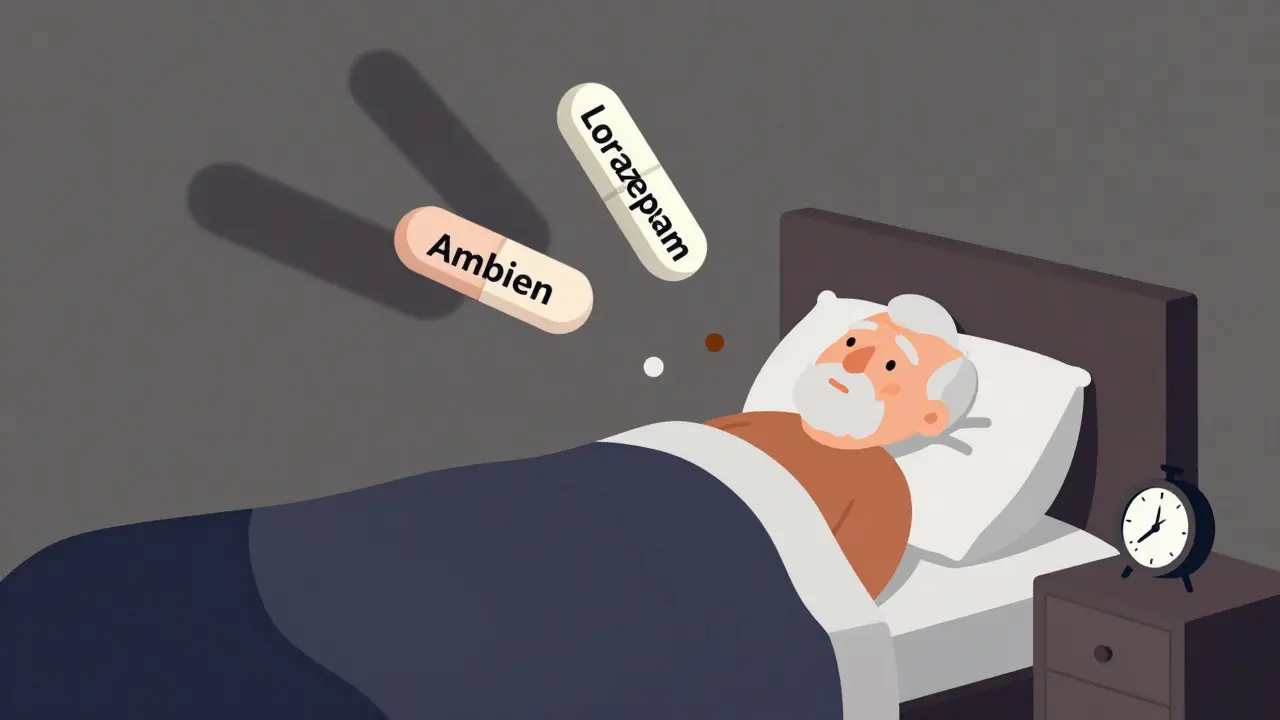
More than half of adults over 65 struggle with sleep. They lie awake for hours. They wake up tired. They take a pill-maybe Ambien, maybe a benzodiazepine-and hope for rest. But that pill might be making things worse. Falls. Confusion. Memory loss. These aren’t rare side effects. They’re common. And they’re preventable.
Why Older Adults Are at Higher Risk
As we age, our bodies change. The liver and kidneys don’t process drugs as quickly. Fat increases, muscle decreases. This means medications stay in the system longer. A dose that’s safe for a 40-year-old can be dangerous for a 70-year-old.Take zolpidem (Ambien). At 5mg, it helps younger adults fall asleep faster. But in seniors, that same dose increases the risk of falling by 30%. Why? Because the drug lingers into the next day. Dizziness. Slow reactions. A trip to the bathroom at night becomes a broken hip.
Benzodiazepines like diazepam or lorazepam are even riskier. A 2014 study in the BMJ found people who used long-acting versions for more than six months had an 84% higher chance of developing Alzheimer’s. That’s not a small risk. That’s a red flag.
Even drugs marketed as “gentle” aren’t always safe. Trazodone, often prescribed off-label for sleep, causes dizziness and low blood pressure in older adults. One nursing home caregiver reported residents on trazodone wandering at night-confused, disoriented, at risk of injury.
The Drugs to Avoid (According to Experts)
The American Geriatrics Society has a list called the Beers Criteria. It’s not a suggestion. It’s a warning. And in its 2019 update, it specifically named 10 sleep medications as potentially inappropriate for seniors.Here are the ones doctors are told to avoid as first-line treatments:
- Benzodiazepines: diazepam, lorazepam, flurazepam, temazepam
- Z-drugs: zolpidem, zaleplon, eszopiclone
- Triazolam (Halcion)
- Antihistamines: diphenhydramine (Benadryl), doxylamine (Unisom)
These aren’t banned. But they’re no longer the go-to. Why? Because the risks outweigh the benefits. The side effects-falls, confusion, memory loss, daytime grogginess-are too common. And they’re often permanent.
Even over-the-counter sleep aids are risky. Many contain diphenhydramine, an anticholinergic drug. These drugs block acetylcholine, a brain chemical vital for memory and focus. Long-term use is linked to higher dementia risk. That’s not just a rumor. It’s backed by multiple studies.
What’s Actually Safe for Seniors?
There are safer options. But they’re not the ones you hear about on TV. They’re quieter. Less flashy. And they require patience.Low-dose doxepin (Silenor) - 3 to 6mg at bedtime. This is a tricyclic antidepressant, but at this tiny dose, it doesn’t affect mood. It helps you stay asleep. A 2010 study showed seniors using it gained nearly 30 extra minutes of sleep and had no more dizziness than those on placebo. Side effects? Just 5% reported drowsiness the next day.
Ramelteon (Rozerem) - 8mg. This isn’t a sedative. It works by mimicking melatonin, helping your body know it’s time for sleep. It doesn’t cause next-day grogginess. No fall risk. No memory issues. Just a 14-minute reduction in time to fall asleep. And no rebound insomnia when you stop.
Lemborexant (Dayvigo) - 5mg. A newer drug that blocks orexin, the brain chemical that keeps you awake. A 2021 JAMA study found it caused less postural instability than zolpidem in adults 55+. It’s not perfect-cost is high-but it’s one of the safest pharmacological options available.
Melatonin - 2 to 5mg. Not a miracle cure, but it can help reset your internal clock. Especially useful for seniors with delayed sleep phase syndrome. No significant side effects at low doses. And it’s cheap.
These aren’t magic pills. But they’re far safer than what’s commonly prescribed.
The Real Solution: CBT-I
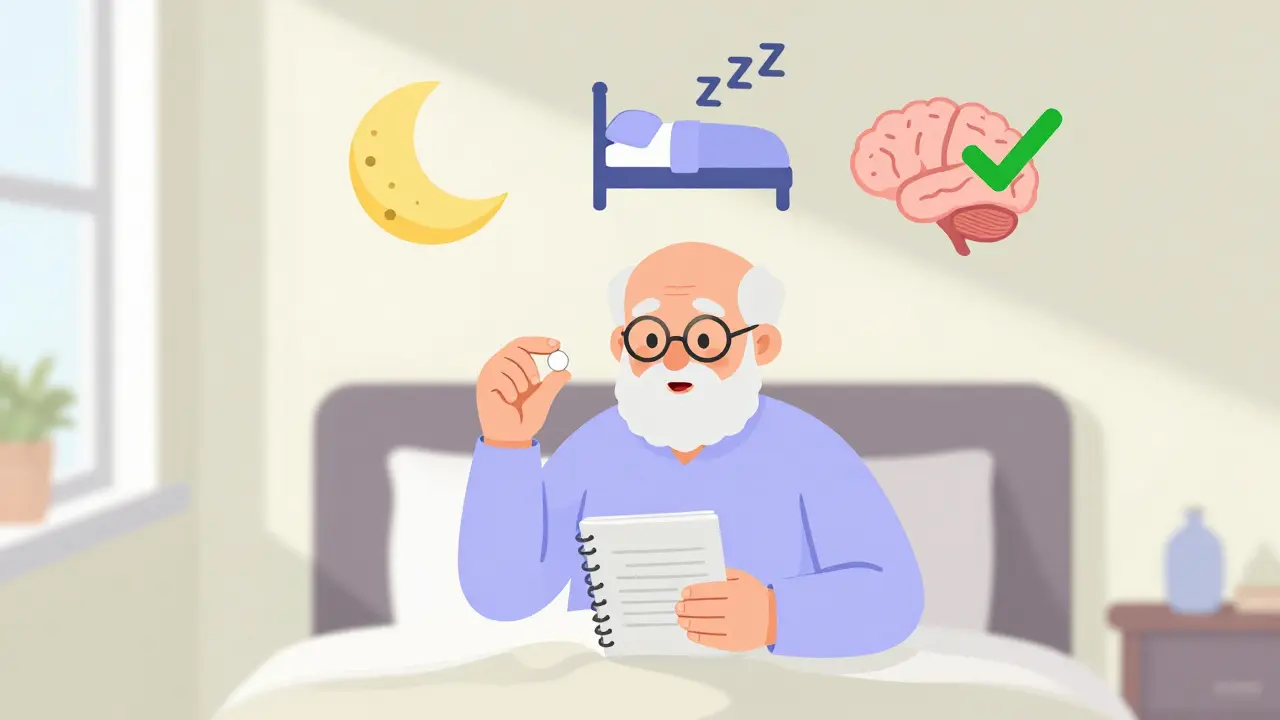
The American Academy of Sleep Medicine says it clearly: cognitive behavioral therapy for insomnia (CBT-I) is the first-line treatment for chronic insomnia in adults-especially seniors.CBT-I isn’t a drug. It’s a program. Usually 6 to 8 weekly sessions. You learn how to:
- Restrict time in bed to match actual sleep
- Only use the bed for sleep and sex
- Challenge thoughts like “I’ll never sleep again”
- Fix sleep habits-no caffeine after 2pm, no screens before bed
It sounds simple. But it works better than pills. A 2019 JAMA study found that seniors who did CBT-I had a 57% remission rate for insomnia. And 89% stuck with it. Compare that to pills-where most people stop after a few months because of side effects.
And here’s the best part: telehealth CBT-I works just as well. A 2023 study showed digital platforms like Sleepio helped 63% of seniors 65+ improve their sleep. No travel. No waiting. Just guided sessions from home.
One woman in her late 60s told her story on AgingCare.com: “After six weeks of CBT-I, I cut my Lunesta from 2mg to as-needed. I sleep better than I have in 20 years.”
Deprescribing: How to Stop Safely
If you or a loved one is already on a risky sleep medication, stopping isn’t as simple as skipping a pill. Suddenly quitting benzodiazepines or Z-drugs can cause rebound insomnia, anxiety, even seizures.The STOPP/START criteria recommend a slow taper. Over 4 to 8 weeks. Reduce the dose by 25% every week. Monitor for withdrawal. Keep a sleep diary. Work with your doctor.
For example: If someone is on 10mg of zolpidem, the taper might look like:
- Week 1-2: 7.5mg nightly
- Week 3-4: 5mg nightly
- Week 5-6: 5mg every other night
- Week 7-8: 2.5mg every other night
- Week 9: Stop
During this time, start CBT-I. Replace the pill with a habit. The goal isn’t just to stop the drug-it’s to build a better way to sleep.
Cost and Access: The Hidden Barrier
The safest drugs aren’t always the cheapest. Low-dose doxepin costs around $400 a month without insurance. Generic zolpidem? $15. That’s why many seniors stay on risky meds-they’re affordable.But cost shouldn’t be the deciding factor. A fall that breaks a hip can cost over $50,000 in medical bills. And that’s just the start. Recovery takes months. Independence is lost. Quality of life plummets.
Some insurers cover CBT-I. Medicare now pays for sleep disorder evaluations. Ask your doctor. Ask your pharmacist. There are programs to help.
And don’t underestimate the value of free tools: sleep diaries, apps like Sleepio, community health centers offering sleep workshops. These aren’t glamorous. But they’re life-changing.
What You Can Do Right Now
If you’re a senior struggling with sleep-or you’re helping someone who is-here’s what to do next:- Ask your doctor: “Is this sleep medication on the Beers Criteria list?”
- Request CBT-I: “Can you refer me to a sleep specialist who does CBT-I?”
- Review all meds: Many seniors take 5+ prescriptions. Some of them might be causing sleep problems. Ask for a full med review.
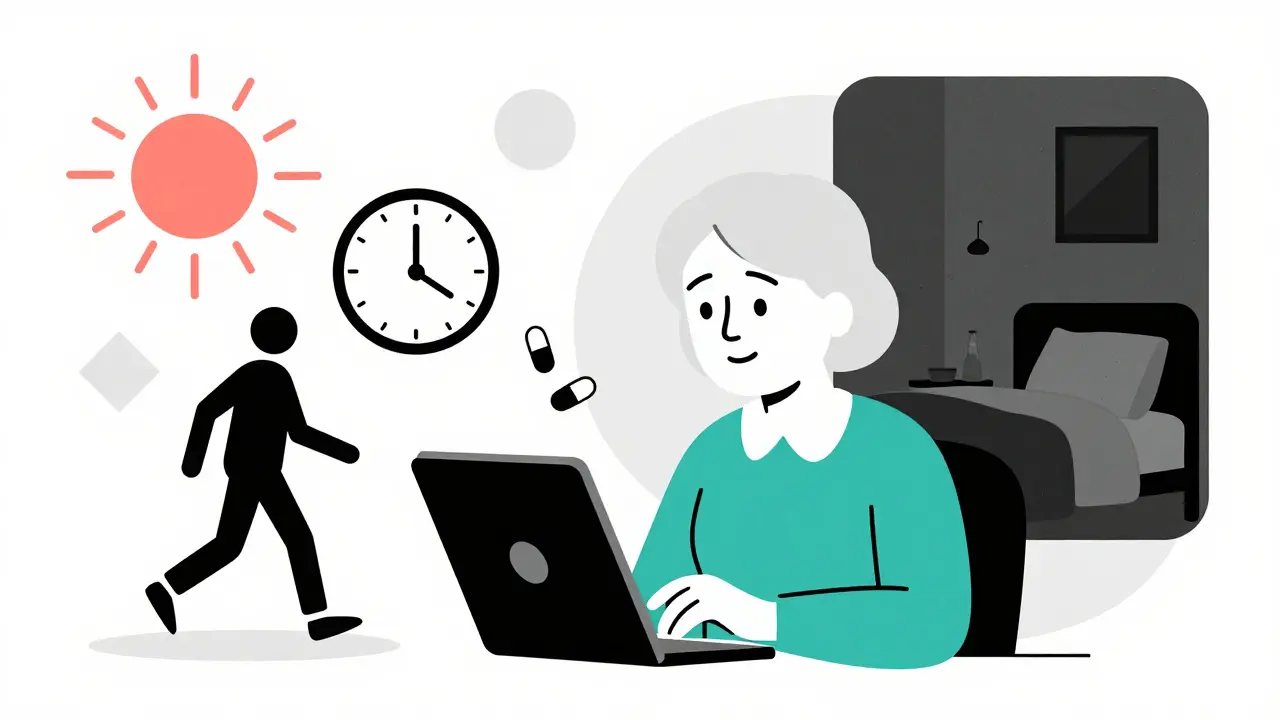
- Try sleep hygiene: No screens 90 minutes before bed. Keep the bedroom cool and dark. Get sunlight in the morning. Walk daily.
- Track your sleep: Use a notebook or app. Note what you took, when you slept, how you felt the next day.
There’s no shame in needing help. But there’s danger in accepting the first solution offered. Sleep isn’t just about rest. It’s about safety. Memory. Independence. Living well into your 80s and 90s.
The best sleep strategy isn’t a pill. It’s a plan. A smart, safe, sustainable plan. And it starts with asking the right questions.
Are over-the-counter sleep aids safe for seniors?
No, most over-the-counter sleep aids are not safe for seniors. Many contain diphenhydramine or doxylamine-anticholinergic drugs that increase the risk of confusion, memory loss, and dementia. Even though they’re sold without a prescription, they’re not harmless. The American Geriatrics Society recommends avoiding them entirely in older adults. Better alternatives include low-dose melatonin or non-drug approaches like CBT-I.
Can sleep medications cause dementia in seniors?
Yes, long-term use of certain sleep medications is linked to higher dementia risk. A 2014 BMJ study found benzodiazepine use for more than six months increased Alzheimer’s risk by 84%. Anticholinergic drugs like diphenhydramine also contribute to cognitive decline. Even Z-drugs like zolpidem may raise risk with prolonged use. The connection isn’t guaranteed for everyone, but the evidence is strong enough that experts now recommend avoiding these drugs as first-line treatments.
What’s the safest sleep medication for seniors?
The safest options are those with minimal side effects and no sedative action. Low-dose doxepin (3-6mg) helps seniors stay asleep without next-day grogginess. Ramelteon (8mg) works with your natural sleep rhythm and has no fall risk. Lemborexant (5mg) is newer but shows better safety than Z-drugs in older adults. Melatonin (2-5mg) is a gentle option for resetting sleep cycles. All should be used under medical supervision, but they’re far safer than benzodiazepines or Z-drugs.
Is CBT-I really better than sleeping pills for seniors?
Yes, and the evidence is clear. CBT-I is the first-line recommendation from the American Academy of Sleep Medicine. Studies show it helps 57% of seniors overcome chronic insomnia, with effects lasting years. Pills only work while you take them-and come with risks like falls and memory loss. CBT-I teaches skills that last. One study found seniors who did CBT-I reduced or stopped their sleep meds and slept better than ever before.
How can I help an elderly parent stop taking sleep meds?
Don’t stop the medication suddenly. Work with their doctor to create a slow taper plan over 4 to 8 weeks. Replace the medication with CBT-I or sleep hygiene habits. Keep a sleep diary together. Attend appointments with them. Bring up the Beers Criteria. Ask if they’ve been screened for depression or sleep apnea-both can mimic insomnia. Support is key. Many seniors feel embarrassed to admit they’re still struggling. Your involvement can make all the difference.


Write a comment