

Thyroid Medication Timing Calculator
Calculate Your Safe Timing
Results
Enter your times above to see absorption impact.
When you're taking levothyroxine for hypothyroidism, your body depends on consistent, full absorption of that pill to keep your thyroid hormone levels stable. But what you eat-especially iron-rich meals-can seriously mess with that process. It’s not a myth. It’s not exaggeration. It’s science. And if you’re not timing your meals and meds right, you could be sabotaging your treatment without even knowing it.
Why Iron Stops Thyroid Medication from Working
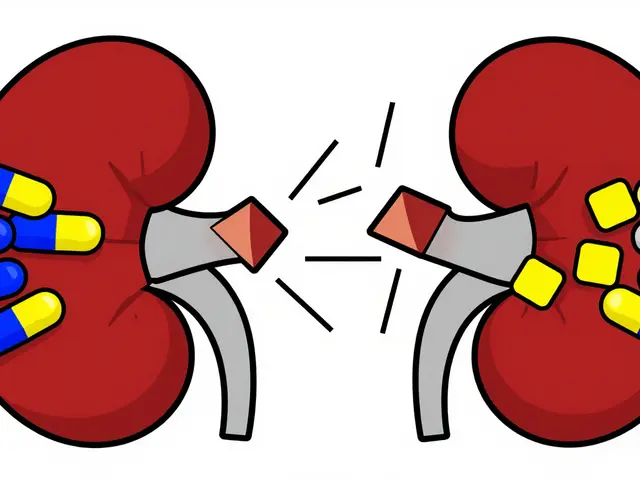
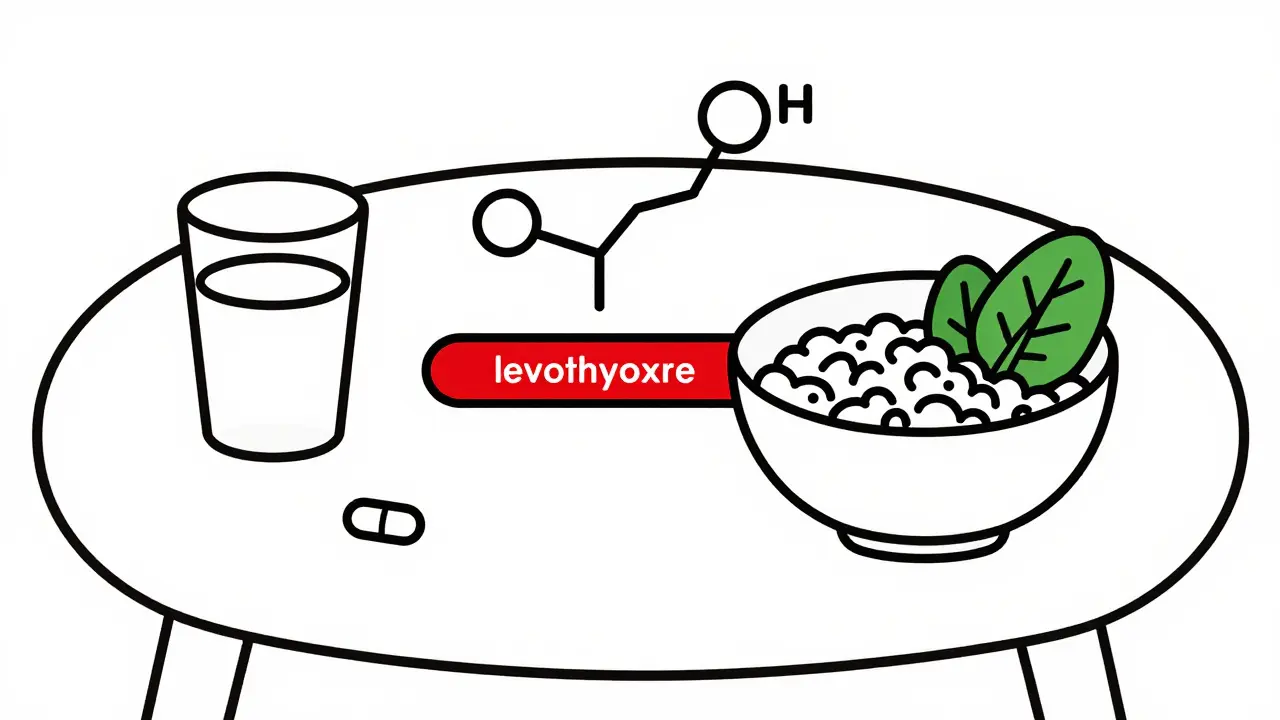
Levothyroxine, the synthetic version of the thyroid hormone T4, needs an empty stomach to be absorbed properly. It dissolves best in the upper part of your small intestine, and anything that binds to it-like iron-blocks absorption. Iron, especially in supplement form, is a divalent cation, meaning it has a strong chemical pull. It latches onto the levothyroxine molecule and forms a complex your body can’t absorb. Think of it like two magnets sticking together. One is your medication. The other is the iron in your cereal, spinach, or pill. They cling, and your body just passes them both out.
Studies show this isn’t a small issue. A 2021 study in the Journal of Clinical Endocrinology & Metabolism found that when people took iron and levothyroxine together, their absorption dropped by 30% to 50%. That’s not a 5% dip. That’s nearly half the dose you paid for vanishing before it even gets into your bloodstream. And it’s not just supplements. Even your morning bowl of iron-fortified cereal can cut absorption by over 35%. Red meat? It still causes a 22% drop. So if you’re eating eggs with spinach for breakfast right after your pill, you’re not getting the full benefit.
The Timing Debate: 2 Hours or 4 Hours?
This is where things get messy. Different experts give different advice, and patients are left confused.
Thyroid UK recommends waiting just 2 hours between iron and levothyroxine. But the American Thyroid Association, the Endocrine Society, and the Mayo Clinic all say 4 hours. Why the gap? Because they’re looking at different things.
Iron supplements-like ferrous sulfate-are concentrated. One tablet can contain 65mg of elemental iron. That’s a lot. Dietary iron? A cup of cooked spinach has about 6mg. A 3-ounce serving of beef liver has 5mg. Much less. So if you’re taking a supplement, the risk is higher. The 4-hour rule is meant to cover the worst-case scenario: iron pills.
But here’s what the data really shows: separation matters. A systematic review of 63 studies (PMC8002057, 2021) found that:
- Taking levothyroxine within 1 hour of iron = 27.4% less absorption
- Waiting 2 hours = 12.6% less absorption
- Waiting 4 hours = only 4.1% less absorption
That 4.1%? That’s practically negligible. That’s what doctors want you to hit. And it’s not just about numbers. A 2022 study in Mayo Clinic Proceedings found that patients who stuck to a 4-hour window had their TSH levels in the target range 89% of the time. Those who didn’t? Only 63%.
Real-Life Scheduling Problems
Let’s be honest. Most people can’t afford to wait 4 hours after breakfast to take their pill-or 4 hours after their pill to eat breakfast. You’ve got work, kids, commutes. You’re tired. You’re not a lab technician.
One Reddit user, ThyroidWarrior87, wrote: “I take Synthroid at 5 AM and iron at 9 AM. My TSH still fluctuates. My doctor says it’s because of trace iron in my orange juice.” That’s not crazy. Many fruit juices, especially fortified ones, contain added iron. Even if you think you’re being careful, you’re not.
A 2022 survey of 1,243 patients on Thyroid.org found that 68% struggled with timing. For women-especially those who menstruate or are pregnant-the problem is worse. Iron needs go up. So do supplement doses. And thyroid needs don’t drop. So you’re stuck between needing more iron and needing your thyroid meds to work.
And it’s not just meals. Multivitamins? Many contain iron and calcium. Calcium also blocks absorption. So if you’re popping a daily pill with your levothyroxine, you’re doubling the problem. Same with antacids, proton pump inhibitors, and even some fiber supplements.
What Actually Works: Practical Solutions
There’s no perfect solution-but there are better ones.
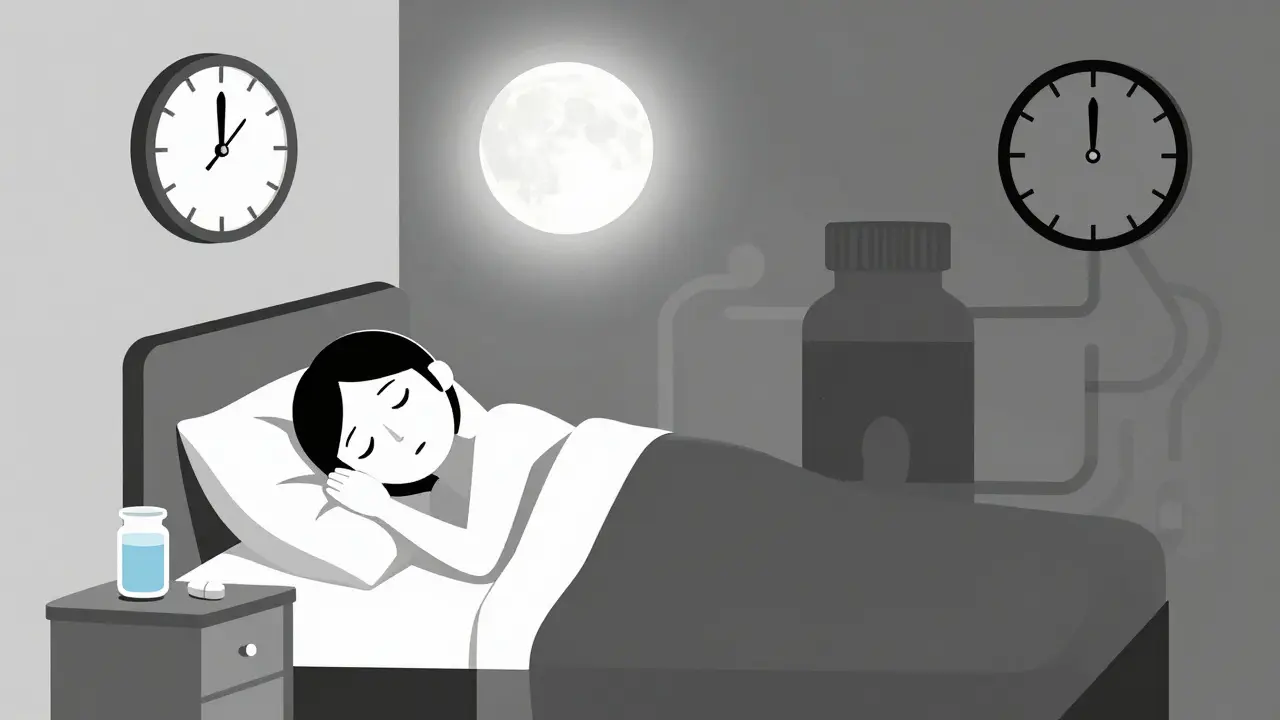
Option 1: Take Levothyroxine at Bedtime
This one’s backed by science. The European Thyroid Association ran a trial with 90 patients who switched from morning to bedtime dosing. Their TSH control improved by 18.7%. Why? Because you’re not eating for 8+ hours after. No iron. No calcium. No coffee. Just your pill, then sleep.
But there’s a catch. Not everyone can do this. Some people get heartburn. Others can’t sleep with a pill in their stomach. And if you take other nighttime meds? You might need to space them out too.
Option 2: The Apple Juice Trick
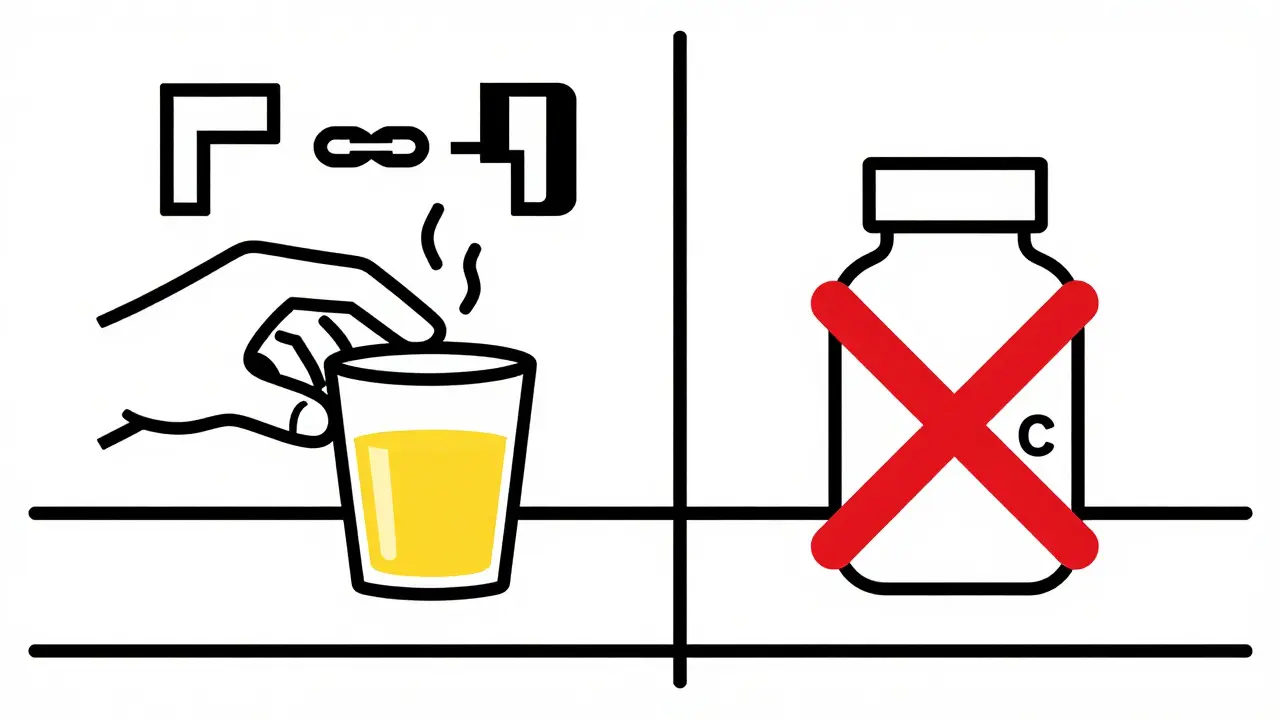
CommonSpirit Health recommends taking levothyroxine with 100% pure apple juice (not from concentrate). Why? Because apple juice doesn’t contain calcium, iron, or other minerals that interfere. It’s acidic enough to help the pill dissolve, but clean enough not to block absorption. A 2021 survey found that 58% of patients who switched to this method reported more stable symptoms.
It’s not FDA-approved. But it’s been used successfully in clinics for years. And it’s cheap. No fancy supplements. Just juice.
Option 3: Use a Liquid Formulation
Tirosint is a liquid version of levothyroxine. It’s absorbed more reliably than pills, even with food. Studies show it’s less affected by iron and calcium. But it costs $187.50 for a 30-day supply-nearly four times the price of generic levothyroxine. For some, the trade-off is worth it. For others? Not feasible.
What to Avoid
- Don’t take levothyroxine with coffee. Caffeine can reduce absorption by up to 30%.
- Don’t take it with soy milk or high-fiber foods. Both interfere.
- Don’t take calcium or iron supplements at the same time. Even if you space them by 2 hours, it’s not enough.
- Don’t assume your multivitamin is safe. Check the label. If it says “iron” or “ferrous sulfate,” leave it out.
What to Do Instead
Here’s a simple, realistic plan:
- Take your levothyroxine first thing in the morning-on an empty stomach-with a full glass of water.
- Wait 30 to 60 minutes before eating or drinking anything else.
- Wait at least 4 hours before eating iron-rich meals (red meat, liver, spinach, fortified cereals) or taking iron supplements.
- If you can’t wait 4 hours, consider switching to bedtime dosing.
- If you’re still struggling, ask your doctor about the apple juice method.
And if you’re on iron supplements? Don’t stop them. Anemia is dangerous. But do talk to your endocrinologist about spacing. Maybe your iron dose can be adjusted. Maybe you can switch to a different form-like ferric citrate, which has less interaction.
Final Thought: It’s Not About Perfection
You don’t need to be flawless. You just need to be consistent. If you take your pill with water at 7 AM, and your iron at 3 PM, you’re doing better than 70% of patients. If you switch to bedtime dosing and take your pill at 10 PM, you’re doing even better.
The goal isn’t to eliminate all risk. It’s to reduce it enough that your thyroid levels stay stable. Because when they don’t, you feel it-fatigue, weight gain, brain fog, cold hands. And those aren’t just symptoms. They’re signs your body isn’t getting what it needs.
Don’t let confusion keep you from control. Talk to your doctor. Test your TSH. Adjust your routine. Your thyroid will thank you.
Can I take my iron supplement at night instead of in the morning?
Yes, taking your iron supplement at night is often the best solution if you take levothyroxine in the morning. As long as you wait at least 4 hours after your thyroid medication, taking iron at bedtime avoids the interaction entirely. This approach is especially helpful for people who eat iron-rich meals for dinner. Just make sure you’re not eating anything else-especially calcium-rich foods-within 4 hours of the iron pill.
Does it matter what type of iron I take?
Yes. Ferrous sulfate, the most common form in supplements, has the strongest interaction with levothyroxine. Ferrous fumarate and ferrous gluconate are slightly less disruptive, but still cause interference. Ferric citrate and heme iron (from animal sources) have weaker binding, but they’re not risk-free. Supplements always carry more risk than dietary iron because of their higher concentration. If you’re struggling with timing, ask your doctor if you can switch to a less interfering form.
Can I take levothyroxine with water and then drink orange juice right after?
It depends on the orange juice. Many brands, especially in the U.S. and Australia, fortify orange juice with calcium and iron. Even a small amount can interfere. If you want to drink juice, use 100% pure apple juice without added minerals. Avoid fortified juices, soy milk, and dairy products for at least 30 to 60 minutes after taking your pill.
I’ve been taking my thyroid pill with breakfast for years. Should I be worried?
You should get your TSH levels checked. If you’ve been taking levothyroxine with food-especially iron-rich meals-you’re likely absorbing only 50-70% of your dose. That can lead to under-treated hypothyroidism, even if your doctor thinks your dose is correct. Symptoms like fatigue, weight gain, or depression might not be from your condition-they might be from your medication not working. Ask your doctor for a blood test. If your TSH is above 2.5, timing may be the issue.
What if I forget to wait 4 hours? Should I skip my dose?
No. Skipping doses can cause bigger problems than occasional timing errors. If you ate iron-rich food 2 hours before your pill, take it anyway. Then, wait 4 hours before your next iron-containing meal or supplement. Your body will absorb some of the dose. It’s not ideal, but it’s better than missing a dose entirely. Focus on consistency over perfection. Track your meals and meds for a week, and you’ll find a rhythm that works.


Write a comment