

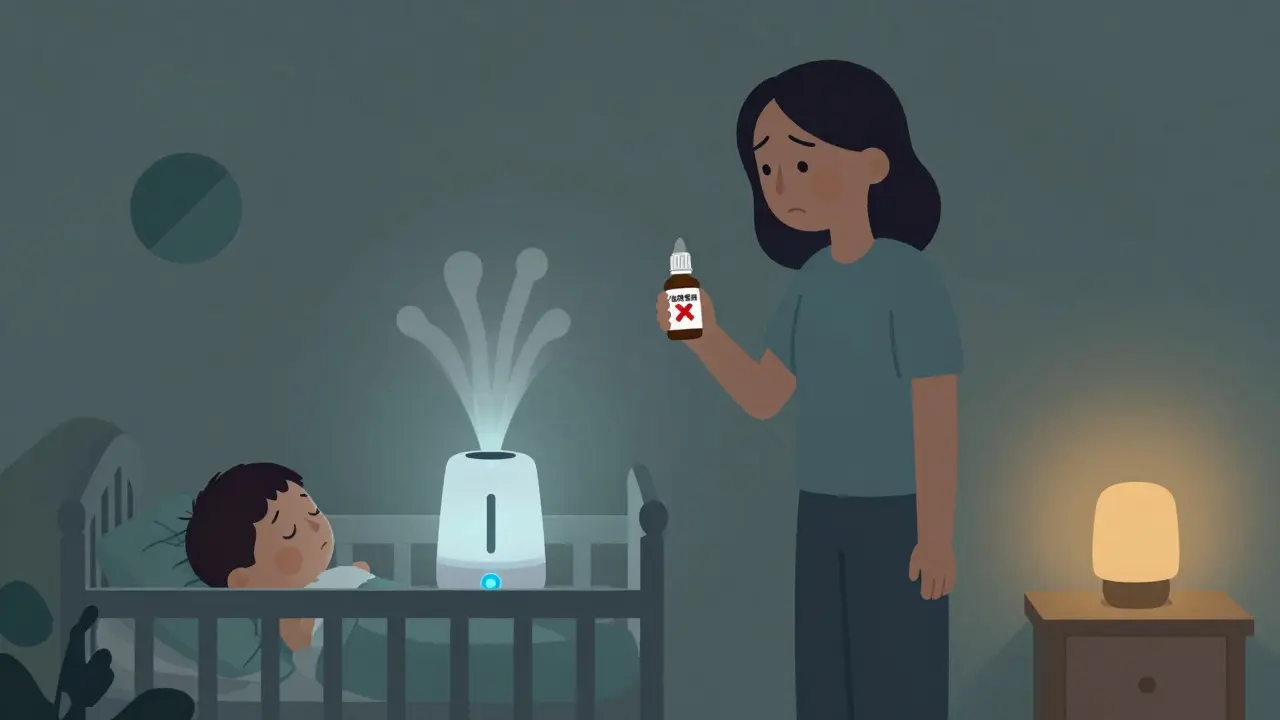
Every winter, parents across Australia and beyond face the same frustrating question: Should I give my child cough and cold medicine? It’s 2 a.m., your 3-year-old is coughing so hard they can’t sleep, their nose is stuffed, and you just want to help them feel better. You reach for the cabinet - there’s that little bottle labeled "Children’s Cold Relief." It seems harmless. But here’s the truth: giving over-the-counter cough and cold medicine to kids under six isn’t just risky - it’s often dangerous, and it doesn’t even work the way you think it does.
Why OTC Cough and Cold Medicines Don’t Work for Young Kids
These medicines were designed for adults, not little bodies. The active ingredients - like dextromethorphan (a cough suppressant), pseudoephedrine (a decongestant), and chlorpheniramine (an antihistamine) - were never tested properly in children under six. The FDA reviewed data from over 120 deaths and thousands of emergency visits between 1969 and 2006, and found no proof these products actually help kids. Instead, they found clear evidence of harm.
Young children’s livers and kidneys aren’t fully developed. A 2-year-old has only about 23% of the liver enzymes needed to break down dextromethorphan safely. That means even a small dose can build up in their system and cause serious side effects: rapid heartbeat, seizures, trouble breathing, or even coma. One parent in Sydney told me their 22-month-old became hyperactive and couldn’t sleep for 12 hours after a single dose of "children’s" cold medicine. That’s not an anomaly - it’s a known reaction.
And here’s something most parents don’t realize: many of these products contain the same ingredients. If you give your child a cough syrup and then a separate cold tablet, you’re accidentally doubling the dose. That’s how accidental overdoses happen - and they’re one of the leading causes of emergency visits for kids under six.
The Hard Truth: No Safe Dose for Under 6
Major medical groups agree: don’t use OTC cough and cold medicines in children under six. The American Academy of Pediatrics, the CDC, the Mayo Clinic, and the FDA all say the same thing. The FDA’s official stance is blunt: "These products could cause serious and potentially life-threatening side effects in children under two."
Even for kids aged four to six, the advice is "ask your doctor first." There’s no magic number where these drugs suddenly become safe. Their bodies are still developing, and the risk of side effects outweighs any tiny, unproven benefit. A 2023 study in JAMA Pediatrics showed that when parents got clear education about these risks, inappropriate use dropped by 58%.
And don’t think switching to adult medicine is safer. That’s a dangerous myth. Adult formulations are packed with much higher doses. One teaspoon of adult cough syrup can contain twice the amount of active ingredient a toddler should ever get. Walgreens customer reviews from 2023 showed 38% of parents admitted to using adult meds when children’s versions weren’t available. That’s not resourcefulness - it’s a medical emergency waiting to happen.
What Actually Works: Safe, Proven Alternatives
If you can’t use medicine, what can you do? Plenty. And most of it is free, natural, and backed by science.
For babies under 6 months: Saline nasal drops and a bulb syringe are your best friends. Gently suction out mucus before feeds and bedtime. Use a cool-mist humidifier in their room - not warm mist. Warm mist can make nasal swelling worse. Keep the air moist, and their breathing will improve.
For babies 6 months and older: If they have a fever or seem achy, you can give acetaminophen. The dose is 10-15 mg per kilogram of body weight, every 4-6 hours, no more than five times in 24 hours. Always use the measuring device that comes with the bottle - never a kitchen spoon. A teaspoon from your drawer can be 20% off from the real dose. That’s enough to cause harm.
For children 1 year and older: Honey. Yes, honey. One study found honey worked better than dextromethorphan at reducing nighttime coughing. Give ½ to 1 teaspoon before bed. It thickens mucus and soothes the throat. Don’t give honey to babies under 12 months - it can cause infant botulism, a rare but serious illness.
For all ages: Lots of fluids. Water, breastmilk, or electrolyte solutions help thin mucus and keep kids hydrated. Elevate the head of their crib slightly (use a towel under the mattress, not pillows - those are a suffocation risk). Steam from a hot shower can help loosen congestion. Just sit with them in the bathroom for 10 minutes, breathing in the moist air.
What to Avoid Like the Plague
Some things you might think are harmless are actually dangerous for little kids:
- Nasal sprays with oxymetazoline: These are for adults. In kids under six, they can cause high blood pressure, drowsiness, and even slowed breathing.
- Combining multiple products: If you’re giving a cough syrup, a cold tablet, and a fever reducer, you’re likely giving too much acetaminophen. That’s the leading cause of liver damage in children from OTC meds.
- Herbal or homeopathic "remedies": These aren’t regulated. Some contain undeclared ingredients like antihistamines or even caffeine. They’re not safer - just untested.
- Expectorants like guaifenesin: They’re meant to loosen mucus, but kids can’t cough effectively enough to clear it. Instead, it can make them gag or vomit.
When to Call the Doctor
Most colds are mild and go away on their own. But here are the red flags that mean it’s time to call your pediatrician:
- Fever over 38.5°C in a baby under 3 months
- Cough lasting more than 10 days
- Difficulty breathing - ribs pulling in, fast breathing, flaring nostrils
- Refusing to drink for more than 8 hours
- Lethargy or extreme fussiness
- Blue lips or fingernails
If your child is struggling to breathe or looks pale and listless, don’t wait. Go to the nearest emergency department. These aren’t "just colds." They can turn into pneumonia or croup quickly in young kids.
Why This Problem Still Exists
You might wonder: if everyone agrees these medicines are unsafe, why are they still on shelves? Because the market is huge. In 2022, the U.S. pediatric OTC cough and cold market was worth over $1.2 billion. Companies still sell them because parents keep buying them - even after warnings.
A 2022 survey found 42% of parents of kids under six still gave them OTC meds, mostly because they "thought it would help their child feel better faster." The truth? It won’t. And it might make things worse.
Even labeling isn’t foolproof. A 2021 FDA inspection found 22% of children’s cold products still didn’t have clear "do not use under 4" warnings. And in Australia, while regulations are stricter than in the U.S., the same misleading marketing still creeps in - "soothes cough," "relieves congestion," "gentle formula." Those words sound safe. They’re not.
What You Can Do Today
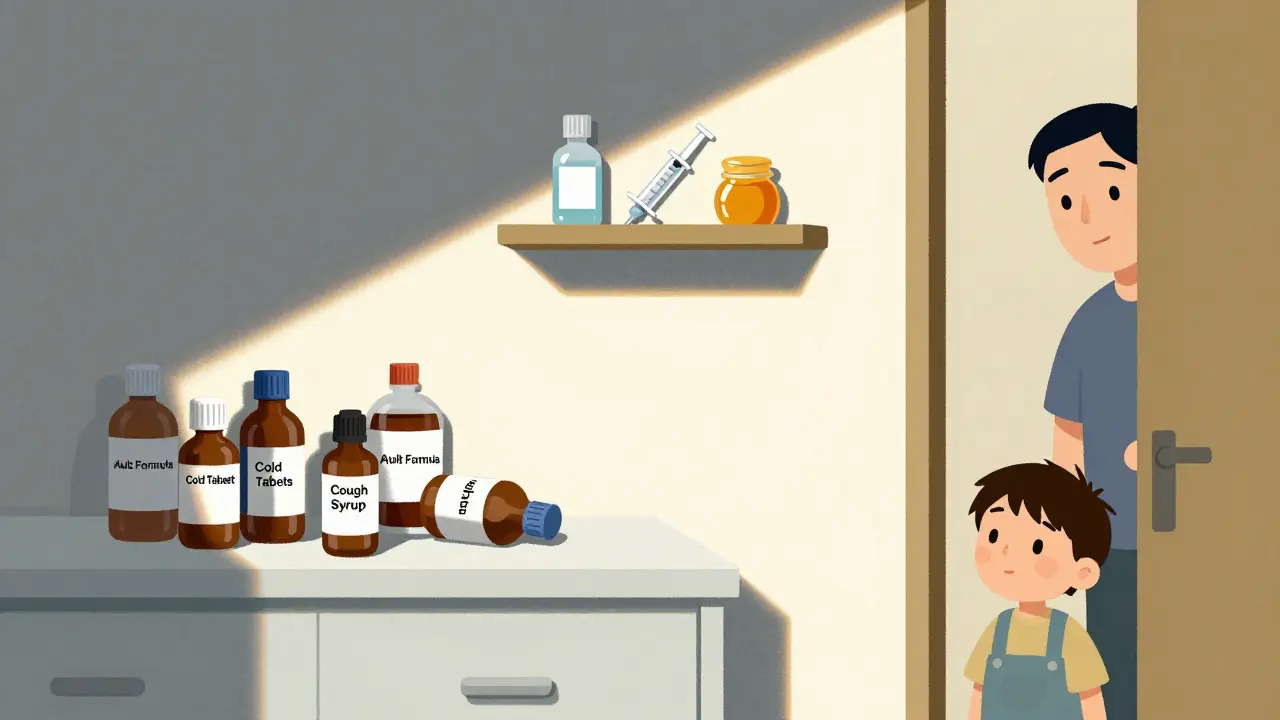
Start by cleaning out your medicine cabinet. Toss any OTC cough and cold products meant for kids under six. Keep only what you need: acetaminophen (for fever/pain), saline drops, a bulb syringe, and honey (for kids over 1). Store everything out of reach - not just locked away, but on a high shelf. Kids are curious, and they can climb.
Next, talk to your pediatrician. Ask: "What should I do if my child has a cold?" Get their advice in writing. Print it out. Put it on the fridge. When you’re tired and stressed at 3 a.m., you need a clear plan - not a guess.
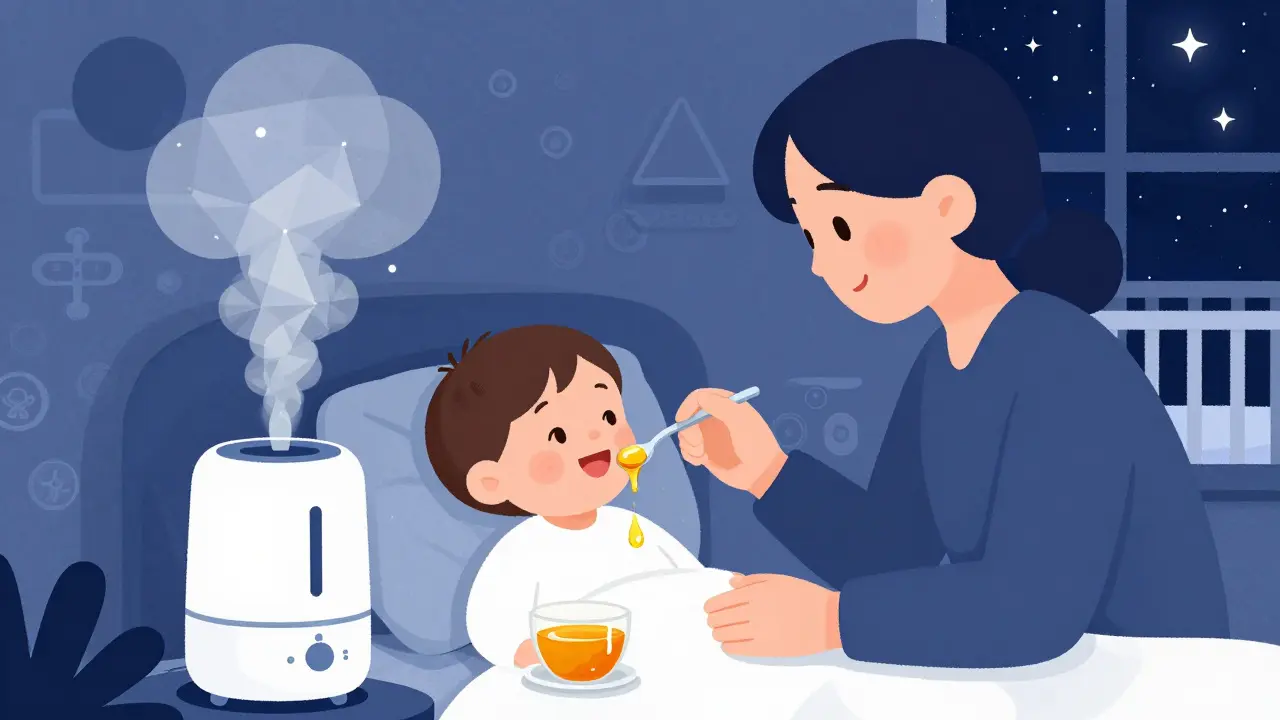
Finally, trust your instincts. If your child is uncomfortable, you’re doing the right thing by trying to help. Just know that the best help isn’t in a bottle. It’s in a warm bath, a spoonful of honey, a humidifier humming softly, and your arms holding them close.
Can I give my 3-year-old children’s cough medicine if I use half the dose?
No. Even half a dose can be dangerous. Children’s medications aren’t just smaller versions of adult ones - they’re formulated for specific weight ranges and metabolic rates. A 3-year-old’s body can’t safely process even a reduced dose of dextromethorphan or pseudoephedrine. The risk of side effects like rapid heart rate, seizures, or breathing problems remains high. Stick to non-medication remedies.
Is honey really safe for toddlers?
Yes, but only for children over 12 months old. Honey is a proven, effective cough suppressant for kids aged one and up. Studies show it works better than many OTC cough syrups at reducing nighttime coughing. Give ½ to 1 teaspoon before bed. Never give honey to babies under 1 year - it can cause infant botulism, a rare but serious illness caused by bacterial spores.
What’s the difference between a cool-mist and warm-mist humidifier?
Cool-mist humidifiers release a fine, cool vapor that helps moisten dry nasal passages without raising room temperature. Warm-mist humidifiers heat water to create steam, which can cause nasal swelling and burns if the child gets too close. For kids under six, only use cool-mist humidifiers. They’re safer and just as effective at easing congestion.
Can I use nasal sprays for my 5-year-old’s stuffy nose?
Only saline nasal sprays are safe. Avoid any nasal spray containing oxymetazoline, phenylephrine, or other decongestants - these are for adults only. In young children, they can cause high blood pressure, drowsiness, or even slowed breathing. Saline sprays are just salt water. They loosen mucus without any side effects. Use them with a bulb syringe for best results.
My child has a fever. Can I give them ibuprofen instead of acetaminophen?
Yes, ibuprofen is safe for children over 6 months old. But only if they’re well-hydrated. The dose is 5-10 mg per kilogram every 6-8 hours, not more than four doses in 24 hours. Always use the measuring tool that comes with the bottle. Never give aspirin to children - it can cause Reye’s syndrome, a rare but deadly condition.
How do I know if my child’s cough is serious?
Watch for signs like fast or labored breathing, ribs pulling in with each breath, wheezing, a barking cough (like a seal), or a cough that lasts more than 10 days. If your child is lethargic, not drinking, has a fever over 38.5°C for more than 72 hours, or has blue lips, seek medical help immediately. These aren’t normal cold symptoms - they could mean pneumonia, croup, or bronchiolitis.
Managing a cold in a young child isn’t about fixing it with medicine. It’s about supporting their body as it heals. Your presence, your comfort, and your patience are the most powerful remedies you have. And they cost nothing.


Write a comment