




GI Side Effect Estimator
How Your Symptoms Might Improve
Based on research from Yokohama City University and ADA studies, this tool estimates your symptom timeline and management options.
Managing type 2 diabetes isn’t just about lowering blood sugar-it’s about living with the side effects that come with it. For many people taking acarbose or miglitol, the biggest challenge isn’t the pill itself, but the gas, bloating, and abdominal discomfort that follow every meal. These drugs work by slowing down how your body breaks down carbs, which helps keep blood sugar from spiking after eating. But that same mechanism leaves undigested starch and sugar to ferment in your colon, turning your gut into a gas factory.
Why Do These Drugs Cause So Much Gas?
Acarbose and miglitol belong to a class called alpha-glucosidase inhibitors. They block enzymes in your small intestine that normally break down complex carbs like bread, rice, and pasta into simple sugars. Without those enzymes, carbs pass through mostly untouched-until they reach your colon. That’s where your gut bacteria step in. They feast on the undigested carbs, producing hydrogen, methane, and carbon dioxide as waste. The result? Flatulence, bloating, cramps, and sometimes diarrhea.
Here’s the catch: acarbose causes more gas than miglitol. Why? Acarbose stays in your gut and works right where carbs are being digested-mostly in the upper small intestine. That means more undigested carbs spill into the lower gut, feeding more bacteria. Miglitol, on the other hand, gets partially absorbed into your bloodstream. That means less of it sticks around to disrupt digestion, so fewer carbs reach the colon. Studies show patients on miglitol report 30% less flatulence than those on acarbose.
How Bad Are the Side Effects Really?
It’s not just a nuisance-it’s a dealbreaker. About 20 to 30% of people stop taking these drugs within the first 12 weeks because the side effects feel unbearable. On Drugs.com, 58% of users who took acarbose rated it negatively, with 73% specifically blaming excessive gas. Miglitol users had slightly better ratings, but still, 61% of negative reviews pointed to gas as the main problem.
But here’s what most people don’t know: the worst symptoms usually last only a week or two. Research from Yokohama City University found that gas and bloating peak between days 3 and 7, then start to drop off by week 2. By week 4, most patients report significant improvement. Why? Your gut bacteria adapt. They shift from gas-producing strains to ones that handle undigested carbs more efficiently. It’s not magic-it’s microbiome evolution.
Dosing Strategy: Start Low, Go Slow
The biggest mistake people make? Starting at the full dose. Taking 100mg of acarbose or miglitol with every meal right away is like throwing gasoline on a fire. Clinical guidelines from the American Diabetes Association recommend starting at 25mg three times a day-with the first bite of each meal. That’s the lowest effective dose. Then, every two to four weeks, increase by 25mg until you hit your target dose.
Why does this work? It gives your gut time to adjust. A 2016 meta-analysis of over 3,000 patients found that slow titration cut discontinuation rates from 30% down to just 12%. One Reddit user, u/DiabeticDave1982, started with just 25mg once a day with his largest meal. After six weeks of gradual increases, his gas became manageable. He didn’t stop the drug-he just gave his body time to catch up.
Dietary Tweaks That Actually Help
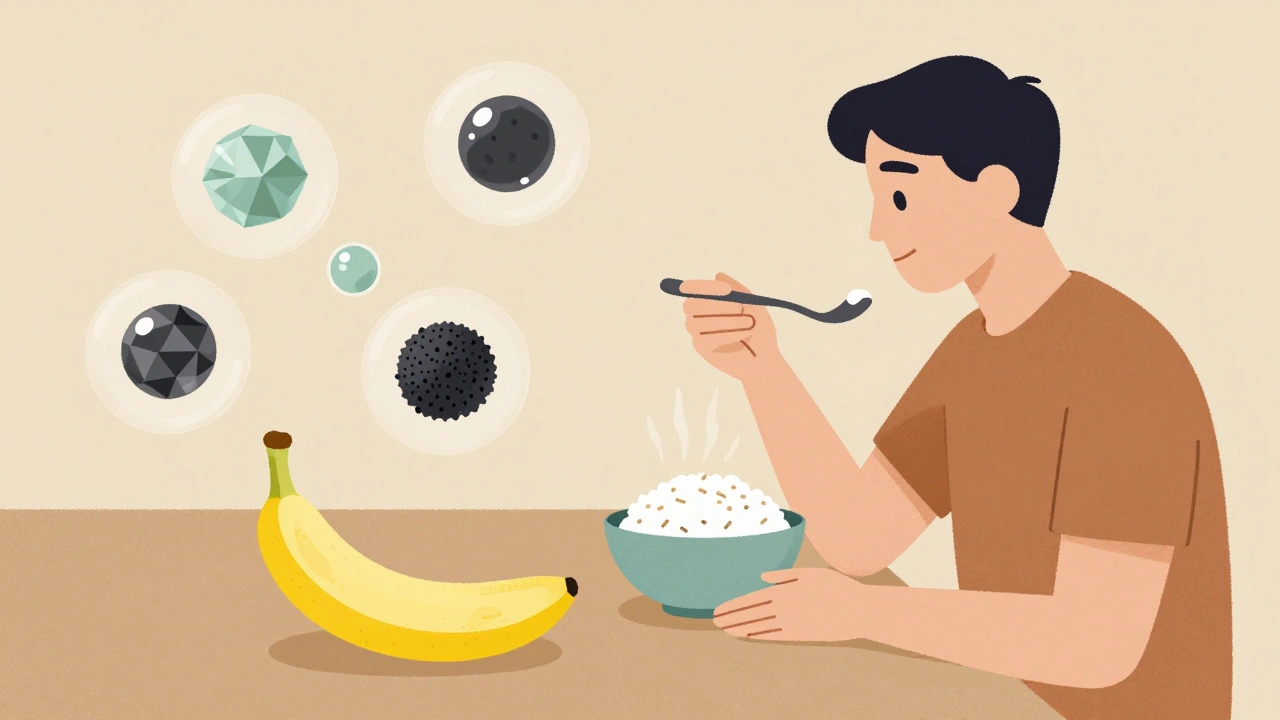
It’s not just about the medication-it’s about what you eat with it. High-fiber foods like beans, lentils, broccoli, and whole grains are great for blood sugar control, but they’re also fuel for gas. During the first 4 to 6 weeks of treatment, reduce your intake of these foods. Swap white rice for brown rice gradually. Choose ripe bananas over green ones. Avoid sugary drinks and candies-they’re pure sugar, and without enzymes to break them down, they’ll hit your colon like a bomb.
Instead, aim for consistent carb intake: 45 to 60 grams per meal. This keeps the amount of undigested carbs steady, so your gut doesn’t get overwhelmed. Don’t skip meals or eat huge portions-irregular eating makes side effects worse.
Over-the-Counter Fixes That Work
If gas still won’t quit, there are proven, safe solutions:
- Activated charcoal: Take 500mg capsules 30 minutes before meals. A study showed it reduced flatus volume by 32%.
- Simethicone: Found in Gas-X or Mylanta Gas. Take 120mg three times a day. It breaks up gas bubbles, reducing bloating by 40%.
- Probiotics: Lactobacillus GG (10 billion CFU daily) reduced flatulence by 37% in a 12-week trial. Bifidobacterium longum BB536, used in a 2023 ADA study, cut gas by 42% when paired with miglitol.
Don’t expect overnight results. Probiotics take 2 to 4 weeks to rebalance your gut. Stick with them. Many patients report that combining probiotics with slow titration made the difference between quitting the drug and staying on it long-term.
When to Consider Switching or Stopping
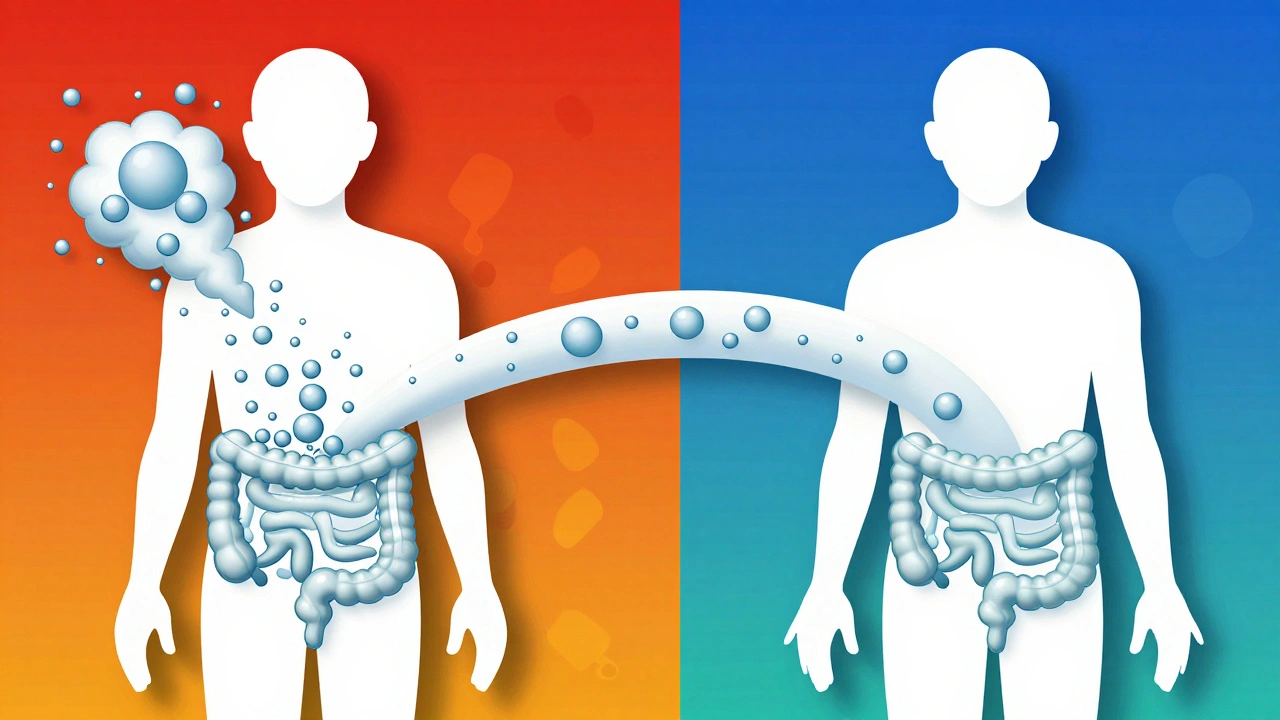
If you’ve tried slow titration, dietary changes, and OTC aids for 8 weeks and still can’t tolerate the side effects, talk to your doctor. Miglitol may be a better fit-it’s simply gentler on the gut. If you’re still struggling, newer options exist. In 2023, the FDA approved Acbeta-M, a combination tablet of acarbose and metformin with controlled-release tech that cuts gas by 28% compared to regular acarbose.
But don’t assume these drugs are outdated. In Japan, over 30% of diabetics take them. Why? They don’t cause weight gain or low blood sugar. For obese patients or those who can’t take metformin, they’re a lifeline. A 2013 study showed miglitol even helped patients lose an average of 1.2kg in 12 weeks-something most diabetes drugs can’t claim.
What to Expect Long-Term
These drugs aren’t for everyone, but for the right person, they’re life-changing. If you stick with them past the first month, you’re likely to see steady HbA1c drops of 0.5% to 1.0%. That’s comparable to metformin, without the risk of weight gain or hypoglycemia. And while they’re underused in the U.S., they’re growing in popularity in Asia, where diets are higher in carbs and patients tolerate the side effects better.
The future? Personalized dosing. Researchers are studying genetic differences in gut enzymes to predict who’s more likely to have bad side effects. Soon, a simple blood test might tell you whether acarbose or miglitol will be tolerable for you before you even start.
Right now, the key is patience and strategy. Don’t quit because of gas. Adjust. Adapt. Give your body time. Thousands of people are on these drugs today-not because they’re perfect, but because they work, and the side effects can be managed.
How long does gas last when taking acarbose or miglitol?
Gas and bloating usually peak between days 3 and 7 after starting the medication. Most people notice improvement by week 2, and symptoms significantly reduce by week 4 as gut bacteria adapt. Consistent use is key-stopping and restarting resets the process.
Is miglitol better than acarbose for reducing flatulence?
Yes. Miglitol is absorbed more into the bloodstream than acarbose, meaning less of it stays in the gut to interfere with digestion. Studies show miglitol causes 30% less flatulence than acarbose at equivalent doses. For patients who struggle with gas, miglitol is often the preferred choice.
Can I take probiotics with acarbose or miglitol?
Absolutely. Probiotics like Lactobacillus GG and Bifidobacterium longum BB536 have been shown to reduce flatulence by 37% to 42% when taken daily alongside these drugs. Take them at least 2 hours apart from the medication to avoid interference with absorption.
Why do I still get gas even after taking the drug with food?
Taking the drug with the first bite of a meal helps, but it doesn’t eliminate side effects. The drug still blocks carb-digesting enzymes, so undigested carbs reach the colon. Gas happens because of what you eat-not when you take the pill. Reducing high-fiber and sugary foods during the first month helps a lot.
Should I stop taking acarbose if I can’t handle the gas?
Don’t stop right away. Most people improve after 2 to 4 weeks. Try lowering your dose, adjusting your diet, and adding simethicone or probiotics. If you’ve tried everything for 8 weeks and still can’t tolerate it, talk to your doctor about switching to miglitol or another medication.
Are there any new treatments to reduce GI side effects?
Yes. In 2023, the FDA approved Acbeta-M, a combination tablet of acarbose and metformin with controlled-release technology that reduces gas by 28% compared to standard acarbose. Research also shows combining miglitol with specific probiotic strains can cut flatulence by over 40%.


Write a comment