





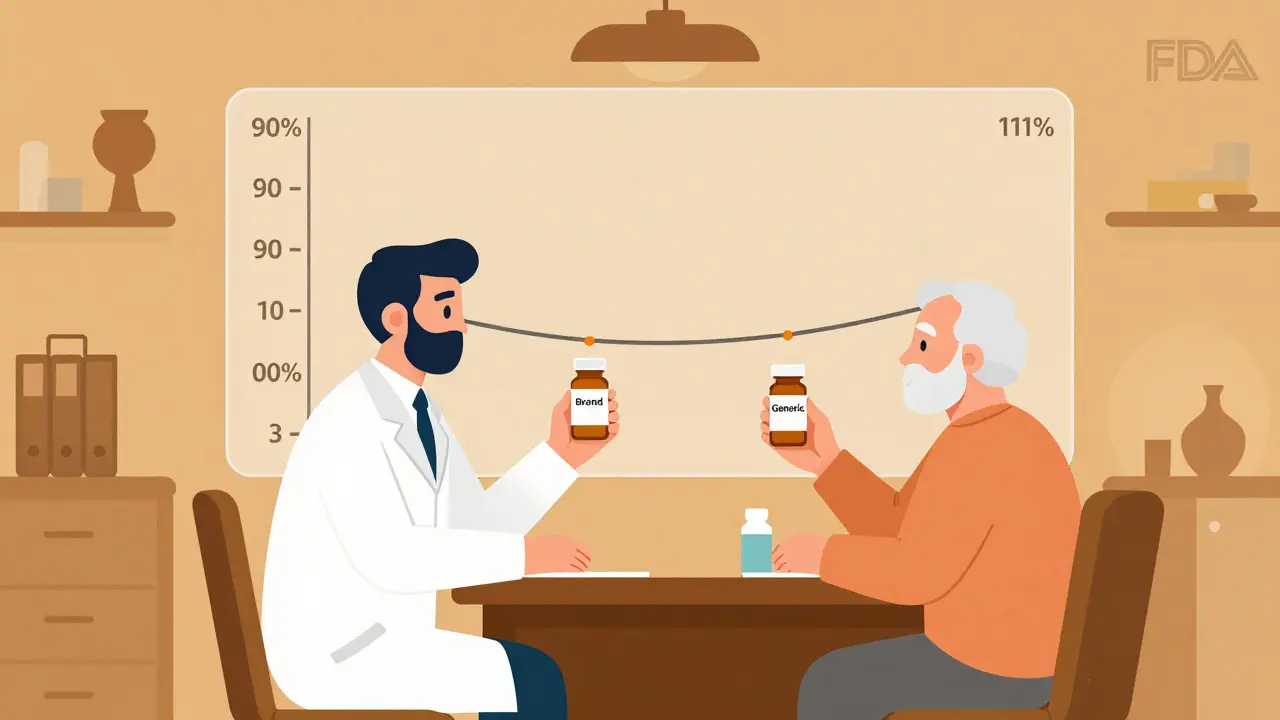
Switching a patient from a brand-name NTI drug to a generic version isn’t just a pharmacy transaction. It’s a clinical decision that can make or break their treatment. NTI drugs-like warfarin, levothyroxine, phenytoin, and digoxin-have a razor-thin margin between working perfectly and causing harm. A 5% drop in blood levels might mean a seizure. A 10% rise could mean a dangerous bleed. And yet, many patients are switched without ever understanding why-or what to watch for.
Why NTI Drugs Are Different
Not all generics are created equal. Most medications have a wide safety buffer. You can take a little more or a little less, and your body handles it. But with NTI drugs, that buffer is gone. The FDA defines them as drugs where even small changes in blood concentration can lead to treatment failure or serious side effects. That’s why their bioequivalence standards are stricter than regular generics. While most generics must match the brand within 80-125% of the original, NTI drugs must stay within 90-111.11%. For some, like levothyroxine, the standard is even tighter: 95-105% for AUC. These aren’t arbitrary numbers. They’re based on real data from thousands of patient studies.What Patients Really Think
A 2017 survey found that 94% of pharmacists believed generic NTI drugs were safe. But only 60% routinely substituted them. Why? Because patients were scared. And many providers were too. One doctor told me, “I’ve seen patients stabilize on brand for years. Then we switch them, and their INR goes wild.” That’s not myth-it’s documented. In one study, 8-12% of patients with well-controlled epilepsy had seizures after switching to a generic antiepileptic. That’s not because the generic didn’t work. It’s because their body reacted to a different filler, coating, or absorption rate. Even tiny differences matter when the window is this small.What You Must Say to Patients
Don’t just say, “This is cheaper.” Don’t say, “It’s the same.” Patients hear that and think, “But what if it’s not?” Instead, say this:- “This generic version has the exact same active ingredient as your brand. It’s been tested to deliver the same amount of medicine into your bloodstream.”
- “The FDA requires stricter testing for these drugs than for most generics. They have to match the brand within 90-111%-not 80-125%.”
- “I prescribe this to my own family. I trust it.”
- “We’ll check your blood levels in 5-7 days to make sure everything’s still on target.”
State Laws Can Change Everything
In 27 U.S. states, you can’t just switch an NTI drug without permission. Fourteen of them require written patient consent. Thirteen have special rules about which generics can be substituted. If you’re in California, you need a signed form. In Texas, you can’t substitute at all unless the prescriber checks a box. In Florida, you must document the counseling. Ignoring this isn’t just risky-it’s illegal. Always check your state’s pharmacy board website before making a switch. If you’re unsure, ask the pharmacist. They’re legally required to know these rules.
Who Needs Extra Care
Some patients are more vulnerable. Elderly patients. People with kidney or liver problems. Those on five or more medications. Their bodies don’t process drugs the same way. A small change in absorption can tip them into toxicity. For these patients, the switch should be even more deliberate. Schedule a follow-up within a week. Call them personally. Don’t wait for them to report a problem. One patient, 78, switched from brand to generic levothyroxine and felt fine-until she got dizzy walking to the bathroom. Her TSH was 8.2. Normal is 0.4-4.0. She didn’t know the difference. Her daughter found out when she saw the new bottle and asked why the pills looked different.Visual Aids Work
A 2023 study found that pharmacists who used simple charts or diagrams during counseling had 42% higher patient adherence. A picture of a narrow range-like a tightrope-helps. Show the therapeutic window. Mark where the brand sits. Mark where the generic lands. Show the FDA’s 90-111% range. Patients remember visuals better than words. Print a one-page handout. Include the drug name, why monitoring matters, what symptoms to watch for, and when to call. Make it big. Make it clear. Give it to them. Don’t assume they’ll remember.What Not to Say
Avoid these phrases:- “It’s just as good.” (Too vague. Patients don’t believe it.)
- “The FDA says it’s safe.” (Too abstract. They don’t trust regulators-they trust you.)
- “Everyone switches.” (Pressure doesn’t build trust.)
- “It’s cheaper.” (Makes them think you’re cutting corners.)
Documentation Matters
If you don’t write it down, it didn’t happen. In a malpractice case, your notes are your defense. Document this:- Date of switch
- Brand name and generic name used
- What you explained to the patient
- What monitoring was ordered and when
- Whether consent was obtained (if required by state law)
- That educational materials were provided
The Bigger Picture
NTI generics are safe. They’re effective. But only if we treat them with care. The FDA has spent years tightening standards. The data shows that when patients are properly counseled and monitored, outcomes are identical to brand-name use. But too often, the switch happens in silence. A pharmacy fills the script. The patient picks it up. No one talks. No one checks. That’s when things go wrong. The goal isn’t just to save money. It’s to make sure no patient gets hurt because no one bothered to explain. Every time you take five minutes to sit down, show a chart, and ask, “What are you worried about?”-you’re not just preventing a bad outcome. You’re building trust. And that’s what keeps patients alive.Are generic NTI drugs really as safe as brand-name ones?
Yes, when they meet FDA standards. The FDA requires stricter bioequivalence testing for NTI drugs than for regular generics. For most NTI drugs, the generic must deliver between 90% and 111.11% of the brand’s active ingredient into the bloodstream. For drugs like levothyroxine, the range is even tighter: 95% to 105%. These aren’t guesses-they’re based on clinical studies with thousands of patients. When properly monitored, outcomes are the same as with brand-name drugs.
Why do some patients have problems after switching?
Problems usually happen when monitoring is skipped. Even small differences in how a generic is absorbed-due to fillers, coatings, or manufacturing-can affect patients who are sensitive to tiny changes in blood levels. This is especially true for older adults, people with liver or kidney issues, or those on multiple medications. The issue isn’t the generic itself. It’s the lack of follow-up. Checking blood levels 5-10 days after switching catches problems before they become dangerous.
Which NTI drugs are most likely to cause issues after a switch?
The top NTI drugs with documented cases of issues after switching include warfarin (anticoagulant), levothyroxine (thyroid hormone), phenytoin and carbamazepine (antiepileptics), digoxin (heart medication), and valproic acid (mood stabilizer). These drugs have very narrow therapeutic ranges. For example, digoxin’s safe level is 0.5-0.9 ng/mL. A level above 1.0 can be toxic. A level below 0.5 may not work. That’s why monitoring is non-negotiable.
Do I need patient consent to switch an NTI drug?
It depends on your state. As of 2024, 14 states require written patient consent before substituting an NTI drug. Fourteen others have special rules about which generics can be used. Only a few states allow automatic substitution. Always check your state pharmacy board’s website or ask your pharmacist. If you’re unsure, get consent. It’s better to be safe than sorry-and legally protected.
How long should I wait before checking blood levels after a switch?
For warfarin, check INR within 3-5 days. For phenytoin, carbamazepine, or valproic acid, check serum levels within 7-10 days. For levothyroxine, check TSH in 6-8 weeks, but consider an earlier check (within 2 weeks) if the patient is elderly or has heart disease. For digoxin, check levels within 5-7 days, especially if the patient has kidney problems. Don’t wait for symptoms. Proactive testing prevents crises.
What should I do if a patient refuses to switch?
Listen first. Don’t push. Ask why they’re hesitant. Often, it’s fear of change or a bad experience. Validate their concern: “I understand you’re worried. Many patients feel the same way.” Then share the facts: “This generic has been tested to work the same way. We’ll check your levels in a week to make sure.” If they still say no, honor it. Prescribe the brand. But document the conversation. Later, they may change their mind after seeing how well the generic works for someone else.
Can I switch between different generic brands?
Technically, yes-if they’re all FDA-approved. But it’s not recommended. Each generic may have slightly different fillers or release profiles. Switching between generics is like switching from brand to generic: it can affect absorption. If a patient is stable on one generic, keep them on it. Don’t switch to another generic unless there’s a cost issue or supply problem-and even then, monitor closely.
Are there tools to help explain NTI drugs to patients?
Yes. The FDA’s 2024 NTI Drug Communication Initiative offers free, multilingual patient handouts for 15 high-priority NTI drugs. These include simple diagrams, symptom checklists, and clear instructions on when to call a provider. Many pharmacies also have printed materials. Use them. Don’t rely on memory. A visual aid increases understanding and adherence by more than 40%.


Write a comment