


NSAID Risk Calculator
Assess Your NSAID Risk
Answer the following questions to calculate your risk of gastrointestinal bleeding from NSAID use.
Your Risk Assessment
Recommendations:
Every year, millions of people reach for ibuprofen, naproxen, or diclofenac to ease joint pain, headaches, or backaches. These drugs - non-steroidal anti-inflammatory drugs, or NSAIDs - work fast, they’re cheap, and they’re easy to get. But for a surprising number of users, especially older adults, what starts as simple pain relief can turn into something far more dangerous: gastrointestinal bleeding.
How NSAIDs Damage the Gut
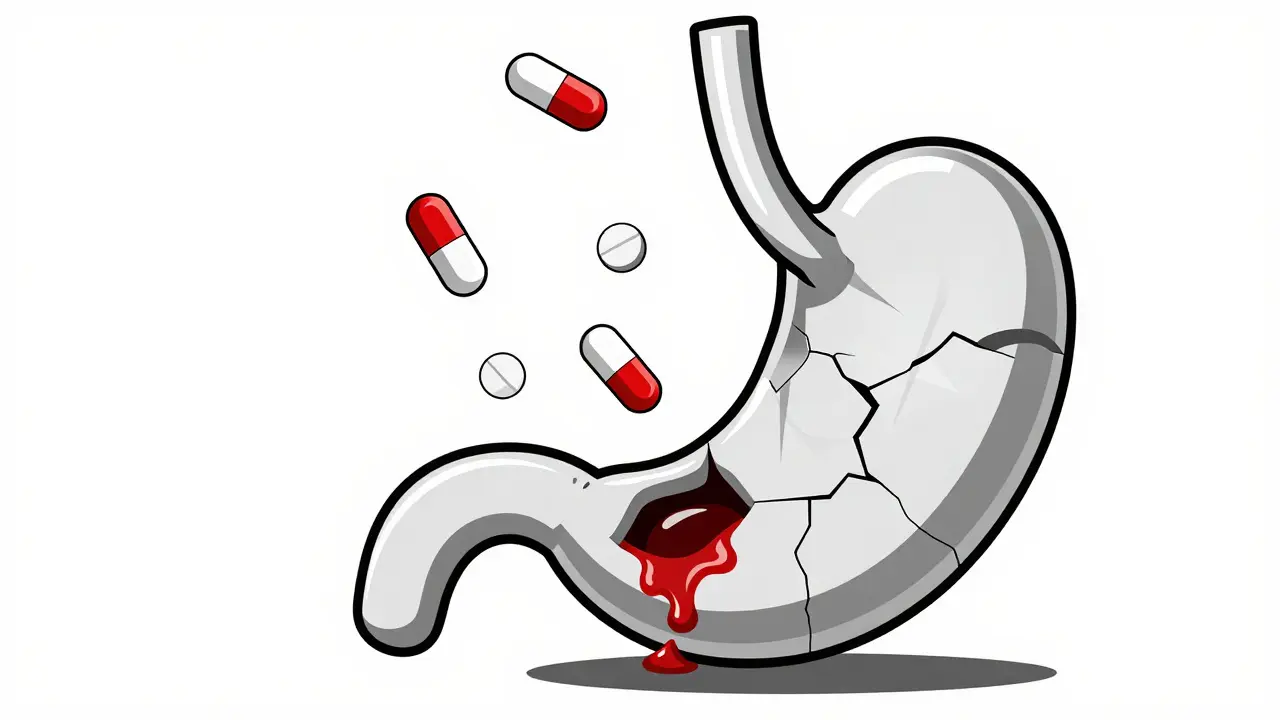
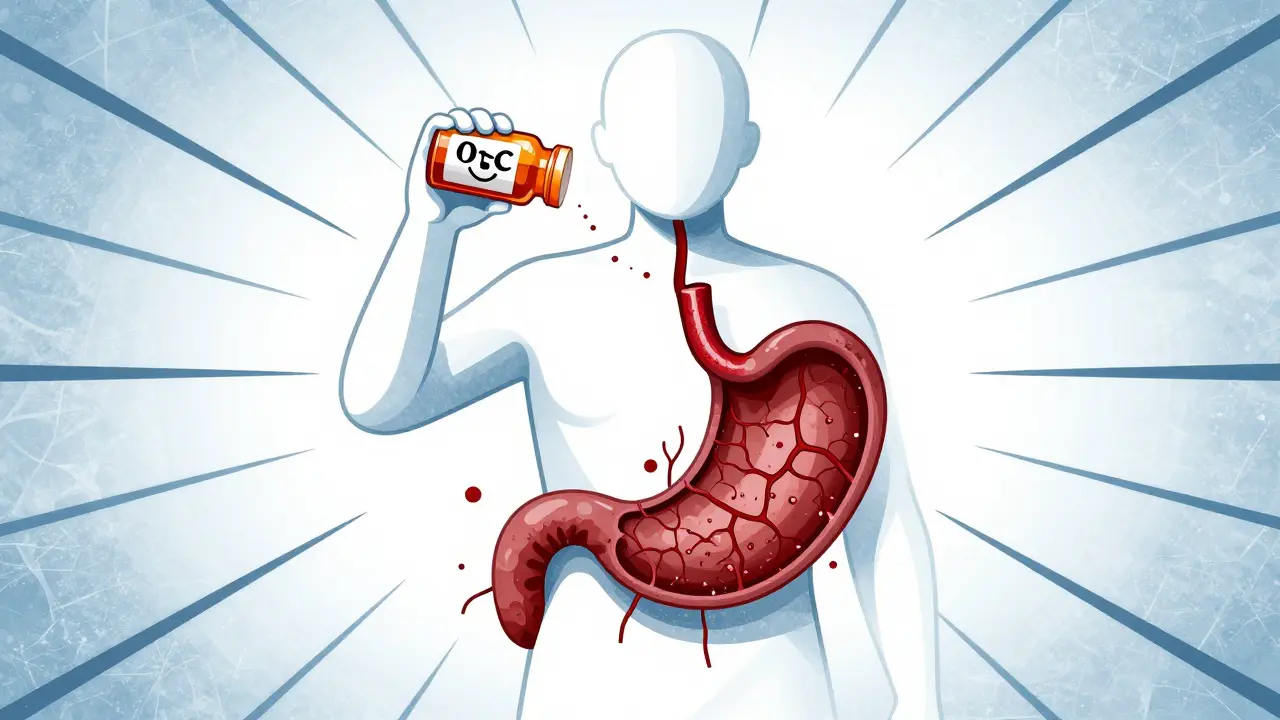
NSAIDs block enzymes called COX-1 and COX-2. COX-2 causes inflammation and pain, so blocking it helps. But COX-1 protects the stomach lining by making mucus and keeping blood flow steady. When NSAIDs shut down COX-1, the stomach loses its natural shield. Acid eats away at the tissue, causing erosions, ulcers, and sometimes life-threatening bleeding.You don’t need to have a history of ulcers for this to happen. A 2021 review in Clinics in Medicine found that NSAIDs cause damage all along the digestive tract - from the stomach to the small intestine. In fact, 86% of patients with lower GI bleeding had taken NSAIDs, even if they didn’t have a classic peptic ulcer.
Doctors classify this damage in four grades. Grade 1 is just surface scratches. Grade 4 means deep ulcers with visible blood vessels - the kind that can bleed out without warning. And here’s the scary part: many people don’t feel anything until they’re in the ER. Bleeding can be slow and hidden, leading to iron deficiency anemia. One Reddit user described their 78-year-old mother needing three blood transfusions after months of fatigue and dizziness - all from unnoticed NSAID-induced bleeding.
Who’s Most at Risk?
Not everyone who takes NSAIDs bleeds. But some people are walking into danger without knowing it. Experts have identified clear risk factors:- Age over 65 - risk doubles every decade
- Previous ulcer or GI bleeding - 2.5 times higher risk
- Taking blood thinners like warfarin or aspirin - 2.3 times higher risk
- Using corticosteroids (like prednisone) - 1.8 times higher risk
- Taking more than one NSAID at a time - 1.9 times higher risk
- Dosing over 1,200 mg of ibuprofen daily - 2.1 times higher risk
A 2021 American College of Gastroenterology tool gives points for each of these. Two or more points? You’re high risk. And if you’re high risk and still taking NSAIDs without protection? You’re playing Russian roulette with your gut.
Not All NSAIDs Are Created Equal
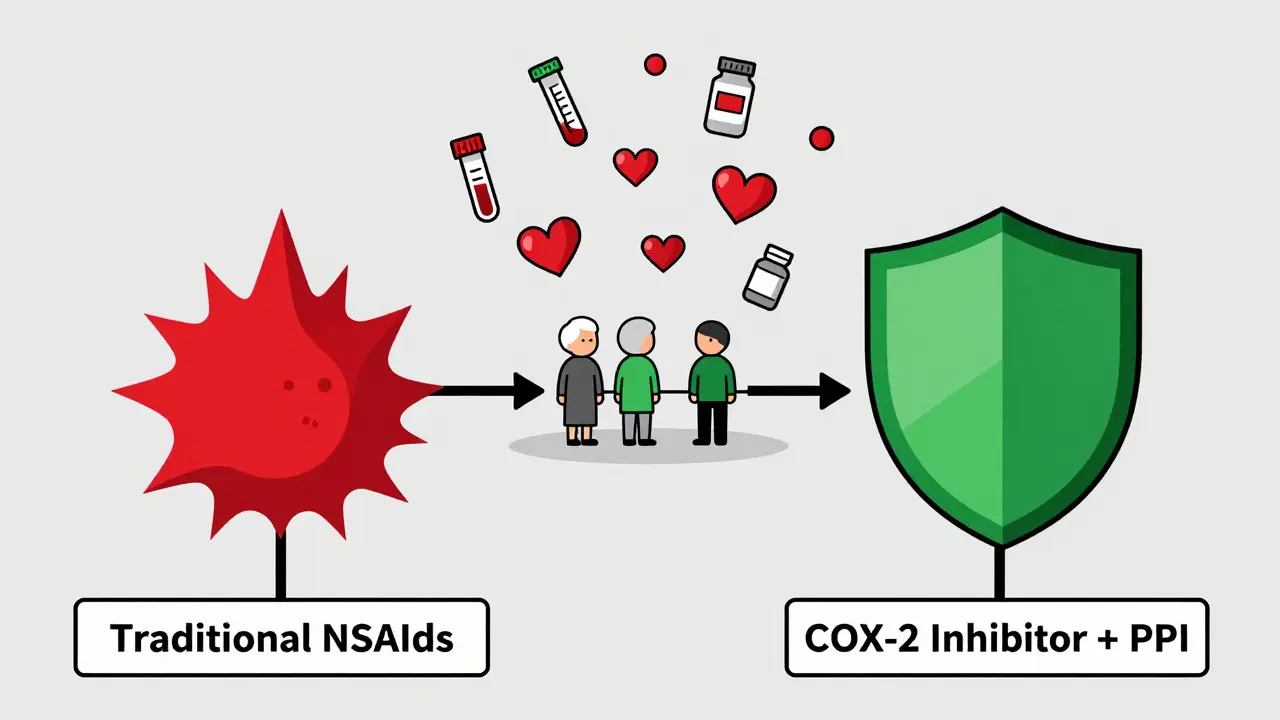
There’s a big difference between traditional NSAIDs and the newer COX-2 inhibitors. Naproxen, ibuprofen, and diclofenac - the common ones - hit both COX enzymes. That means more stomach damage. Celecoxib and etoricoxib - the COX-2 selective drugs - spare COX-1. That’s why a 2000 Lancet study showed celecoxib caused half as many serious ulcers as ibuprofen.But there’s a catch. COX-2 inhibitors raise heart attack risk. Rofecoxib (Vioxx) was pulled from the market in 2004 after the APPROVe trial showed it doubled heart attack risk. Celecoxib is still around, but the FDA requires a black box warning about cardiovascular danger.
So it’s not about picking the “safest” NSAID. It’s about matching the drug to the patient’s overall risk profile. Someone with heart disease shouldn’t take COX-2 inhibitors. Someone with a history of ulcers shouldn’t take naproxen alone.
How to Protect Your Stomach
If you need NSAIDs and you’re at risk, there’s one proven fix: proton pump inhibitors (PPIs). Omeprazole, esomeprazole, pantoprazole - these drugs shut off stomach acid production. A 2017 Cochrane review of over 13,000 patients found PPIs cut NSAID-related ulcers by 75%.That’s not a small win. It’s life-saving. For patients who’ve bled before, combining a COX-2 inhibitor with a PPI reduces the chance of another bleed by 80%. The number needed to treat? Just 16 people to prevent one serious complication over 12 weeks.
Misoprostol is another option - it rebuilds the stomach lining. But it causes diarrhea in up to 20% of users and isn’t safe during pregnancy. Most doctors avoid it unless there’s no other choice.
And here’s a practical tip: don’t wait until you feel pain. If you’re high risk, start the PPI before you even take your first NSAID. Studies show that preemptive protection reduces ulcers by 74%.
The Hidden Problem: Over-the-Counter Use
Most people think OTC NSAIDs are safe because they’re sold on drugstore shelves. They’re not. A 2021 review found that 26% of users take more than the recommended dose. Many don’t tell their doctors they’re taking them daily. One patient might pop two ibuprofen tablets for back pain, then another for a headache, then another after dinner - all without realizing they’ve crossed the danger line.On HealthUnlocked, 63% of users reported stomach discomfort from NSAIDs. Only 37% told their doctor. That silence is deadly. Doctors can’t protect you if they don’t know you’re in danger.
What’s New in 2026?
In 2023, the FDA approved a new combo pill: naproxen and esomeprazole (Vimovo). In the PRECISION-2 trial, it cut ulcer complications from 25.6% down to 7.3% compared to naproxen alone. It’s not perfect - it’s expensive - but for high-risk patients who need naproxen, it’s a game-changer.Researchers are also testing CINODs - drugs that release nitric oxide to protect the gut while blocking inflammation. Naproxcinod showed half the ulcers of naproxen in the 2021 NAPROX-2 trial. These aren’t on the market yet, but they’re coming.
Meanwhile, guidelines from the American College of Rheumatology in 2023 say this: if you have one risk factor, use the lowest NSAID dose for the shortest time. If you have two or more - skip the traditional NSAIDs. Go with a COX-2 inhibitor plus a PPI.
The Bigger Picture: Costs and Consequences
NSAID-related GI bleeding isn’t just a medical issue - it’s a financial disaster. In the U.S. alone, these complications cause 107,000 hospitalizations and 16,500 deaths every year. The cost? $2.2 billion annually.And yet, NSAIDs are still the go-to for arthritis and chronic pain. Why? Because they work. The Institute for Clinical and Economic Review found naproxen with PPI costs just $12,500 per quality-adjusted life year saved. Celecoxib with PPI? $45,200. That’s why most insurers still push the cheaper option - even if it’s riskier.
The bottom line? NSAIDs aren’t evil. They’re powerful tools. But like a chainsaw, they need respect. Use them with awareness. Know your risks. Talk to your doctor. And if you’re over 65, have had ulcers, or take blood thinners - don’t take NSAIDs without a stomach protector.
Because your gut doesn’t scream before it bleeds. And by the time it does, it might be too late.
Can I take ibuprofen if I’ve had a stomach ulcer before?
No - not without serious protection. If you’ve had a peptic ulcer or GI bleed, taking ibuprofen or other traditional NSAIDs puts you at very high risk of another bleed. The American College of Gastroenterology recommends using a COX-2 inhibitor like celecoxib combined with a proton pump inhibitor (PPI) like omeprazole. This combination reduces the risk of recurrence by up to 80%. Never restart NSAIDs after a bleed without consulting your doctor.
Are over-the-counter NSAIDs safer than prescription ones?
No. The active ingredients in OTC and prescription NSAIDs are the same. A 2021 review found 26% of people take OTC NSAIDs at doses higher than recommended - often daily - without telling their doctor. The risk of bleeding doesn’t drop just because the label says “non-prescription.” If you’re over 65, have high blood pressure, or take blood thinners, even one OTC ibuprofen tablet a day can be dangerous.
Do COX-2 inhibitors like celecoxib cause no stomach damage at all?
No. COX-2 inhibitors cause significantly less stomach damage than traditional NSAIDs - about half as many ulcers. But they’re not risk-free. A 2020 study showed 1 in 20 long-term users still developed ulcers. Plus, they carry a higher risk of heart attack and stroke. That’s why they’re not recommended for people with heart disease. They’re safer for the stomach, but not safe overall. Always use them with a PPI if you’re at risk for ulcers.
How do I know if NSAIDs are causing internal bleeding?
Symptoms can be silent. Classic signs like black, tarry stools or vomiting blood mean urgent care is needed. But many people experience only fatigue, dizziness, or shortness of breath - signs of anemia from slow, hidden bleeding. If you’ve been taking NSAIDs daily for more than a few weeks and feel unusually tired, get a blood test. A low hemoglobin level could mean you’re bleeding internally. Don’t wait for pain - that’s often too late.
Is it safe to take a PPI long-term with NSAIDs?
Yes, for most people. PPIs like omeprazole are very safe for long-term use when medically necessary. The biggest risk is a slight increase in bone fractures and vitamin B12 deficiency after 3+ years, but these are rare. The benefit of preventing a life-threatening GI bleed far outweighs these risks. If you’re on NSAIDs and have two or more risk factors, your doctor should prescribe a PPI - and monitor you yearly for any side effects. Don’t stop the PPI just because you feel fine.
What are alternatives to NSAIDs for chronic pain?
For arthritis or chronic joint pain, consider acetaminophen (Tylenol) for mild pain - it doesn’t harm the stomach. Physical therapy, weight loss, and heat/cold therapy can reduce reliance on pills. For inflammatory conditions, disease-modifying drugs like methotrexate or biologics may be options. In some cases, topical NSAID gels (like diclofenac gel) deliver pain relief with far less gut exposure. Always discuss alternatives with your doctor - especially if you’re at risk for bleeding.


Write a comment