




Every year, millions of Americans pay hundreds-or even thousands-of dollars for medications they no longer need. It’s not because they’re overprescribed by careless doctors. It’s because no one ever asked whether they still needed them. You might be taking a pill for sleep that stopped working years ago. Or a statin your doctor started when you were 60, but now you’re 78 and your health goals have changed. You might not even realize these drugs are costing you money and putting your health at risk.
Why You’re Paying for Medications You Don’t Need
Most people don’t think about their meds unless they feel sick or get a bill. But here’s the truth: deprescribing-the careful, planned process of stopping medications that aren’t helping anymore-is one of the most effective ways to cut costs and avoid side effects. It’s not about stopping everything. It’s about stopping the right things at the right time.
According to a 2019 JAMA Internal Medicine study, 41% of older adults take five or more medications. That’s called polypharmacy. And it’s not harmless. Each extra pill adds risk: dizziness, confusion, falls, kidney strain, even hospital visits. A 2022 Medicare report found that 37% of hospitalizations in adults over 65 are caused by medication problems-most of which could’ve been avoided.
And the money adds up fast. One unnecessary $50-a-month pill? That’s $600 a year. Three? $1,800. A 72-year-old woman in Ohio saved $840 a year just by stopping three meds she didn’t need anymore. One Reddit user cut $1,980 off his annual bill by ditching a vitamin D supplement (his levels were normal) and an herbal remedy his doctor never approved.
What Deprescribing Really Means
Deprescribing isn’t quitting cold turkey. It’s not a quick fix. It’s a conversation. A plan. A step-by-step process done with your doctor, not against them.
The goal? To stop drugs where the risks outweigh the benefits. Maybe you’re on a proton pump inhibitor (PPI) for heartburn, but you haven’t had symptoms in two years. Studies show you can safely stop these in many cases-and save $420 a year while lowering your risk of pneumonia. Or maybe you’re on a blood pressure pill that also treats migraines. Stopping it could cause headaches. That’s why you need a plan.
The American Academy of Family Physicians (AAFP) recommends a four-step process:
- Bring everything. Walk into your appointment with every pill, capsule, patch, and supplement in a brown bag. Include over-the-counter meds, vitamins, and herbal products. Most patients bring 2-3 unnecessary items they didn’t even realize were meds.
- Ask why. For each drug, ask: Why am I taking this? What’s it supposed to do? What happens if I stop? Use the Beers Criteria-a list of 53 drugs that are risky for older adults-to guide your questions.
- Plan the stop. Never quit abruptly. Some meds need to be tapered. Blood pressure pills, antidepressants, and steroids can cause rebound effects if stopped too fast. Your doctor should give you a timeline: 2 weeks? 6 weeks? 3 months?
- Check in. Schedule a follow-up. Call your doctor if you feel worse. Keep a log of symptoms. You might feel better after stopping a pill you didn’t even know was bothering you.
How to Prepare for the Talk
Doctors are busy. The average visit lasts just 15.7 minutes. If you show up without a plan, you’ll leave with the same prescriptions. But if you come prepared, you’ll get results.
Here’s what to do before your appointment:
- Make a list of every medication, including dose and frequency.
- Write down the cost of each-check your pharmacy receipt or use GoodRx.
- Circle the ones you’re unsure about. Did your doctor start them? Did your mom recommend them? Did you just keep taking them because “it seemed like a good idea”?
- Write down your goals: I want to feel less dizzy. I want to spend less on pills. I want to avoid another hospital trip.
Then ask these five questions:
- Why am I taking this?
- What are the benefits-and what are the risks?
- Could this cause falls, memory issues, or fatigue?
- Can I stop or reduce this dose?
- Who should I call if I feel different after stopping?
Doctors who’ve done this before say patients who come with a list are 68% more likely to get a deprescribing plan. That’s not magic. That’s preparation.
Where to Find Help Beyond Your Doctor
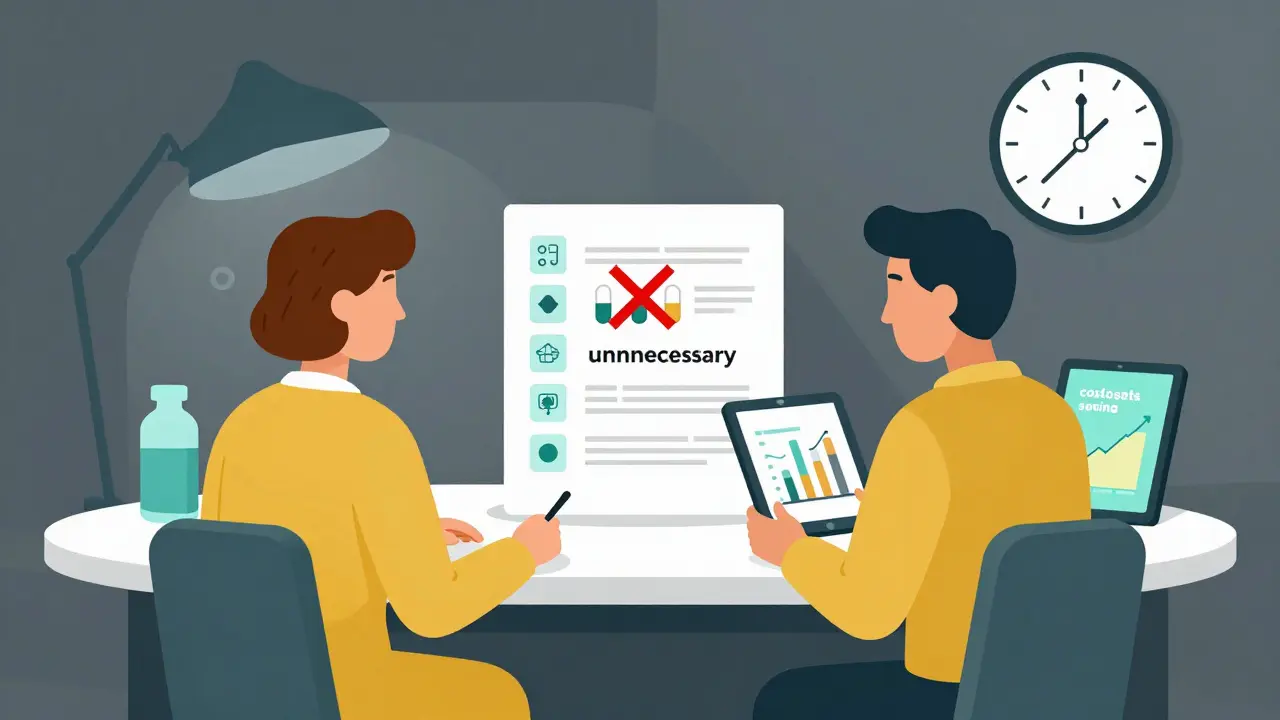
You don’t have to do this alone. Community pharmacists are trained to spot medication problems-and they’re free.
Under Medicare Part D, most pharmacies offer Medication Therapy Management (MTM) at no extra cost. This is a 20-30 minute session where a pharmacist reviews your whole list, checks for duplicates, interactions, and unnecessary drugs. One 2022 study found pharmacists identified $1,200 in annual savings per patient just by spotting redundant or outdated meds.
Some health systems, like Kaiser Permanente, have formal deprescribing programs. Their 2022 report showed patients saved $47 per month on meds and had 28% fewer adverse events. They also had 92% patient satisfaction.
And new tools are coming. Apps like MedStopper, used in 127 hospitals, use AI to flag risky or costly meds. They’re 89% accurate at spotting things doctors might miss.
What to Watch Out For
Deprescribing works-but only if done right.
A 2019 BMJ study found that when blood pressure meds were stopped too quickly, 12% of patients had a dangerous rebound spike. Another study by the National Council on Aging found that 18% of people who tried to quit meds on their own ended up in the ER, costing an average of $1,200 in extra care.
Don’t try to stop antidepressants, anti-seizure drugs, or steroids without medical supervision. Even something as simple as a sleep aid can cause rebound insomnia if you quit cold turkey.
Also, don’t assume all supplements are safe. A 2021 study found that 40% of older adults take at least one supplement that interacts with their prescription meds. Many don’t even tell their doctors.

Why This Matters More Than Ever in 2026
Prescription costs have risen 60% since 2014. For seniors on fixed incomes, meds now eat up 18.3% of their income-more than food or housing in some cases. The Lown Institute says inappropriate polypharmacy costs the U.S. system $30 billion a year in avoidable hospital visits.
But there’s good news. The Inflation Reduction Act capped insulin at $35 a month and expanded access to medication reviews. Medicare Advantage plans now rate providers on medication safety. That means doctors are being rewarded for deprescribing-not just prescribing.
And it’s not just about money. It’s about quality of life. One patient told the Deprescribing Network: “I stopped my sleep pill and started walking at night. I haven’t felt this clear-headed in 10 years.”
Next Steps: Your Action Plan
Here’s what to do this week:
- Grab your brown bag. Collect every pill, patch, and supplement you take.
- Write down the name, dose, why you take it, and the monthly cost.
- Call your pharmacy. Ask if you qualify for free Medication Therapy Management.
- Write down your top 3 goals: cost savings? fewer side effects? more energy?
- Book your next doctor’s appointment and say: “I’d like to review my medications. I think some might not be helping anymore.”
You don’t need to be sick to ask. You don’t need to be old. You just need to be willing to question what you’ve been told. The right meds can save your life. The wrong ones? They just drain your wallet-and your energy.
It’s time to take back control.
Is deprescribing safe?
Yes, when done properly under medical supervision. Deprescribing is not about stopping all meds-it’s about removing the ones that no longer help or could be harmful. Studies show it reduces falls, confusion, and hospital visits. The key is tapering slowly and monitoring symptoms. Never stop blood pressure, antidepressant, or steroid medications without your doctor’s guidance.
Can I just stop taking my meds on my own?
No. Stopping some medications suddenly can cause serious problems-like rebound high blood pressure, seizures, or severe anxiety. Even supplements can interfere with prescriptions. Always talk to your doctor or pharmacist first. If you’re unsure, call your pharmacy. Most offer free medication reviews.
How much money can I save by deprescribing?
It varies, but the average patient saves $600 a year per unnecessary medication. One study found patients saved $1,200 annually just by removing redundant supplements and over-the-counter drugs. Avoiding a single medication-related hospitalization-which costs about $15,700-can save tens of thousands. In Kaiser Permanente’s program, patients saved $47 per month on average.
What if my doctor says no?
Ask why. If they can’t explain the benefit, or if they say “it’s fine to keep taking it,” that’s a red flag. Request a referral to a pharmacist for a free Medication Therapy Management review. Many doctors welcome outside input. You can also ask for a second opinion or visit a geriatric specialist, who’s trained in managing complex medication regimens.
Are there tools to help me track my meds?
Yes. Apps like MedStopper (used in hospitals) and MyTherapy can help you log medications and side effects. Your pharmacy’s online portal often has a medication list you can print. You can also use a simple spreadsheet with columns for drug name, dose, reason, cost, and start date. The goal is to have a clear, updated list you can bring to every appointment.
Does Medicare cover deprescribing services?
Yes. Medicare Part D requires plans to offer free Medication Therapy Management (MTM) to high-risk beneficiaries. This includes a full review of your meds by a pharmacist, with recommendations to reduce costs and risks. You don’t need a referral-just call your pharmacy and ask if you qualify. Many people don’t know this service exists.
How long does it take to see results after stopping a medication?
It depends on the drug. For sleep aids or antacids, you might feel better in days. For blood pressure or antidepressants, it can take weeks. Your doctor should give you a timeline. Keep a symptom journal: note energy levels, sleep, dizziness, or mood changes. Many people report improved clarity, less fatigue, and fewer stomach issues after stopping unnecessary meds.


Write a comment