


Why Your Medication Reminders Keep Failing
You set up a reminder on your phone. You even named it "Morning Meds." But by noon, you’ve forgotten. Again. You’re not lazy. You’re not careless. You’re just human. And most medication reminders are designed like they’re for robots, not people.
Half of all people taking daily meds for chronic conditions like high blood pressure, diabetes, or arthritis miss at least one dose a week. That’s not because they don’t care-it’s because the reminders don’t work with their lives. Too many beeps. Too many apps. Too many steps. And when you’re juggling five different pills at different times, your brain just shuts down.
The good news? It’s not about buying a fancy gadget. It’s about building a system that fits you.
Start With What You’re Actually Taking
Before you touch your phone, write down every medication you take. Not what your doctor says you should take. Not what’s on the bottle label. What you actually swallow, when, and how.
Include:
- Drug name (brand or generic)
- Dose (e.g., 10 mg, 500 mg)
- Time of day (morning, after lunch, bedtime)
- Special instructions ("take with food," "avoid sunlight")
- Refill date (check your pharmacy app or call them)
Do this on paper first. A messy list is better than a perfect app entry that’s wrong. Many people make their first mistake here-typing "Lisinopril 20mg" when it’s actually "Lisinopril/HCTZ 20/12.5mg." That tiny error can mess up your whole schedule.
Use RxNorm, the standard drug database used by hospitals and pharmacies, to double-check names. If you’re unsure, call your pharmacist. They’ve seen this a thousand times. They won’t judge you.
Choose the Right Tool-Not the Flashiest One
There are dozens of apps: Medisafe, MedAdvisor, Mango Health, CareZone. But the best one isn’t the one with the most stars. It’s the one you’ll actually use.
Here’s what works for real people:
- If you’re over 65 or not tech-savvy: Try a physical pillbox with built-in alarms. Hero Health or MedMinder dispense pills automatically and call your family if you miss a dose. No phone needed. Cost: $150-$200 upfront, but no monthly fee.
- If you use your phone all day: MedAdvisor (popular in Australia) links directly to your pharmacy. When your script is ready, it texts you. No more guessing if your meds are in.
- If you take 3+ meds daily: Medisafe’s AI learns your patterns. If you usually skip your 8 p.m. pill after dinner, it nudges you at 7:30 p.m. with a gentle vibration, then a sound if you don’t respond.
- If you have family helping: CareZone lets you add caregivers. They get alerts if you miss a dose and can refill prescriptions for you.
Don’t install five apps. Pick one. Test it for two weeks. If it feels like a chore, switch. Your goal isn’t to master an app. It’s to take your pills.
Set Up Alarms That Don’t Annoy You
One alarm? Fine. Ten alarms? You’ll turn them all off.
Here’s how to set alarms that actually get noticed:
- Start with one time per day. Pick the hardest pill to remember-maybe your evening blood pressure pill. Set one alarm for that. Get it right for a week.
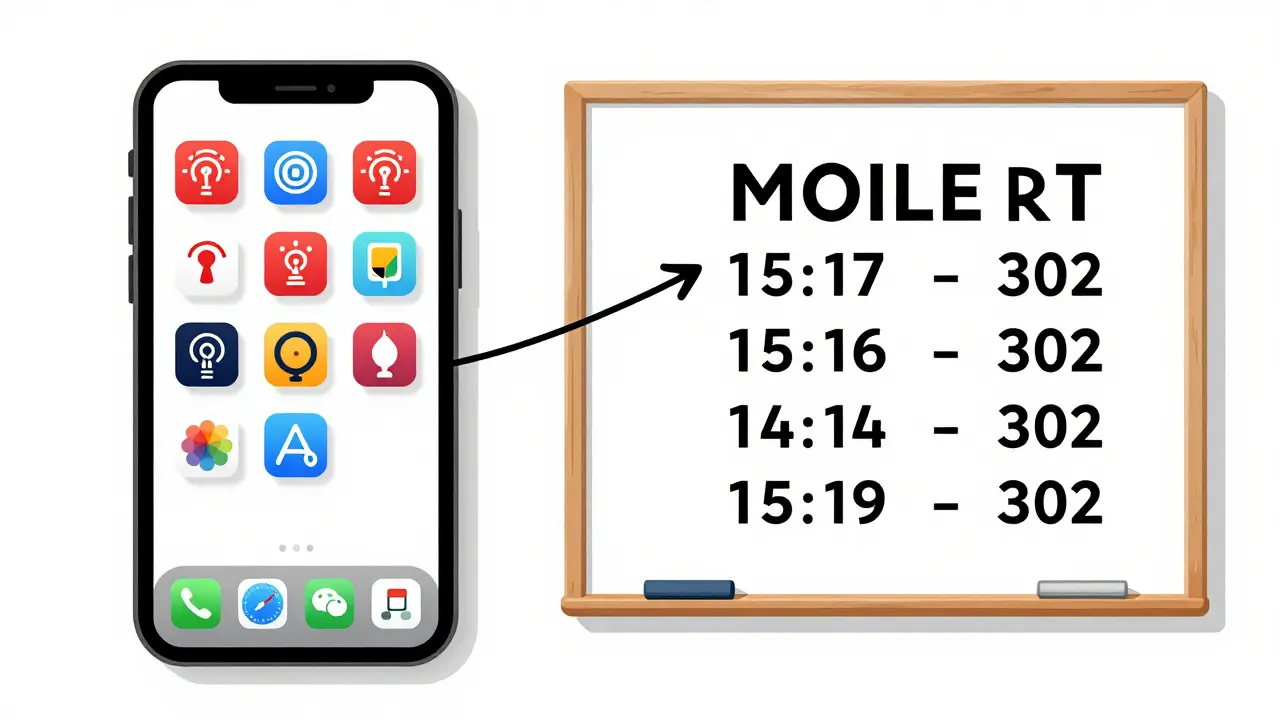
- Use staggered alerts. Don’t set all alarms at once. Set the first one as a silent vibration 15 minutes before. Then a soft chime at the exact time. Then a loud tone 30 minutes later. Finally, a text to your spouse if you still haven’t responded. This is how Mayo Clinic’s trial cut missed doses by 63%.
- Turn off sound in meetings or at night. Use your phone’s Do Not Disturb or calendar integration. If you’re in a Zoom call at 10 a.m., your reminder shouldn’t blare. Let it wait until you’re free.
- Never use the snooze button as your default. Snoozing 10 times a day means you’re not really remembering. Set your alarm for when you’ll be awake and ready-not when you think you might be.
Pro tip: Set your alarm to play a sound you associate with routine-like your favorite morning song or a short chime you only hear for meds. Your brain learns to link that sound with action.
Make It Visual-Not Just Auditory
Sound isn’t enough. Especially if you’re hard of hearing, tired, or in a noisy room.
Use visual cues:
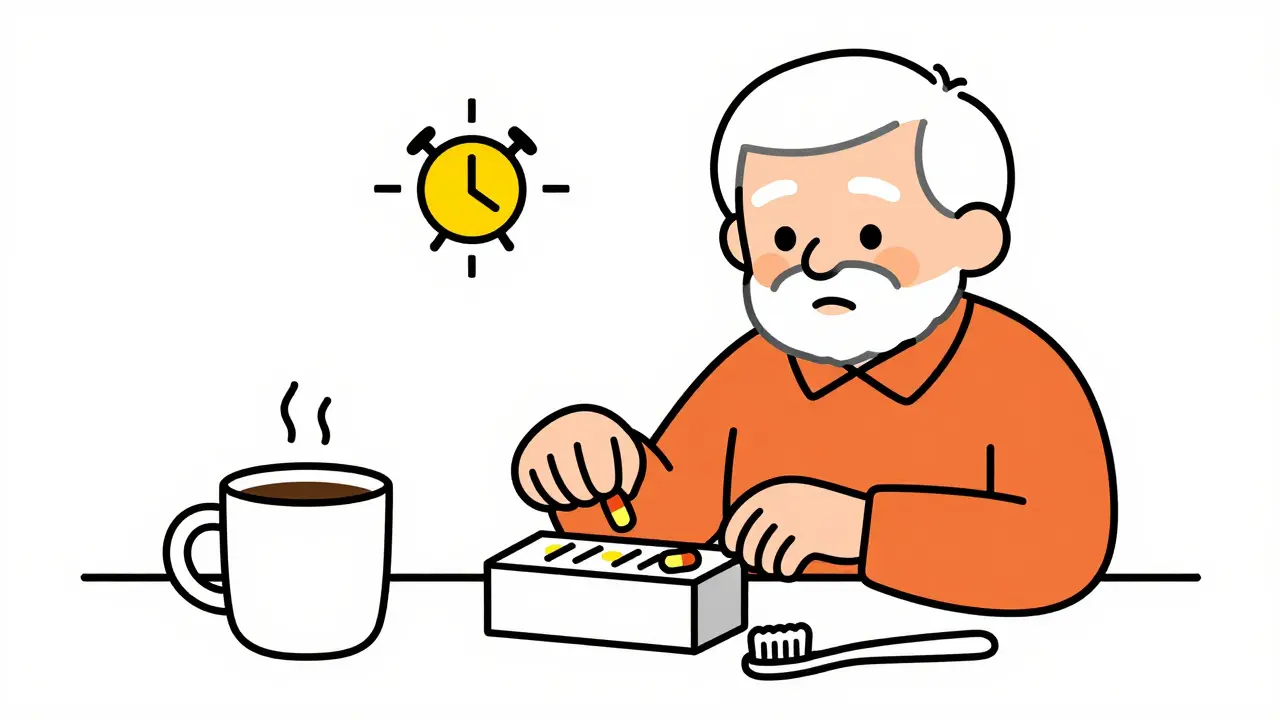
- Put your pillbox next to your toothbrush or coffee maker. That’s where you already go every morning.
- Use a whiteboard or sticky note on the fridge. Write: "8 a.m.-Metformin. 8 p.m.-Lisinopril." Cross it off with a marker.
- Some apps let you take a photo of your pills after you take them. Medisafe and MedAdvisor use this. It’s not about being watched-it’s about proof. Your brain remembers what you see.
Stanford Medicine found that people who took a photo after each dose were 89% less likely to fake their adherence. You can’t lie to a picture.
Link It to Your Pharmacy
Nothing kills adherence faster than running out.
If your pharmacy supports it (most do in Australia and the U.S.), connect your reminder app to your prescription system. MedAdvisor does this automatically with Australian pharmacies. In the U.S., CVS, Walgreens, and Rite Aid work with Medisafe and CareZone.
When you connect them:
- You get a text when your refill is ready.
- The app checks if you’ve picked it up.
- If you haven’t, it nudges you-and can even notify a family member.
One user in Sydney told me she missed three refills in a row because she thought her script was still active. After linking to her pharmacy app, she got a text the day it expired. She picked it up the next day. Her blood pressure dropped by 15 points in two weeks.
Give Yourself Credit-Not Guilt
Most apps show you a percentage: "You’re 72% adherent this week." That’s not helpful. It’s shaming.
What works better?
- Streak counters: "7 days in a row!"
- Small rewards: "You’ve taken your meds for 21 days. Treat yourself to a coffee."
- Weekly summaries: "You missed one dose last week. Was it because you were traveling? We can adjust your time."
University of Pennsylvania found that people who got positive feedback-like a badge or a thank-you note-were 37% more likely to stick with it for 30 days.
Turn off the guilt. Turn on the encouragement.
What to Do When It Still Doesn’t Work
Maybe you’ve tried everything. Alarms. Photos. Pharmacy links. Still missing doses.
Ask yourself:
- Is the dose too big? Maybe you’re supposed to take two pills at once and it’s hard to swallow. Ask your doctor if they can switch you to a combo pill.
- Is the timing weird? "Take every 8 hours" sounds precise, but if you sleep through 2 a.m., you’ll never do it. Ask if you can switch to twice daily instead.
- Are side effects stopping you? Dizziness? Nausea? Tell your doctor. Sometimes the fix isn’t more reminders-it’s a different drug.
- Do you need help? If you live alone and forget often, ask about home visits from a nurse or community health worker. Many Medicare and private plans cover this.
And if you’re still stuck? Talk to your pharmacist. They’re not just there to hand out pills. They’re your secret weapon for adherence.
Final Tip: Keep It Simple, Keep It Real
You don’t need a perfect system. You need a working one.
Some people use a kitchen timer. Some use a sticky note on the mirror. Some use a $20 pillbox with a loud alarm. All of them work better than an app that sits unused on your home screen.
Medication adherence isn’t about technology. It’s about habits. And habits stick when they’re easy, visible, and kind to you.
Start small. One pill. One alarm. One day. Then build from there.
What’s the best app for medication reminders in Australia?
MedAdvisor is the most widely used in Australia because it connects directly to local pharmacies and integrates with My Health Record. It’s free, works on both iOS and Android, and sends refill alerts automatically. For users who want more advanced features like AI scheduling or caregiver alerts, Medisafe is a strong alternative.
Can I use my Apple Watch or smartwatch for medication reminders?
Yes, but with limits. Apple Watch and Fitbit can send vibrations and alerts, but they’re not reliable as your only reminder system. They often disconnect from your phone, lose battery, or don’t sync properly with complex dosing schedules. Use them as a backup-not your primary tool. Always pair them with your phone’s app or a physical alarm.
Why do my medication reminders keep going off at the wrong time?
This usually happens because your phone’s time zone or daylight saving setting is wrong. Check your phone’s Date & Time settings. Make sure "Set Automatically" is turned on. If you travel often, manually verify the time zone after each trip. A mismatch here causes 22% of all early reminder failures.
How do I get my family to help without making them feel like they’re policing me?
Frame it as teamwork, not control. Say: "I’m trying to get better at taking my meds, and I’d really appreciate it if you could check in once a week to see if I’ve taken my evening pill." Don’t give them access to edit your schedule unless you’re comfortable. Start with view-only access. Many apps like CareZone let you control exactly what they can see.
Are there free options that actually work?
Yes. MedAdvisor and CareZone are free and reliable for basic use. Medisafe has a free version that includes alarms, photos, and refill alerts. The free versions don’t have advanced AI or caregiver features, but they handle 80% of common needs. Don’t pay for premium features unless you need them. Most people never use them.
What if I forget to take my pill and I’m not near my phone?
If you’re away from your phone and miss a dose, don’t panic. Most medications are safe to take up to 2-4 hours late. Check the label or call your pharmacist. Never double up unless told to. If you miss a dose regularly, adjust your alarm to go off earlier-when you’re more likely to be home or awake.


Write a comment