


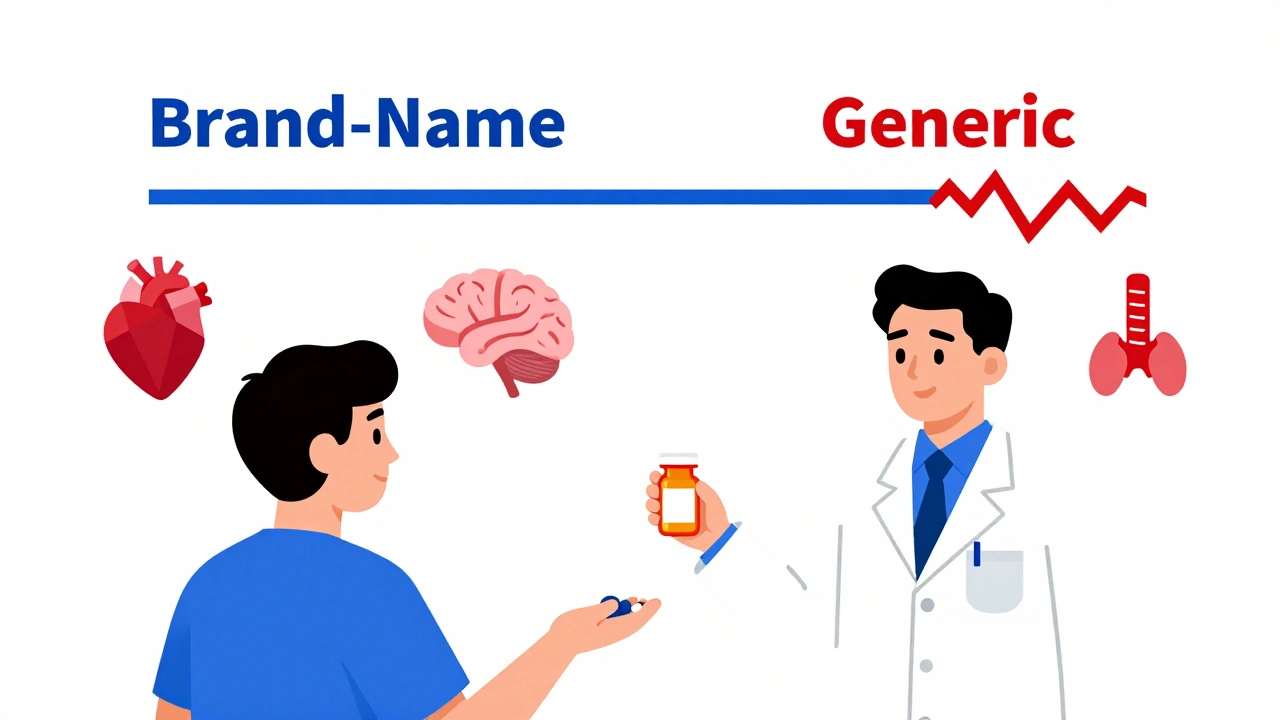
When a pharmacist hands you a pill bottle with a different name than what your doctor wrote, it’s not a mistake. It’s generic substitution - and it’s happening in 90% of prescriptions where a generic version exists. But here’s the catch: not all doctors are okay with it. Some medical societies have issued official positions that directly contradict how pharmacies operate, especially for drugs where even tiny differences can be dangerous.
Why Generic Drugs Are Everywhere
Generic drugs aren’t cheap knockoffs. They’re legally approved copies of brand-name medications that contain the exact same active ingredient, strength, dosage form, and route of administration. The FDA requires them to meet the same strict standards as the original. In fact, 90% of all prescriptions filled in the U.S. are for generics - yet they make up only 23% of total drug spending. That’s billions saved every year. But saving money doesn’t mean it’s always safe. The real debate isn’t about whether generics work. It’s about when they’re allowed to be swapped without a doctor’s say-so.The FDA’s Rule: Bioequivalence Isn’t Always Enough
The FDA says a generic drug is acceptable if it’s bioequivalent - meaning the amount of drug in your bloodstream falls within 80% to 125% of the brand-name version. That sounds precise. But for some drugs, even a 5% variation can mean the difference between control and crisis. Take anticonvulsants like phenytoin or carbamazepine. These drugs have a narrow therapeutic index (NTI). That means the gap between an effective dose and a toxic one is razor-thin. A patient stabilized on a brand-name version might suddenly have a seizure if switched to a generic that’s at the lower end of that 80-125% range. Or worse - they might get too much and suffer dizziness, confusion, or liver damage. The FDA knows this. That’s why they flag NTI drugs in the Orange Book with special codes. But state laws? They vary wildly. Some require a doctor’s permission before switching. Others let pharmacists substitute automatically. That’s where medical society guidelines come in.The American Academy of Neurology: No Substitution for Epilepsy Drugs
The American Academy of Neurology (AAN) is one of the few medical societies that has drawn a hard line. In their official position, they oppose automatic substitution of generic antiepileptic drugs - period. Why? Because the stakes are too high. About 3.4 million Americans live with epilepsy. For many, seizure control is fragile. A 2023 ASPE report cited neurologists who say 68% have seen complications after switching to generics. These aren’t anecdotes. They’re patterns: breakthrough seizures, increased ER visits, medication adjustments. The AAN doesn’t say generics don’t work. They say the risk isn’t worth it when the patient is stable. This isn’t just theory. In states like California and New York, laws now require prescriber consent before substituting NTI drugs - partly because of pressure from neurology groups. Other specialties? They’re watching.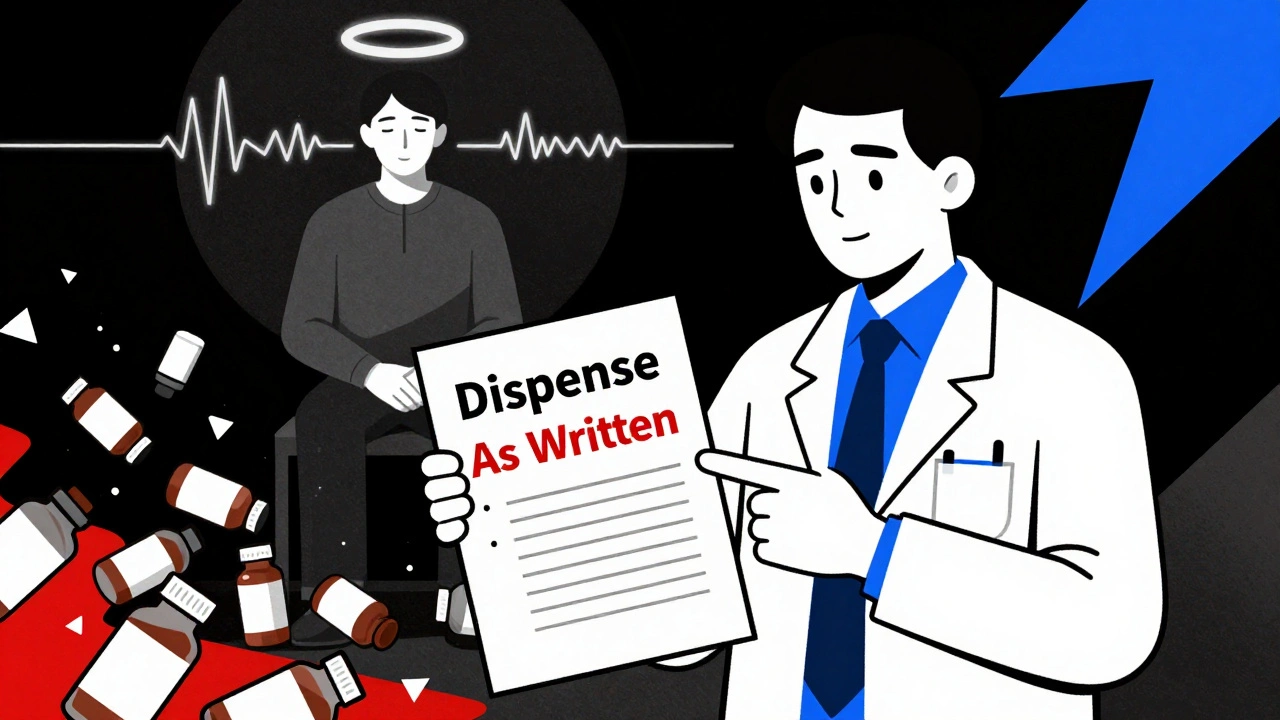
The American Medical Association: Naming Matters More Than You Think
You might not realize it, but the name on your prescription is carefully chosen. The AMA’s United States Adopted Names (USAN) Council decides how generic drugs are named - not randomly, but with patient safety as the top priority. They avoid names that sound too similar to other drugs. No confusing “Lunesta” with “Lunexa.” No mixing stems that could make “Metoprolol” look like “Metoprolol Tartrate” when it’s actually a different formulation. Why? Because 40% of medication errors are linked to look-alike or sound-alike names, according to the Institute of Medicine. The USAN Council also assigns “stems” - the endings that tell you what class a drug belongs to. “-lol” for beta-blockers, “-pril” for ACE inhibitors. This helps doctors and pharmacists quickly identify drug types and avoid mix-ups. But here’s the twist: if a new drug doesn’t fit into an existing stem group, they create a new one. Rarely. And only if it’s truly novel. That’s because changing names too often causes confusion - and confusion leads to errors.Oncology: Off-Label Use Makes Generic Substitution Easier
In cancer care, generics are used in ways the original manufacturers never intended. That’s called off-label use. The National Comprehensive Cancer Network (NCCN) compendium - used by Medicare and insurers to decide what to cover - lists hundreds of off-label generic drug applications. For example, a generic chemotherapy drug approved for breast cancer might be used for ovarian cancer. If the NCCN says it’s safe and effective, insurers pay for it. That’s why oncologists rarely resist generic substitution. The evidence is clear: for most chemo drugs, the active ingredient is the only thing that matters. Bioequivalence studies show consistent results. Plus, cancer patients are often on complex regimens - switching brands mid-treatment adds unnecessary risk. So, if the NCCN endorses it, and the FDA says it’s equivalent, doctors trust the system.
Why Some Doctors Still Resist
It’s not about distrust in generics. It’s about trust in the patient’s stability. A primary care doctor might switch a patient from brand-name lisinopril to generic without a second thought. But a psychiatrist? They’ll hesitate with SSRIs. A cardiologist? They’ll pause with warfarin. Why? Because these drugs affect systems that are finely tuned. A small change in blood levels can cause a mood dip, a clot, or a bleed. And it’s not just the drug. It’s the patient’s experience. Many report feeling different after a switch - even if labs show no change. That’s real. It’s not placebo. It’s psychopharmacology. The body adapts. The brain remembers. And when that rhythm breaks, symptoms return. Medical societies aren’t anti-generic. They’re pro-safety. They want substitution to be intentional, not automatic.What This Means for Patients
If you’re on a drug for epilepsy, thyroid disease, warfarin, or certain seizure meds - ask before a switch. Don’t assume your pharmacist can swap it. Check your prescription. Look for “dispense as written” or “do not substitute.” If it’s not there, ask your doctor to add it. If you’re on a generic and feel off - tell your doctor. Don’t wait. Changes in mood, energy, or symptoms aren’t always “just stress.” They could be a drug level shift. And if you’re prescribed a new medication? Ask: “Is there a generic? Is it safe to substitute?” Most doctors will tell you - but only if you ask.The Bigger Picture: Cost vs. Control
The pharmaceutical industry pushes generics because they’re profitable. Insurers push them because they save money. Hospitals push them because budgets are tight. But patients? They’re caught in the middle. One side says: “It’s the same drug.” The other says: “It’s not the same for me.” Medical society guidelines exist to protect the vulnerable - not to block progress. They’re not about stopping generics. They’re about making sure substitution happens at the right time, for the right patient, with the right oversight. The future? More alignment between FDA therapeutic equivalence ratings and specialty guidelines. But for now, if you’re on an NTI drug - don’t let a pharmacy decision override your doctor’s judgment.Are generic drugs really the same as brand-name drugs?
Yes - for most drugs, generics contain the same active ingredient, strength, and dosage form as the brand-name version. The FDA requires them to meet the same quality, purity, and stability standards. But for drugs with a narrow therapeutic index - like anticonvulsants, warfarin, or thyroid meds - even small differences in how the body absorbs the drug can matter. That’s why some doctors avoid automatic substitution for these.
Can a pharmacist substitute a generic without my doctor’s permission?
It depends on your state and the drug. Most states allow pharmacists to substitute generics unless the prescription says “dispense as written” or “do not substitute.” But for drugs with a narrow therapeutic index (NTI), many states require prescriber consent. Check your prescription label or ask your pharmacist. If you’re on epilepsy, thyroid, or blood thinner medication, always confirm before a switch.
Why do some doctors refuse to allow generic substitution?
Doctors who oppose substitution aren’t against generics - they’re protecting stability. For drugs like antiepileptics or warfarin, a tiny change in blood levels can cause breakthrough seizures, clots, or bleeding. Some patients report feeling different after a switch, even if lab tests look normal. Medical societies like the American Academy of Neurology have issued official guidelines against automatic substitution for these drugs because the risks outweigh the cost savings.
How do I know if my drug has a narrow therapeutic index?
Common NTI drugs include phenytoin, carbamazepine, levothyroxine, warfarin, lithium, and cyclosporine. If you’re on one of these, your doctor or pharmacist should flag it. You can also check the FDA’s Orange Book - drugs with an “A” rating are considered therapeutically equivalent, but those with special NTI notes are flagged. When in doubt, ask: “Is this a narrow therapeutic index drug?”
Do generic drugs cause more side effects?
There’s no evidence that generics cause more side effects than brand-name drugs - if they’re bioequivalent and approved by the FDA. But some patients report changes in how they feel after a switch. This isn’t always due to the drug itself - it could be the placebo effect, stress, or the body adjusting to a new formulation. If you notice new symptoms after switching, talk to your doctor. Don’t assume it’s “all in your head.”


Write a comment