

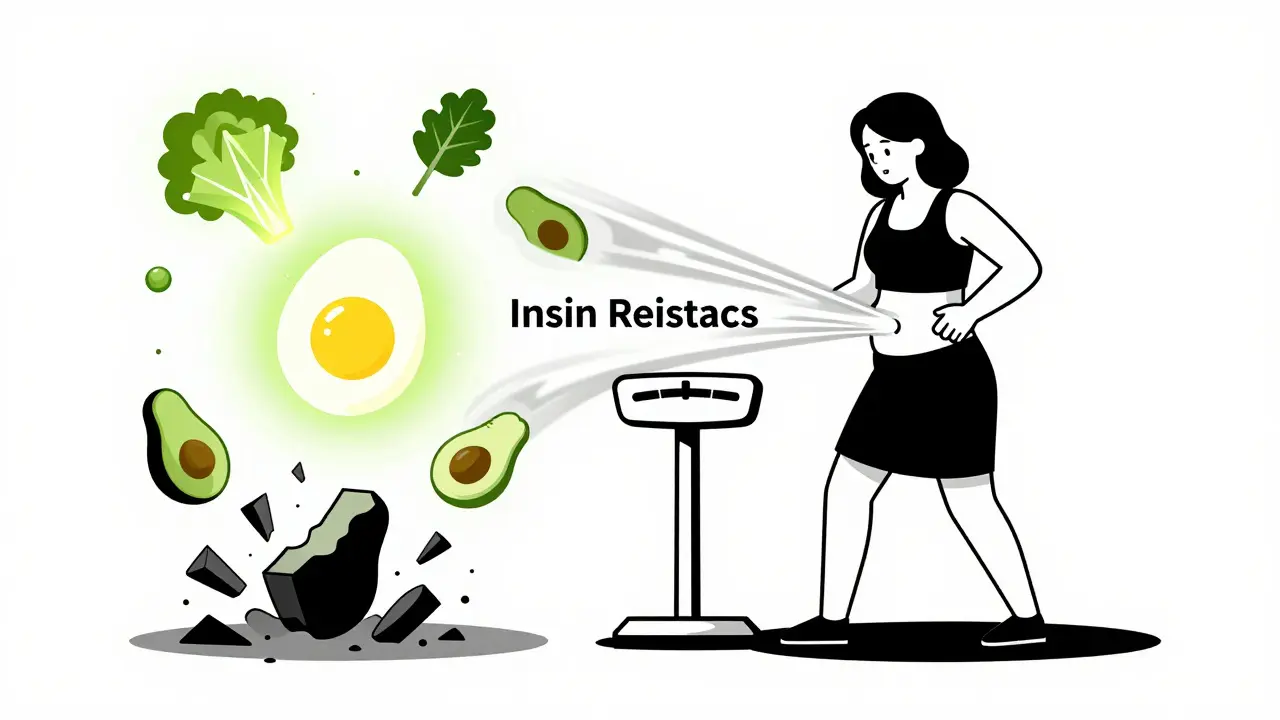
If you have PCOS and you’re struggling to lose weight, you’re not lazy. You’re not failing. You’re not doing anything wrong. The problem isn’t willpower-it’s biology. Insulin resistance is the hidden engine behind why weight sticks to your midsection no matter how hard you try to lose it. And it’s not just about calories in, calories out. This is a metabolic trap, and understanding it is the first step to breaking free.
Why Weight Comes So Easily With PCOS
Polycystic Ovary Syndrome isn’t just about irregular periods or acne. At its core, it’s a metabolic disorder. About 70% to 95% of people with PCOS who are overweight have insulin resistance. Even leaner individuals with PCOS? Around 30% to 75% still have it. That means insulin resistance isn’t a side effect-it’s a defining feature.
Here’s how it works: your body makes insulin to help move sugar from your blood into your cells for energy. But with insulin resistance, your cells don’t respond well. So your pancreas pumps out more insulin to compensate. That extra insulin doesn’t just float around-it starts telling your body to store fat, especially around your belly. It also shuts down fat burning. And it ramps up your production of male hormones like testosterone. That’s why women with PCOS often gain weight in an “apple shape” instead of a “pear shape.”
And it gets worse. The more fat you store, especially around your organs, the more insulin resistant you become. It’s a loop: insulin resistance causes weight gain, and weight gain makes insulin resistance worse. That’s why many women with PCOS feel like they’re running in place-eat less, move more, and still gain weight. It’s not your fault. It’s your hormones.
The Real Health Risks Beyond the Scale
Carrying extra weight with PCOS isn’t just about how you look. It’s about how long you’ll live. The same insulin resistance that makes you gain weight also raises your risk of type 2 diabetes. In fact, women with PCOS are up to seven times more likely to develop it than women without it. And if you’re overweight? That risk jumps even higher.
High insulin levels also lower your sex hormone-binding globulin (SHBG), which means more free testosterone circulating in your blood. That worsens acne, hair growth, and hair loss. It also messes with ovulation, making it harder to get pregnant. And then there’s the silent danger: abdominal fat. Unlike fat on your hips or thighs, belly fat is metabolically active. It releases inflammatory chemicals that raise your blood pressure, worsen cholesterol, and increase your risk of heart disease.
Studies show that women with PCOS are more likely to have high blood pressure, fatty liver disease, and sleep apnea-all linked to insulin resistance and excess weight. The CDC and Cleveland Clinic both warn that PCOS isn’t just a reproductive issue. It’s a whole-body metabolic condition that demands attention before it leads to serious, long-term damage.
What Diets Don’t Work (And Why)
You’ve probably tried low-fat diets. Maybe you counted calories. You might have cut out carbs completely and felt better for a few weeks-only to crash, crave sugar, and regain everything. That’s not your fault. Most standard diets ignore the root problem: insulin spikes.
Low-fat, high-carb diets? They make insulin resistance worse. When you eat a lot of refined carbs-white bread, pasta, sugary snacks, even fruit juice-your blood sugar spikes. Your body responds with a big insulin surge. That insulin tells your body to store fat and stop burning it. It also makes you hungrier within hours, triggering cravings for more carbs. It’s a recipe for failure.
Extreme low-calorie diets? They backfire too. When you eat too few calories, your body thinks it’s starving. It slows your metabolism, holds onto fat, and increases stress hormones like cortisol. That makes insulin resistance even worse. You lose muscle, not fat. And when you go back to normal eating? The weight comes back faster than ever.
And don’t fall for quick fixes-keto, intermittent fasting, juice cleanses. Some people find them helpful, but they’re not solutions. They’re temporary fixes that don’t teach your body how to handle insulin properly. If you go back to your old eating habits, the weight and symptoms return.
What Actually Works: Eating for Insulin Balance
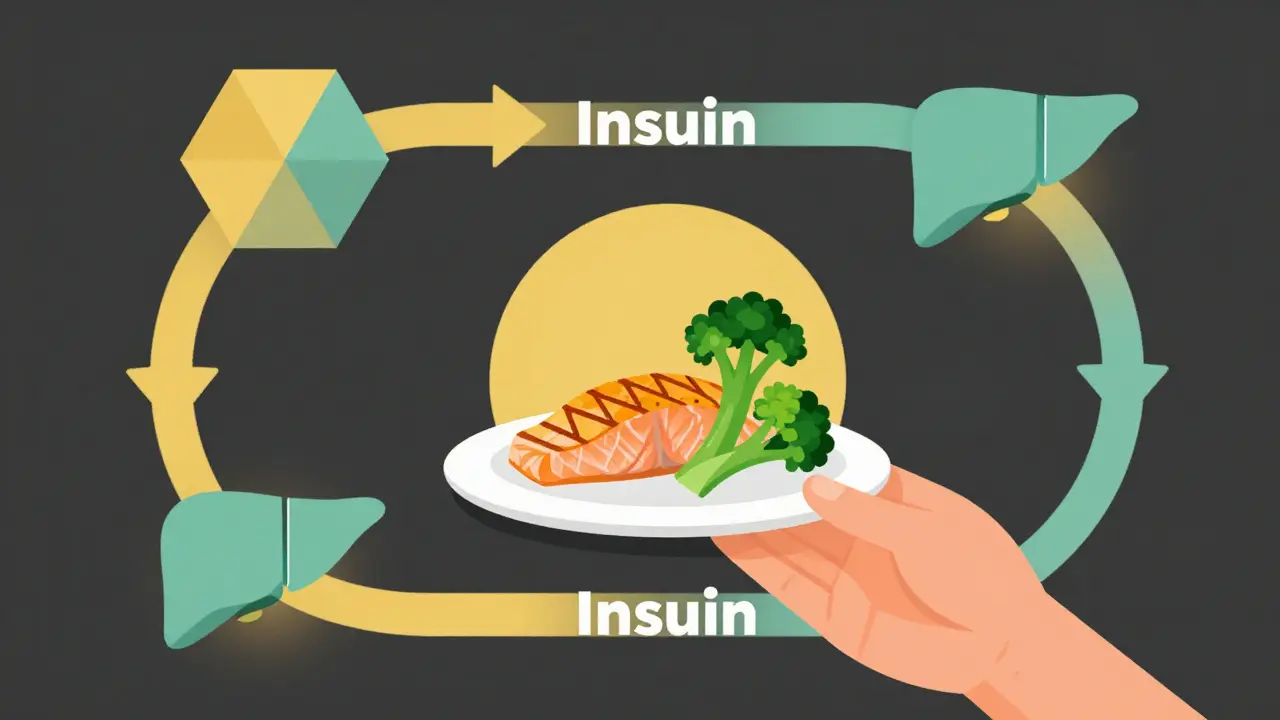
The goal isn’t to lose weight fast. It’s to lower your insulin levels so your body can start burning fat again. And that starts with what you eat.
Focus on protein and healthy fats first. These don’t spike insulin. They keep you full longer. Start meals with eggs, chicken, fish, tofu, or lentils. Add avocado, olive oil, nuts, or seeds. You’ll feel satisfied without the crash.
Choose low-glycemic carbs. Not all carbs are bad. But you need to pick the right ones. Swap white rice for brown rice or quinoa. Swap regular pasta for chickpea or lentil pasta. Eat whole fruits instead of juice. Stick to non-starchy vegetables-broccoli, spinach, kale, zucchini, peppers. These are packed with fiber, which slows down sugar absorption and keeps insulin steady.
Avoid added sugar and refined carbs. That means no soda, candy, pastries, white bread, or even “healthy” granola bars loaded with honey or syrup. Read labels. If sugar is one of the first three ingredients, skip it. Even fruit smoothies can be sugar bombs. Stick to whole fruit.
Eat regularly-don’t skip meals. Going too long without eating causes your blood sugar to drop. That triggers cravings for sugary, carb-heavy foods. Eat every 3-4 hours. A small snack like almonds and an apple, or Greek yogurt with chia seeds, can prevent a crash later.
Don’t fear fat. Fat doesn’t make you fat. Sugar and refined carbs do. Healthy fats help your body absorb nutrients, balance hormones, and reduce inflammation. Olive oil, salmon, walnuts, and full-fat dairy (if you tolerate it) are your friends.
Real-Life Eating Patterns That Help
You don’t need to follow a strict diet. You need a sustainable rhythm.
- Breakfast: Scrambled eggs with spinach and avocado. Or Greek yogurt with berries and flaxseed.
- Lunch: Grilled chicken salad with olive oil dressing, chickpeas, and mixed veggies.
- Dinner: Baked salmon with roasted Brussels sprouts and wild rice.
- Snacks: Handful of almonds, hard-boiled eggs, cottage cheese with cucumber slices.
Try to eat dinner at least 3 hours before bed. Your body repairs itself while you sleep. If you eat too late, insulin stays high, and fat storage continues. Even small changes like this can make a difference.
Hydration matters too. Drink water instead of sugary drinks. Sometimes thirst feels like hunger. Keep a bottle handy. Add lemon or mint if you want flavor.
Why Movement Matters-But Not How You Think
Exercise helps, but not because you need to burn 500 calories a day. The goal is to improve insulin sensitivity. That means moving regularly-not punishing yourself with hours on the treadmill.
Strength training is the most powerful tool. Lifting weights or doing bodyweight exercises (squats, lunges, push-ups) builds muscle. Muscle uses glucose without needing insulin. The more muscle you have, the better your body handles sugar.
Walking is underrated. A 20-30 minute walk after meals lowers blood sugar spikes. It’s simple, free, and works. Yoga and stretching help reduce stress, which lowers cortisol and improves insulin response.
Don’t overdo cardio. Long, intense workouts can raise cortisol and make insulin resistance worse. Focus on consistency, not intensity.
What to Expect-and What Not to Expect
Weight loss with PCOS is slow. You might lose 1-2 pounds a month. That’s normal. That’s success. You’re not trying to get to a number on the scale. You’re trying to reset your metabolism.
Look for non-scale victories: better sleep, fewer cravings, more energy, regular periods, clearer skin. These are signs your insulin is improving. The weight will follow.
Don’t compare yourself to others. Someone without PCOS might lose 10 pounds in a month. You might lose 3. That doesn’t mean you’re failing. It means your body is working harder. Celebrate every win, even if it’s small.
When to Ask for Help
If you’ve tried diet and lifestyle changes for 3-6 months and still aren’t seeing progress, talk to your doctor. There are medications like metformin that help lower insulin levels. They’re not magic pills, but they can give your body the support it needs to respond better to food and movement.
Working with a dietitian who understands PCOS is also a game-changer. They can help you build a plan that fits your life, not a rigid rulebook.
And if you’re feeling overwhelmed, anxious, or hopeless-you’re not alone. PCOS is hard. It’s not just physical. It’s emotional. Therapy or support groups can help you cope with the frustration and shame that often come with it.
You’re not broken. You’re not lazy. You have a metabolic condition that’s been misunderstood for decades. The good news? You can fix it. Not overnight. But step by step, meal by meal, day by day. Your body is capable of healing. You just need to give it the right tools.
Can you lose weight with PCOS if you have insulin resistance?
Yes, you can. Weight loss with PCOS and insulin resistance is slower than for people without it, but it’s absolutely possible. The key is lowering insulin levels through diet and lifestyle changes-not just cutting calories. Focusing on protein, healthy fats, low-glycemic carbs, and regular movement helps your body burn fat again. Many women see improvements in energy, cravings, and menstrual cycles before they see major weight loss.
Why is it so hard to lose belly fat with PCOS?
High insulin levels directly promote fat storage around the abdomen. Insulin blocks fat breakdown and signals your body to store energy as fat, especially in the visceral area around your organs. This is different from the hip and thigh fat typical in women without PCOS. Belly fat is also more active metabolically, releasing hormones that make insulin resistance worse. That’s why it’s stubborn-it’s tied directly to your hormonal imbalance.
Is keto diet good for PCOS?
Some women with PCOS do well on keto because it cuts carbs and lowers insulin. But it’s not for everyone. Long-term keto can be hard to maintain and may affect hormone balance if not done right. It’s not a cure-it’s a tool. Many people find a moderate low-carb approach (not full keto) works better long-term. Focus on whole foods, not processed keto snacks. Always check with your doctor before starting any extreme diet.
Does metformin help with weight loss in PCOS?
Metformin doesn’t cause weight loss by itself, but it helps by improving insulin sensitivity. This can reduce hunger, lower cravings, and make it easier to lose weight with diet and exercise. Many women lose 5-10% of their body weight over 6-12 months when metformin is combined with lifestyle changes. It’s often used when diet and exercise alone aren’t enough, especially if you’re prediabetic.
How long does it take to see results with a PCOS diet?
Most women notice changes in energy, cravings, and skin within 4-8 weeks. Regular periods may return in 3-6 months. Weight loss is slower-typically 1-2 pounds per month. The goal isn’t rapid loss but lasting metabolic improvement. If you stick with the changes for 6 months, you’ll likely see big improvements in insulin levels, hormone balance, and overall health-even if the scale doesn’t move much.
PCOS and weight gain are linked by insulin resistance-but that link can be broken. You don’t need to starve yourself or spend hours at the gym. You need to eat in a way that respects your body’s biology. Start small. Pick one change this week: swap soda for water, add protein to breakfast, take a walk after dinner. Those small steps add up. Your body is waiting for you to give it the right fuel. It’s ready to heal. You just have to show up.


Write a comment